iscover
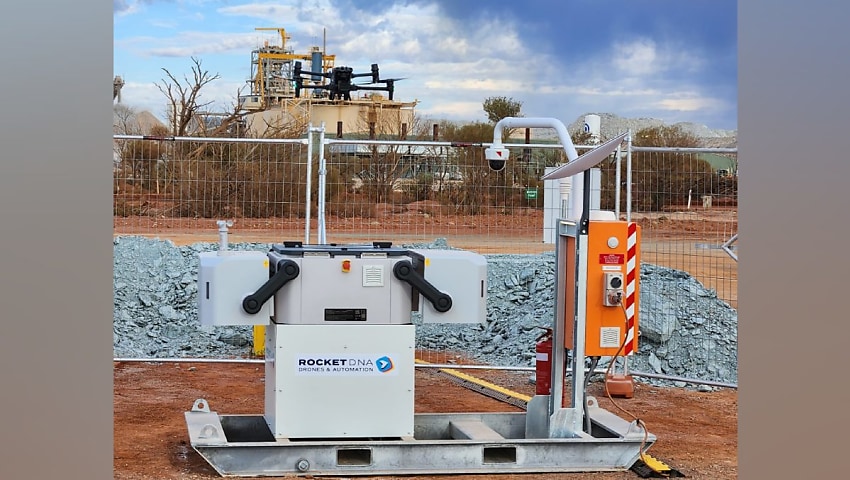
Drone developer RocketDNA has put forward its X-Bot solution for quick response to defence, power outages, and to identify asset faults.
The autonomous “drones-in-a-box” provides flying beyond visual line of sight capability as a cost-effective and easy way for any business with remote assets.
The X-Bot is designed to monitor and respond to emergencies involving defence, energy, mining, agriculture, oil and gas industry infrastructure.
“One of the main issues with electricity outages for example is the fault can be difficult to locate, especially in remote areas where the fault may be a fallen tree over a powerline kilometres away from a road,” according to RocketDNA chief executive officer Christopher Clark.
“RocketDNA’s drones-in-a-box respond automatically when a fault occurs and can be used to identify the exact location and send the information back to the remote operating centre in a much more timely and efficient way.
“Rather than sending a human to complete certain tasks, or to respond to an emergency alarm which can be a potentially life-threatening situation, our autonomous drone systems can be pre-programmed or triggered to identify the issue, thus creating safer and more sustainable work environments.
“This could be identifying faults on pipelines and conveyors belts, corrosion, overheating and defect detection of critical energy infrastructure, to full emergency response.
“Our autonomous flight footage and remote detection plus AI overlay is recorded and livestreamed in real time, helping organisations simply and urgently determine the issue and the appropriate level of response.”

Australia’s Civil Aviation Safety Authority (CASA) has approved the autonomous “drones-in-a-box” design to quickly respond to emergencies. The approval covers two autonomous drone systems, the DJI Dock System and the Hextronics Global drone station, including Beyond Visual Line of Sight flights.
RocketDNA is the first Australian company to secure CASA approval for the DJI Dock System following almost a year of work with CASA including the development of robust safety protocols and a suite of policies and procedures, as well as a practical demonstration.
“This approval ushers in a new era of data collection applications that can be conducted remotely and marks the initiation of autonomous flights seamlessly integrated into existing operations,” Clark said.
“We have already deployed our first DJI Dock to a customer site (gold mine) in Western Australia, where the team will begin implementing autonomous flights into existing operations.”
The full X-Bot product is assembled in Australia. The system is approximately the size of two pallets, weighs just 100 kilograms and can easily be moved from location to location depending on requirements. The DJI drones have a 7-kilometre range and can be deployed as part of a network to cover large areas.

Robert Dougherty
Want to see more stories from trusted news sources?
Make Defence Connect a preferred news source on Google.
Click here to add Defence Connect as a preferred news source.