iscover





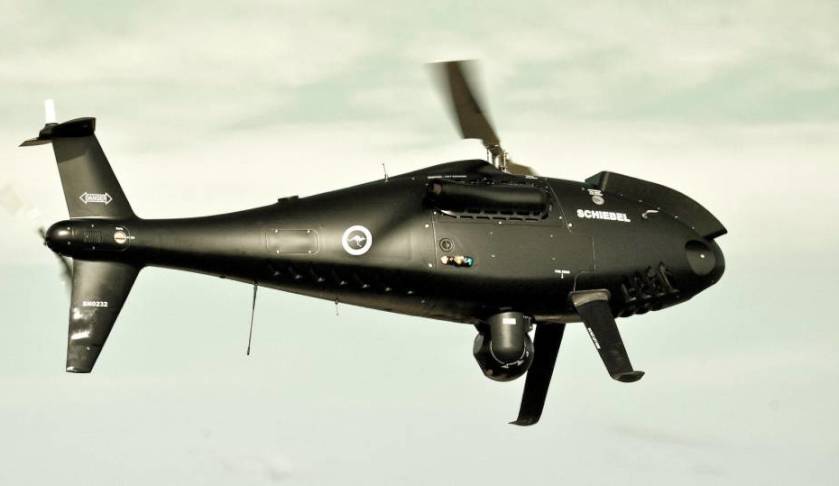
A Schiebel S-100 Camcopter Unmanned Aerial Vehicle (UAV) crashed at Beecroft Weapons Range east of Nowra, causing a small bushfire.
The vertical takeoff and landing (VTOL) UAV crashed while conducting flying conversion training for Royal Australian Navy personnel on Monday, 27 March at 10am.
It is believed the UAV experienced a control failure.
Schiebel was awarded a contract in February this year to provide its Camcopter S-100 unmanned helicopter and three years of logistics support to the RAN.
The contract, which was signed in late December, fulfils a request for tender (RFT) for Navy Minor Project (NMP) 1942, which sought to procure a “proven” VTOL Maritime Tactical Unmanned Aircraft System – Interim Capability (MTUAS-IC) and associated engineering and logistics support for the RAN.
The RAN issued the RFT for an unmanned rotary-wing aircraft to perform maritime and littoral intelligence, surveillance and reconnaissance (ISR) missions in February 2016. The UMS Skeldar V-200 and the Northrop Grumman MQ-8C Fire Scout were considered contenders for the requirement
The Camcopter S-100 features a carbon fibre and titanium fuselage, has a maximum takeoff weight of 200 kilograms and can carry a 34-kilogram payload of electro-optics and infrared sensors for up to 10 hours. It has a maximum speed of around 120 knots and is powered by a 55 horsepower (41 kilowatt) Diamond piston engine.
Schiebel said the S-100 holds an impressive track record of supporting naval customers, with missions successfully completed on over 30 different ships on all of the world’s oceans, in every environment from the tropics to the Arctic.
The S-100 has a beyond line-of-sight capability out to 200 kilometres, is able to fly completely autonomously and can be operated from a pilot control unit with missions planned and controlled via a simple point-and-click graphical user interface. High-definition payload imagery is transmitted to the control station in real time.
Want to see more stories from trusted news sources?
Make Defence Connect a preferred news source on Google.
Click here to add Defence Connect as a preferred news source.