iscover





An artificial intelligence project run by Defence personnel in search and rescue (SAR) trials has the potential to save lives.
The project, dubbed AI-Search, aims to apply modern AI to help detect small and difficult-to-spot targets, such as life rafts and individual survivors.
Plan Jericho’s AI lead, Wing Commander Michael Gan, said his team recognised the potential for the technology to augment and enhance SAR.
“The idea was to train a machine-learning algorithm and AI sensors to complement existing visual search techniques,” he said.
“Our vision was to give any aircraft and other Defence platforms, including unmanned aerial systems, a low-cost, improvised SAR capability.”
His team approached Lieutenant Harry Hubbert of Warfare Innovation Navy Branch, who was prominent in developing AI-enabled autonomous maritime vehicles for the Five Eyes Exercise Autonomous Warrior in Jervis Bay in late 2018.
LEUT Hubbert was given a month to develop the new algorithms and completed the work in a fortnight.
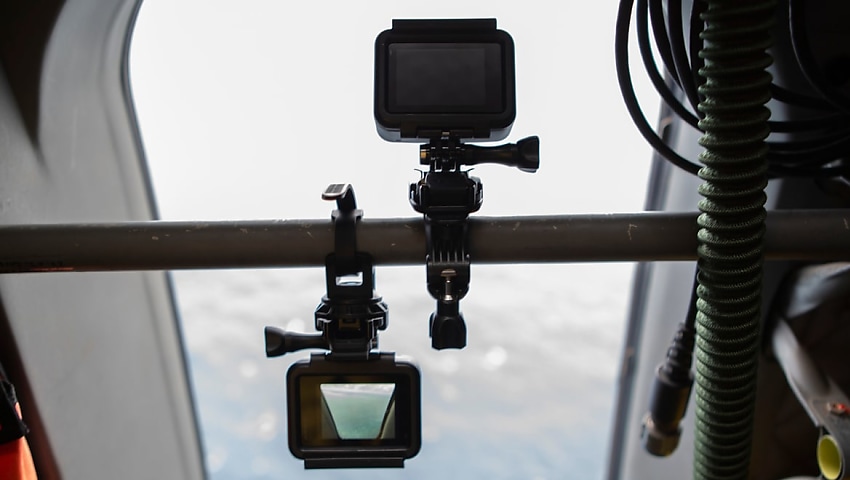
The AI comprises a series of machine-learning algorithms alongside other deterministic processes to analyse the imagery collected by camera sensors and aid human observers.
AI-Search was first trialled successfully aboard a RAAF C-27J Spartan last year. The second trial took place in March this year near Stradbroke Island, Queensland. During these trials, AI-Search detected a range of small targets in a wide sea area while ‘training’ the algorithm.
Using commercial off-the-shelf components with custom software and programming by LEUT Hubbert, the trials highlighted the feasibility of the technology, which can be applied easily to other ADF airborne platforms.
“There is a lot of discussion about AI in Defence but the sheer processing power of machine-learning applied to SAR has the potential to save lives and transform it,” LEUT Hubbert said.
The project is a collaboration between Warfare Innovation Navy Branch, Plan Jericho, RAAF Air Mobility Group’s No. 35 Squadron and the University of Tasmania’s Australian Maritime College.
The project stemmed from a challenge from the Director-General Air Combat Capability, AIRCDRE Darren Goldie, to find a way of enhancing SAR using improved sensors.
Want to see more stories from trusted news sources?
Make Defence Connect a preferred news source on Google.
Click here to add Defence Connect as a preferred news source.