iscover






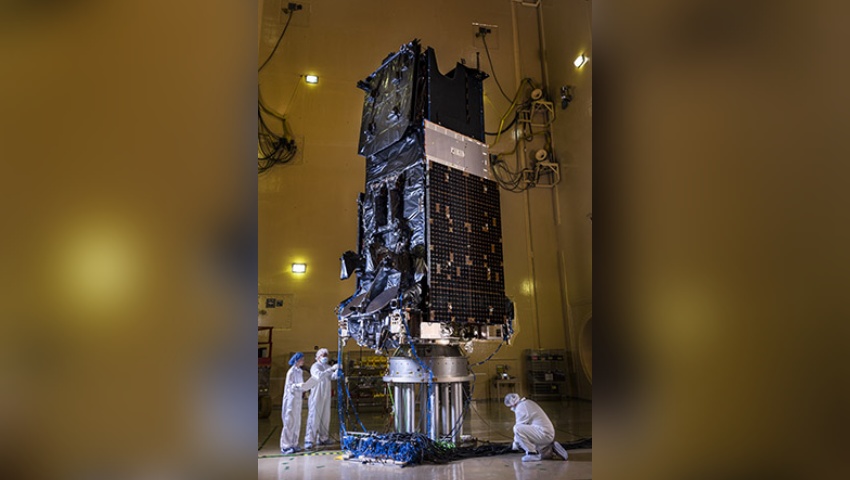
Lockheed Martin has completed production of a missile warning system for the US Space Force.
The sixth Space Based Infrared System Geosynchronous Earth Orbit (SBIRS GEO-6) missile warning satellite has been completed and is ready for launch in 2022.
The satellite entered storage almost a month ahead of the Acquisition Program Baseline (APB) requirement date.
Once launched, SBIRS GEO-6 is expected to join the Space Force’s constellation of missile warning satellites, equipped with powerful scanning and staring infrared surveillance sensors.
The sensors are built to collect data that allow the US military to detect missile launches, support ballistic missile defence, expand technical intelligence gathering and bolster situational awareness on the battlefield.
This follows the deployment of SBIRS GEO-5, which turned on its sensors for the first-time during space vehicle checkout and transmitted its first images back to Earth, achieving the ‘First Light’ milestone.
Both the SBIRS GEO-6 and GEO-5 were originally billed as clones of previous SBIRS satellites before the US Air Force agreed to re-baseline the contract for the two satellites and upgrade the platforms.
Lockheed Martin completed production of the satellite on its LM2100 Combat Bus — an enhanced space vehicle designed to provide greater resiliency, cyber-hardening, and improved spacecraft power, propulsion and electronics.
“We are proud to deliver additional overhead persistent infrared capabilities critical to our nation’s defence with SBIRS GEO-5 and GEO-6,” Colonel Matt Spencer, senior materiel leader for Space Systems Command’s GEO/Polar Division, said.
“The LM2100 Combat Bus continues to be an effective platform to help meet the Chief of Space Operations’ vision for streamlined space acquisitions.”
Tom McCormick, Lockheed Martin’s vice president for overhead persistent infrared systems, also noted the benefits of the LM2100, describing it as a “game changer” for military satellite design.
“From the LM2100, we’ve really been able to enhance resiliency developing a ‘Combat Bus’ and a bridge to achieving the resilient missile warning required for the Space Force’s Next-Gen OPIR Block 0 System,” he said.
[Related: Lockheed Martin conducts F-35 experiment with ADF]
Want to see more stories from trusted news sources?
Make Defence Connect a preferred news source on Google.
Click here to add Defence Connect as a preferred news source.