iscover
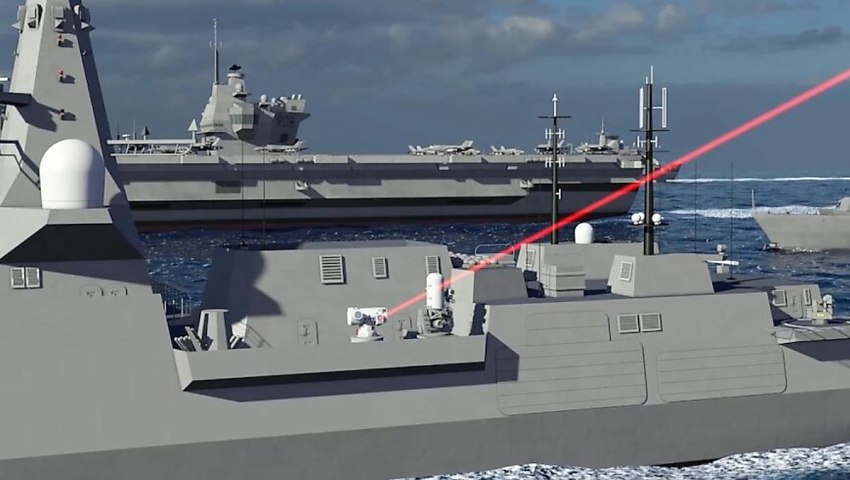
The United Kingdom has announced plans to install a newly developed DragonFire laser system on Royal Navy warships by 2027.
The laser weaponry system, which fires a burst of high-intensity beam at the speed of light, is expected to be utilised for air defence against unmanned aerial vehicles, missiles and aircraft.
It’s addition to Royal Navy warships would cooperate with existing Sea Viper and Sea Ceptor missile systems.
UK Defence Secretary Grant Shapps said the UK is pushing ahead with plans to install the DragonFire ahead of its original 2032 schedule after the system undertook testing by government scientists on the Ministry of Defence’s ranges in the Hebrides at the start of this year.
“In a more dangerous world, our approach to procurement is shifting with it. We need to be more urgent, more critical, and more global,” he said.
“Our widespread reforms will deliver the latest kit and weaponry for our Armed Forces faster and help identify export opportunities that can boost the UK economy.
“DragonFire shows the best of the UK at the forefront of military technology, and we will not delay in getting it in the hands of our military to face down the threats we’re facing.”
DragonFire has been in development for nearly a decade through the Defence Science and Technology Laboratory, on behalf of the UK Ministry of Defence, working with its industry partners MBDA, Leonardo, and QinetiQ.

“This is excellent news and a real step forward in enabling operational advantage at pace for UK Defence. Dstl is all about preparing for the future and the DragonFire technology is a great example of that,” according to Dstl chief executive Paul Hollinshead.
“Our scientists, along with industry partners, have worked tirelessly to bring laser technology to where it is today, one which I am proud to say is a UK sovereign capability.”
The system is not expected to replace current missile systems as the core component of the Royal Navy’s air defence capability.
“The Royal Navy has always been on the front foot to embrace new technologies to enhance our capability,” according to Captain Matt Ryder, responsible for new capabilities as head of Above Water Battlespace in the Royal Navy’s Develop Directorate.
“We recognise this cutting-edge UK laser weapons technology as highly relevant and the need to accelerate it into service on board our ships at the earliest opportunity.
“Clearly a current operational focus is on protecting freedom of navigation in the Southern Red Sea as part of Operation Prosperity Guardian, where in recent months, HMS Diamond and HMS Richmond have each successfully deployed Air Defence capabilities to defend legitimate shipping in the area against drone and missile threats.
“Noting the quantity and varied sophistication of air and missile threats seen in the Southern Red Sea, we see a very relevant and current example of where laser weapons could provide an additional layer of defence to protect shipping, at a potentially much lower cost per shot and without the inherent onboard magazine and silo capacity constraints associated with interceptor missiles.”

Robert Dougherty
Want to see more stories from trusted news sources?
Make Defence Connect a preferred news source on Google.
Click here to add Defence Connect as a preferred news source.