iscover




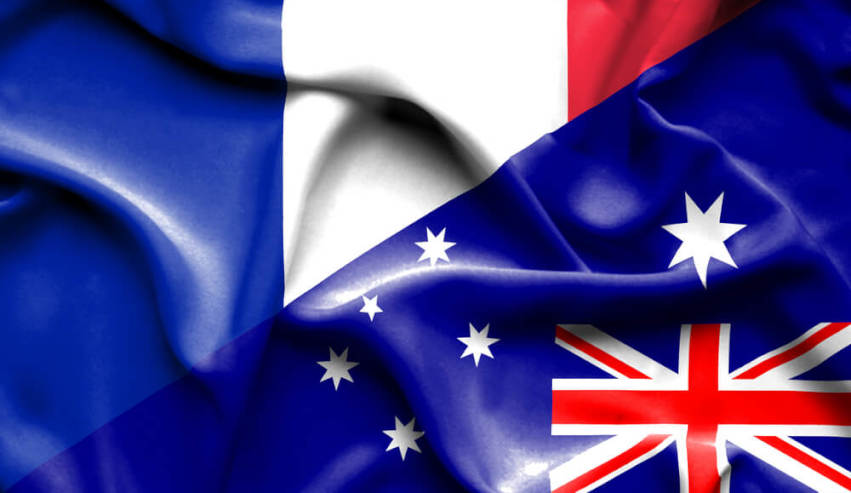
Australia’s Classified Information Agreement with France and the Future Submarine Program will be under the spotlight on Monday when it is examined by the joint standing committee on treaties.
Monday’s examination follows previous hearings into Australia’s Future Submarine Program with France, which reviewed the Framework Agreement for the Future Submarine Program (FSP) and important aspects of the program including the transfer of technology, Australia's sovereign operation, local industry engagement, research and development and the governance and performance of the contract with DCNS.
The conclusions of Monday’s hearing will directly impact the findings of the Framework Agreement for the FSP.
Committee chair Stuart Robert said, "The Future Submarine Program is intended to maximise Australian industry involvement, and we need to make sure these agreements do not unfairly discriminate against, or impose extra burdens on, Australian companies."
The committee will hear from the Attorney-General’s Department, the Department of Defence and the Department of Foreign Affairs and Trade on the implications of the agreement.
Robert also stated the lengthy process of applying for security clearances has been a problem for a business competing for a government work.
"The committee believes this is the first agreement where Australia will be obliged to recognise the security clearance granted to a person by another country when in Australia. The committee will look to ensure that the Australian and French vetting practices are robust enough to protect Australia’s classified information," Robert said.
"The recognition of security clearances issued by France could disadvantage Australian contractors who do not hold current Australian security clearances. The committee has heard that the process of applying for security clearances, particularly the need to be sponsored by a government agency, is an obstacle for Australian businesses in bidding for work."
So far, representatives from BAE Systems Australia, Australian Submarine Corporation, Defence SA, University of Adelaide - Defence and Security, Australian Industrial Transformation Institute, Flinders University, Australian Industry and Defence Network WA and DCNS Australia have spoken at the hearings.
The FSP Framework Agreement is not the agreement to design or build the Future Submarines, but an agreement that establishes a framework for co-operation to support the delivery of the FSP.
The contract for the design and construction of the Future Submarines was awarded to the French government-owned company DCNS in April 2016 and signed in September 2016.
The government confirmed in April 2016 that the submarine fleet will be constructed in Adelaide.
DCNS has stated that over 90 per cent of the build will occur in Australia.
The French company was selected by the Australian government for the contract over German TKMS and Japanese Mitsubishi Heavy Industries and Kawasaki Shipbuilding Corporation offerings.
DCNS has stated that the Shortfin Barracuda pushes submarine stealth capabilities into a new realm, using pump-jet propulsion instead of the traditional propeller. To add to its stealth capabilities, hydroplanes on the submarine will retract to reduce drag and noise.
Want to see more stories from trusted news sources?
Make Defence Connect a preferred news source on Google.
Click here to add Defence Connect as a preferred news source.