iscover
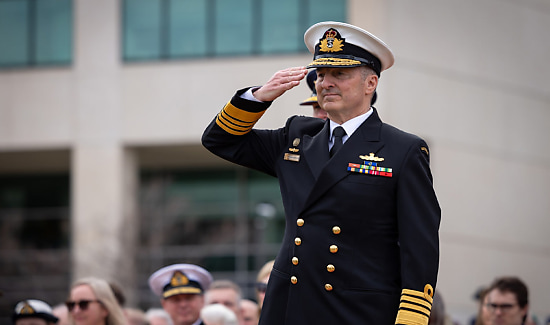





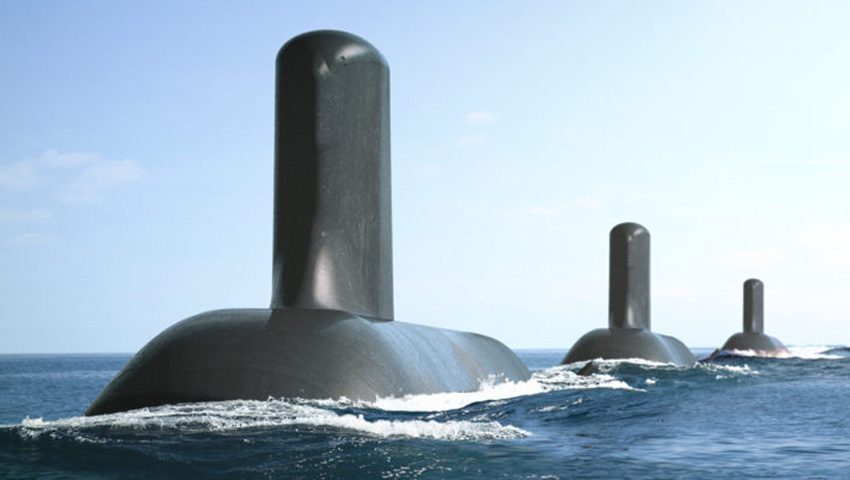
Lockheed Martin Australia has appointed John Chandler as the new director of the Future Submarine Program combat system integration (FSP-CSI) to lead the design of the combat system for the Royal Australian Navy’s future Attack Class submarines.
Chandler will take over the role from the inaugural director, Mike Oliver, who will return to the US following his tenure with the program, which has seen collaboration with the Australian Department of Defence and Naval Group Australia to establish a large, sustainable and highly skilled submarine workforce for Lockheed Martin in Australia.
Joe North, chief executive Lockheed Martin Australia and New Zealand, said, “We are committed to having the best stewardship team in place for the Attack Class Future Submarine Program and this is evidenced through a trusted Defence partnership, a strong sovereign industry capability, and ready access to US capabilities and experience if required.”
Chandler’s career spans over 30 years of experience in program management and submarine combat system development, engineering, operation, and support to Lockheed Martin Australia. In addition to holding a bachelor’s degree in electrical engineering and a master’s degree in management, Chandler brings a solid record of accomplishment, a strong network within the Australian defence community, and a reputation for exceptional leadership to the Future Submarine Program.
North added, “We’ve strategically grown our Future Submarine sovereign industry workforce from two employees in 2016 to 200 in 2020, and our new leadership appointments will further enhance our sovereign commitment to our employees, industry partners and the Commonwealth.
“I’d like to acknowledge Mike Oliver’s remarkable leadership of the program as director since 2016, where he has led the development of a highly-skilled submarine workforce and sovereign industrial capability, oversaw numerous subcontract awards, established new industrial partnerships, and helped create the Combat Systems Laboratory at Mawson Lakes in Adelaide.
“I congratulate John Chandler on his leadership appointment to the Program and I am confident he will continue to maintain the enduring partnerships needed to design, build, test, and integrate what will become one of the world’s most advanced submarine combat systems.”
The Attack Class submarines will be delivered as part of the $50 billion SEA 1000 Future Submarine Program. Naval Group will build 12 "regionally-superior" submarines for the Royal Australian Navy.
Naval Group's successful Shortfin Barracuda design, which serves as the basis for the new Attack Class, is a conventionally-powered variant of the nuclear-powered Barracuda fast attack submarine currently under construction for the French Navy.
Lockheed Martin will provide the AN/BYG-1 combat control system, which provides an open architecture submarine combat control system for analysing and tracking submarine and surface-ship contacts, providing situational awareness as well as the capability to target and employ torpedoes and missiles.
The 12 vessels will be built by Naval Group at a specialist submarine shipyard at Osborne, South Australia.
The Commonwealth government’s Australian Naval Infrastructure (ANI) program will support the development of the future submarine shipyards. The Commonwealth government formally signed the strategic partnering agreement (SPA) with Naval Group in February 2019 ahead of confirming the final design specifications and requirements for the Attack Class submarines.
The Attack Class will enter service with the Royal Australian Navy at a time when 50 per cent of the world’s submarines will be operating in the Indo-Pacific region.

Stephen Kuper
Steve has an extensive career across government, defence industry and advocacy, having previously worked for cabinet ministers at both Federal and State levels.
Want to see more stories from trusted news sources?
Make Defence Connect a preferred news source on Google.
Click here to add Defence Connect as a preferred news source.