iscover
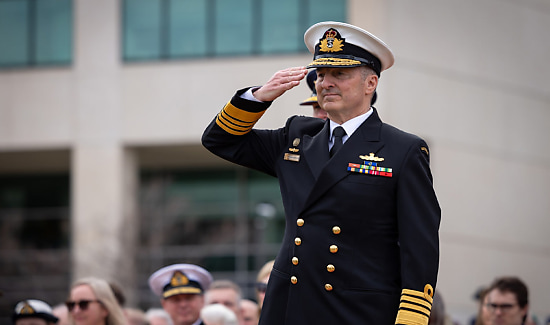





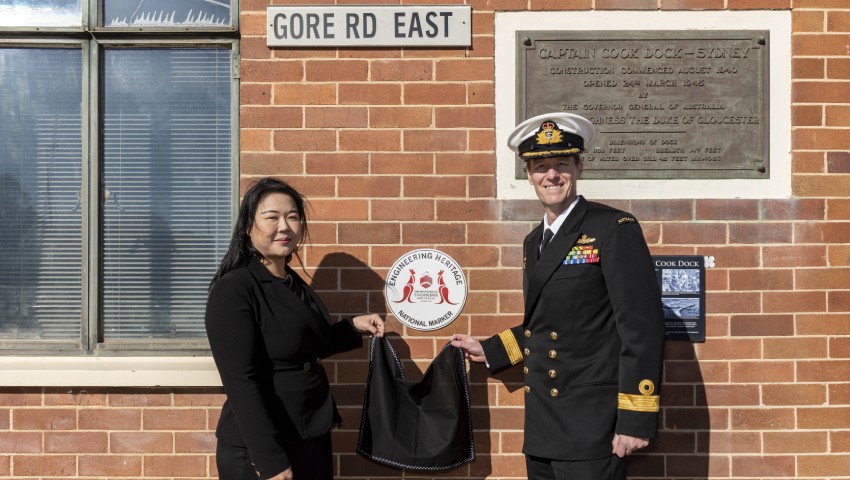
The Captain Cook Graving Dock at Sydney’s Garden Island, built during World War II, has been recognised as a National Engineering Landmark by Engineers Australia.
Jessica Qiu, resident of the Sydney division of Engineers Australia, and Commodore Shane Glassock, director general Maritime Support Branch, unveiled a plaque at the historic site to mark its new status as an engineering landmark.
According to Qiu, the dock took four years to complete and at the time was Australia’s largest engineering project.
“It’s important that we recognise the people who built this landmark and how it contributed to our community,” Qiu said.
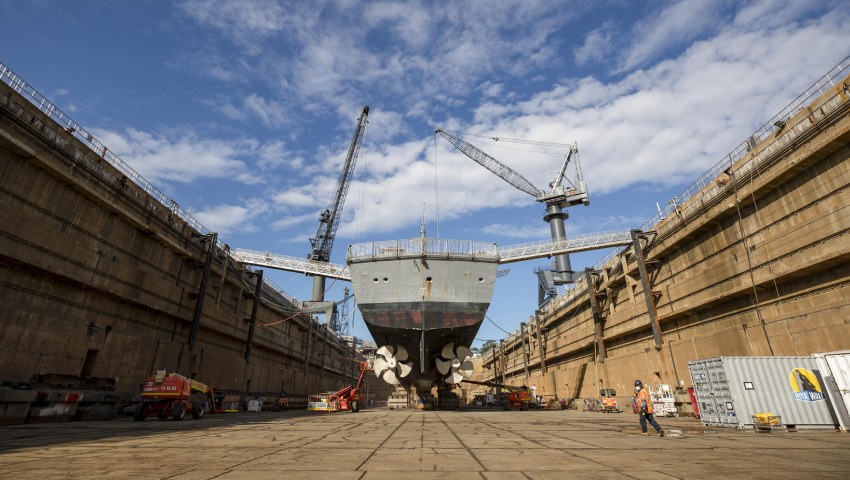
Construction activity peaked in 1943 with more than 4,000 men employed on the project. The graving dock was a product of incredible foresight and remained a national strategic asset, CDRE Glassock added.
“It continues to support maritime sustainment through the ability to dry dock our largest Royal Australian Navy ships, foreign navy ships and regional commercial vessels,” he said.
“While the design and construction of the dock have very much stood the test of time, planning is now underway to ensure this critical asset remains available and operational in the decades ahead.”
Since 1999, the graving dock has been operated and maintained by Above Water Systems, which is part of Thales Australia, on behalf of the Navy, symbolising the close ties Navy has with defence industry.
According to Max Kufner, above water systems vice president, the company appreciated the responsibility of the role and the trust placed in it.
“The trust shown in us by the Royal Australian Navy has instilled an enormous sense of pride and accomplishment across Thales Australia,” Kufner said.
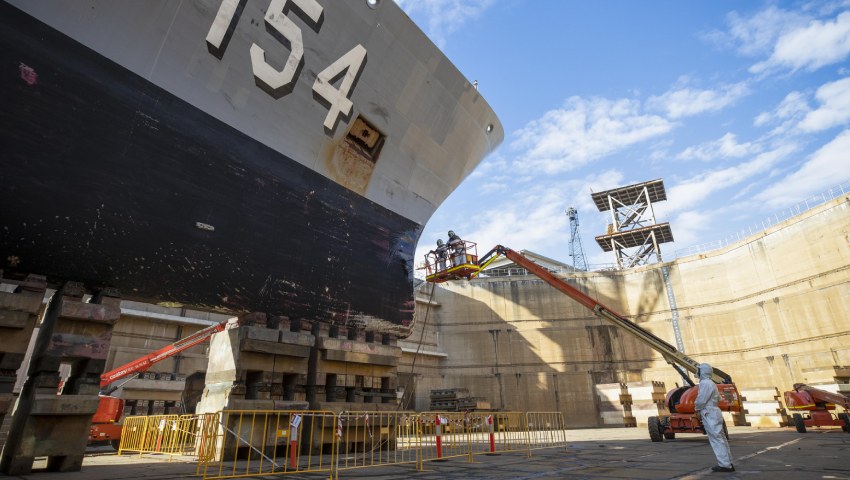
Resembling a giant bath tub, the dry dock is the last remaining facility in Australia capable of docking ships that have a displacement of more than 12,000 tonnes, and its importance is highlighted in Defence’s 2020 Force Structure Plan.
After a ship enters the dock, a watertight floating barrier called a caisson is closed, water is pumped out of the dock and the ship settles on carefully arranged keel blocks.
Captain Matthew Shand, Commanding Officer of HMAS Kuttabul–Garden Island Fleet Base East, thanked the Naval Historical Society of Australia for ensuring the dock’s many years of service were not forgotten.
“Through the sheer persistence of David Michael of the Naval Historical Society, we celebrate the 76th anniversary of the dock and formally recognise what was, and still is, an engineering feat of national proportions,” CAPT Shand said.
[Related: HMAS Parramatta returns to homeport]
Want to see more stories from trusted news sources?
Make Defence Connect a preferred news source on Google.
Click here to add Defence Connect as a preferred news source.