iscover





Capability gaps in Australia’s naval industry have been discussed extensively by government and industry since Naval Group was awarded the $50 billion Future Submarine Program. But this is not the only naval project forcing Australian industry to address its capabilities, or lack thereof.
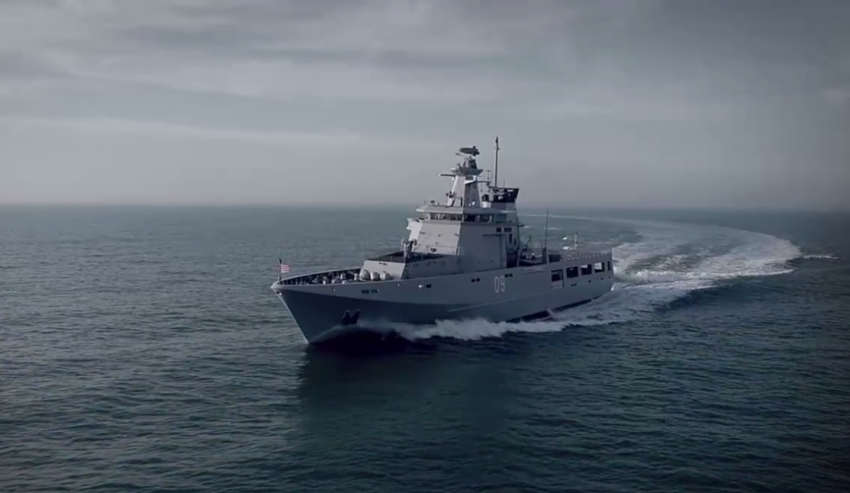
Defence Connect spoke with Dirk Malgowski, managing director of Lürssen (defence), one of the companies tendering for the $3 billion Offshore Patrol Vessel project.
Malgowski, like Naval Group's Brent Clark, raised the issue of tier one pieces of equipment not being present in the Australian market.
"There is certainly some of the major ship's equipment that you have, like the main engine or gear boxes, where simply there is not yet known Australian genuine capability," said Malgowski.
"When it comes to the current engine OEMs [Original equipment manufacturers] that we have in the naval shipbuilding industry, the number is probably less than a handful on a global scale. And all of the engine manufacturers are not exclusively building ship engines, but these are builders of engines for planes, for trains, and you name it. An OEM, like MTU [MTU Friedrichshafen GmbH], probably build thousands of engines a year, whereof only maybe 100 or 150 are used for ships. I think this describes a little bit the difficulty. I think such a decision cannot be made exclusively on the back of shipbuilding defence programs."
But Malgowski said despite the gap, tier two companies are available to help fill the void by collaboration with international companies specialising in these capabilities.
"I think the good thing is, and it's for this example, we have Penske as a company that is representing MTU, the OEM. So, what we are trying to do is, wherever we have such a gap still existing, we are trying to team up with local companies that do add value to the process," Malgowski said.
"So, therefore, I believe that it is quite the right way to have companies engaged in these topics that build up additional capabilities around the engine for the servicing, for the maintenance, for the sustainment work to come. And I think this adds value to the programs and for the Commonwealth."
Two German companies, Lürssen and Fassmer, and Dutch company Damen are all tendering for the $3 billion OPV project.
Lürssen and Damen have both teamed with SA-based ASC Shipbuilding and WA-based Forgacs (a subsidiary of Civmec) as part of their bids for the project. Fassmer has entered into a 50-50 joint venture partnership with Austal.
Want to see more stories from trusted news sources?
Make Defence Connect a preferred news source on Google.
Click here to add Defence Connect as a preferred news source.