


With the Australian Signals Directorate setting ambitious deadlines for transitioning to post-quantum cryptography, defence organisations and industry are being urged to begin preparing now, rather than later, for the emergence of a computer capable of breaking existing encryption.
Speaking with Defence Connect, Senetas co-founder and chief technology officer Julian Fay and chief executive officer Andrew Wilson warn that the transition to quantum-resistant encryption represents a significant undertaking for governments, defence organisations and critical infrastructure operators.
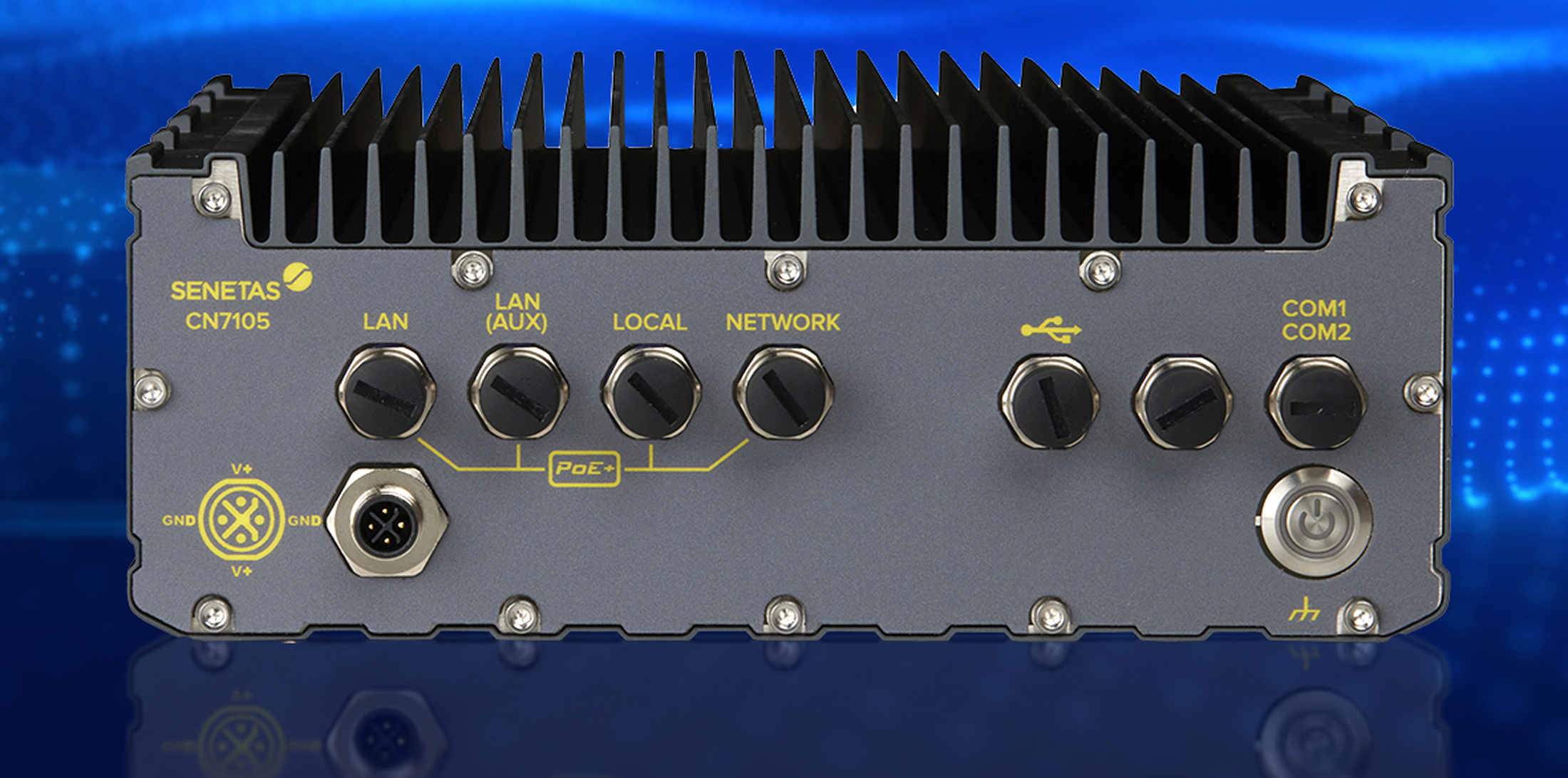
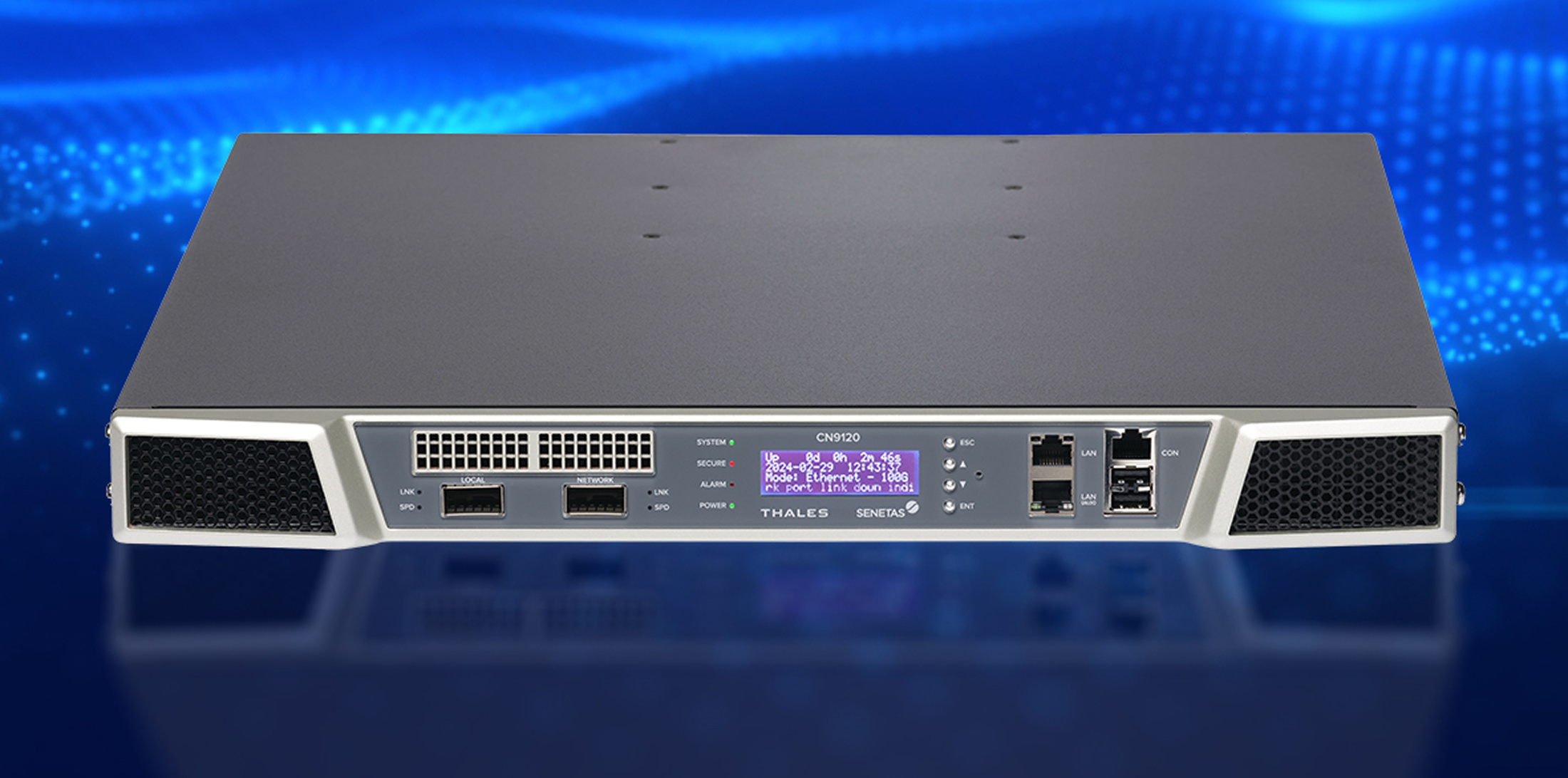
The Melbourne-based company, which has nearly three decades’ experience designing and manufacturing hardware encryption devices, has already incorporated post-quantum cryptography algorithms into its products, positioning itself to support organisations preparing for the emerging threat.
Senetas network encryption technology is used by organisations in more than 60 countries and has undergone independent assessment through the Common Criteria community and the US National Institute of Standards and Technology (NIST). Its products also hold FIPS 140-3 Level 3 certification and have been used by the US Department of War for about two decades.
Quantum computing represents a fundamental departure from conventional computing, with the potential to solve mathematical problems that underpin much of today’s digital security, according to Fay.
“I think most people understand that a lot of effort has been put into building essentially a new type of computing paradigm being quantum computing, which is really a difference in kind, not a difference in degree. So it’s based on a fundamental different sort of engineering premise,” he says.
“We believe that such a quantum computer, when it is built, will be very useful for designing things like new drugs, new medications, things like that, new materials.
“But it’s understood that one of the side effects is that it will be able to break some of the mathematical hardness assumptions that underpin a lot of our digital security. Specifically, a particular type of cryptography called public key or asymmetric cryptography.
“No such device exists today. It is increasingly believed that one will be feasible to be built in a likely ever shortening timeline. And there are several reasons for that; a lot of organisations are trying to build such quantum computers using different approaches and there’s been a lot of recent progress in the hardware evolution of such devices.”
While a sufficiently advanced quantum computer does not yet exist, advances in hardware development and quantum error correction are accelerating progress towards what is known as a cryptographically relevant quantum computer.
Fay points to advances by organisations, including Google and Quantinuum, in quantum hardware and error correction, alongside improvements in quantum algorithms, as evidence that the threat is becoming increasingly credible.
He notes that estimates of the computing power required to break commonly used RSA-2048 encryption have also fallen considerably.
In 2019, one estimate suggested about 20 million stable qubits would be required to break the encryption standard. More recent estimates have reduced that requirement to approximately 1 million qubits.
While the timeline remains uncertain, Fay argues that defence organisations cannot afford to treat the threat as a distant problem.
“If you think about what such a quantum computer might be able to do, it would have a devastating impact on our cyber security,” Fay says.
“There is (also) an immediate and present risk to our cyber security which is harvesting or capturing data from communications networks. If such sensitive information is protected with quantum vulnerable encryption, then it can be stored by an adversary for future decryption in a way that we simply cannot prevent. If they get access to that today, then we cannot control their ability to decrypt it in the future.
“For the highest levels of sensitive information, there is a significant consideration now about the data lifetime for which we have to keep information secure.”
For the highest levels of sensitive information, there is a significant consideration now about the data lifetime for which we have to keep information secure.”
- Julian Fay
The so-called “harvest now, decrypt later” approach allows adversaries to collect encrypted communications then retain them until quantum computing technology becomes sufficiently advanced to decrypt the information.
For defence organisations, this creates a significant vulnerability around sensitive information that must remain protected for many years.
ASD has established three major milestones for Australia’s transition to post-quantum cryptography: a refined transition plan by the end of 2026, commencement of the transition for critical systems and sensitive information by the end of 2028, and the removal of traditional asymmetric cryptography by 2030.
Wilson warns that defence procurement timelines could make even the 2028 milestone difficult to achieve.


The scale of the undertaking is significant, with hardware replacement, network redesign and system upgrades all potentially required before relevant deadlines.
“I think the real day is now, but ASD wants to transition to quantum-hardened systems on critical systems by 2028 … So, if organisations, governments, defence and commercial organisations aren’t thinking about their plan and putting into place a plan right now for procurement, they’re not going to make that 2028 deadline and potentially not even the 2030 deadline,” Wilson says.
The US estimates that the transition of federal government systems to quantum-resistant technologies could cost approximately US$7 billion, and a considerable portion of that expenditure is expected to involve replacing physical hardware that cannot support newer cryptographic algorithms.
Field-upgradable equipment can reduce procurement costs, minimise downtime and avoid the lengthy process of removing and replacing existing hardware. However, Fay cautions that defence organisations should not rush into purchasing products simply marketed as post-quantum ready.
“We’re into a 10-year journey of this transition starting in 2016 when it first became evident this was a serious risk. And the final standards, that was where a true collaborative global effort from cryptographers around the world were only standardised in August 2024 by NIST,” Fay says.
“It’s really only at that point that the industry was able to confidently move forward. There are many systems, many products, many standard protocols which have still not fully embedded these new algorithms in the protocols.
“I think what ASD’s saying is, ‘Don’t just reactively buy any old product that has got claims to be post-quantum’, you want products that properly meet the NIST standards, that have implemented them properly.”
A hybrid approach, combining conventional encryption with post-quantum algorithms, could provide an interim layer of protection during the transition.
However, Fay confirms that this approach also introduces additional complexity and potential vulnerabilities, with NIST favouring a longer-term migration towards exclusively post-quantum cryptography.
“The idea of hybrid approach to quantum security is that you retain your use of your classical, albeit. quantum vulnerable algorithms, but you then add an additional layer of defence by using these new post-quantum algorithms in conjunction with them. So, you kind of have two layers of defence,” he says.
“Opinions from the authorities around the world kind of vary about their guidance on this. I think everybody would sort of say it’s a very pragmatic and reasonable approach as we go through the transition period over the next two or three years.
“But certainly, I think ASD’s views, and certainly NIST views, is that you really, in the medium to long term, want to migrate purely to post quantum cryptography as soon as possible.
“The arguments for it are defence in depth, resilience. Some of these post-quantum algorithms are quite new. It’s not impossible that new attacks will be found against them over the next few years. Particularly with the massive progress we’re seeing in artificial intelligence attacking sort of mathematical hardness assumptions. That’s added a new dimension to the risk.”
Beyond the technical challenge, the transition also raises questions about sovereign capability and Australia’s reliance on foreign technology.
Wilson argues that sovereignty should extend beyond where a product is manufactured to include the ability to inspect, modify and retain control over the underlying technology.
“Sovereign has taken on a new meaning over the past five years. We’ve seen what has happened in Ukraine reliant on Starlink and the Starlink communications are disrupted for one reason or another. And obviously that affects their war effort,” Wilson says.
“We’re also seeing with the large language models that have been developed by OpenAI and Anthropic, that the world is becoming increasingly dependent on, what if access to those large language models are blocked for some reason? And there was a recent example with the US government blocking Mythos.
“To me, sovereignty means can you inspect it? Can you change it and can you keep it if a foreign government says, ‘No, you can’t access it any longer.’
“From an encryption perspective, what people want control over is how the device is actually built, implemented, where it is built, how the encryption system is designed and developed, not just where it is made, but how it is made and who can control it.”
From an encryption perspective, what people want control over is how the device is actually built, implemented, where it is built, how the encryption system is designed and developed, not just where it is made, but how it is made and who can control it.”
- Andrew Wilson
“(With Ukraine) we see that right across Asia as well. Certain Asian countries wanting their own low-orbit satellite systems, particularly in Japan, because they are worried about reliance on foreign technology to that extent.”
For Australia’s defence industry, the challenge now is translating the emerging quantum threat into practical procurement and capability decisions. Wilson urges defence program managers, chief information officers and industry leaders to assess their readiness, establish transition plans and allocate funding before the deadlines arrive.
Senetas has already deployed post-quantum algorithms into its products, having introduced the technology in 2020, when industry awareness of the threat remained relatively limited.
The company is now reporting increased interest from telecommunications providers, international governments and organisations seeking to strengthen their communications infrastructure.
With the transition expected to affect billions of connected devices and potentially require substantial hardware replacement, the message from industry is clear: Australia’s quantum security challenge is no longer a theoretical concern.
For defence organisations responsible for protecting sensitive information, operational networks and critical infrastructure, the window to prepare is already narrowing.