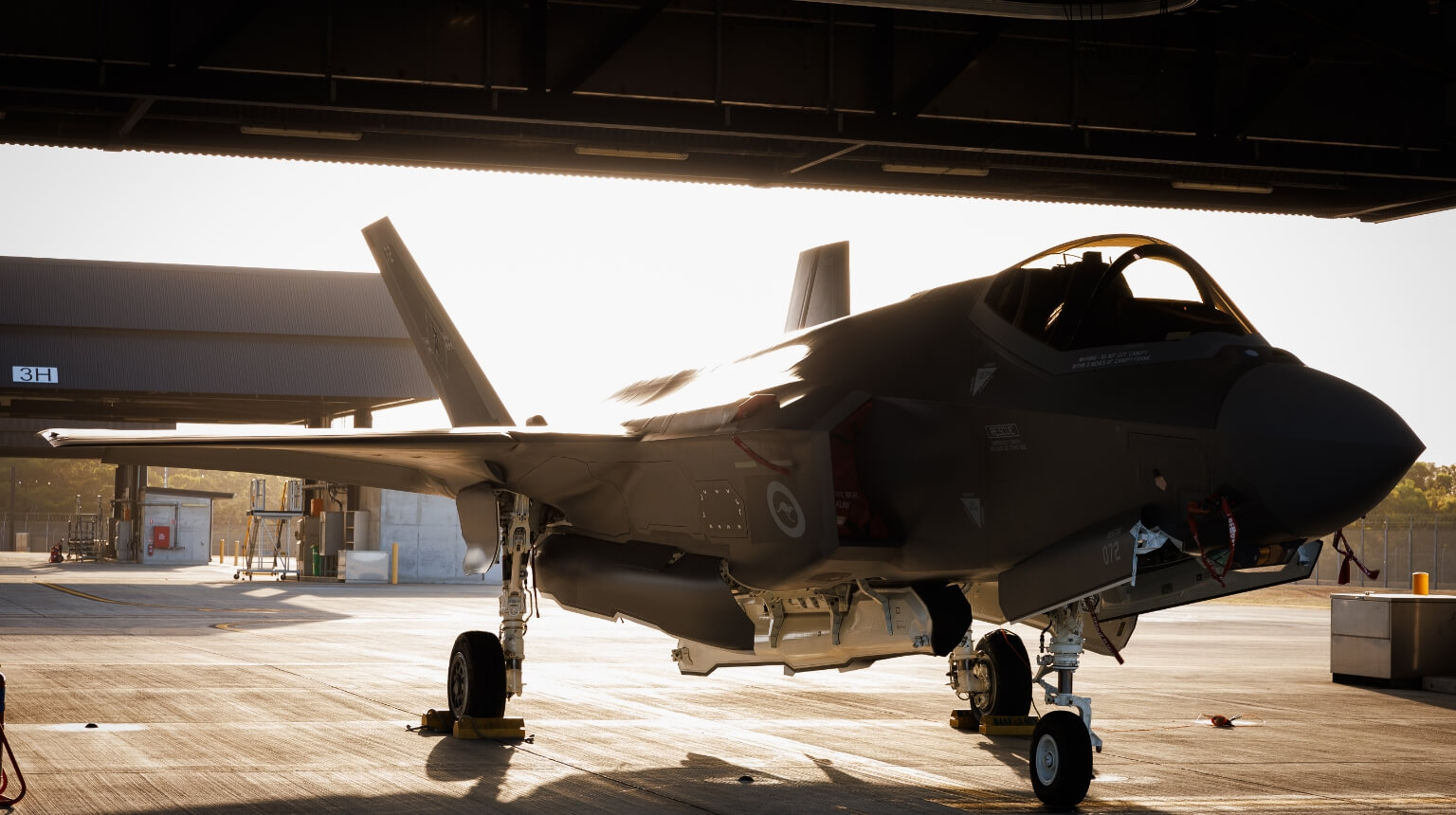


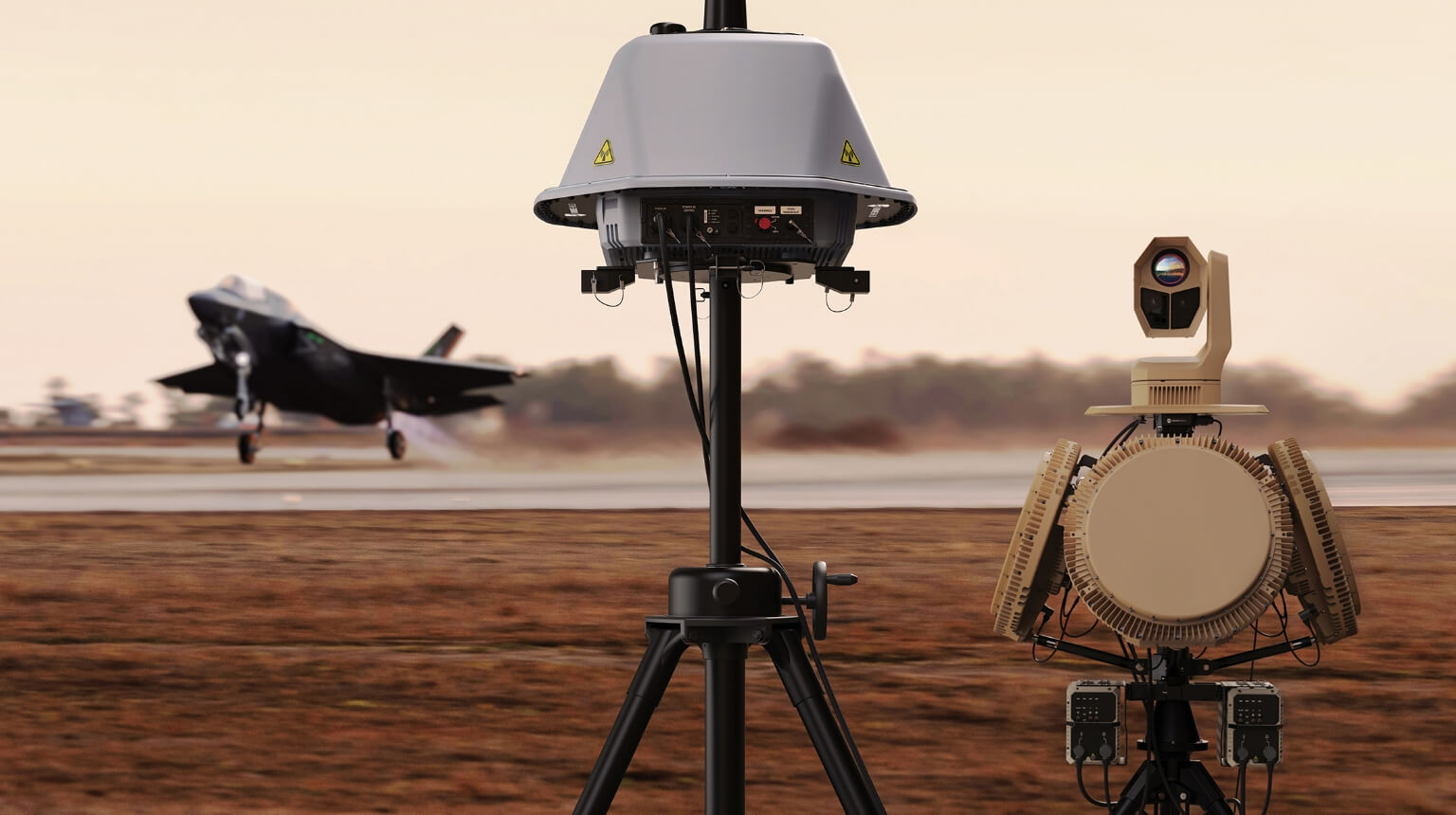
Military aircraft are most vulnerable on the ground. What is a potent and lethal threat at 30,000 feet is a sitting duck when it’s parked on a tarmac or taxying to or from a runway.
In the Second World War, this fact was exploited, particularly in the desert, where the newly developed Special Air Service and Desert Commandos mounted raids on German air bases, destroying hundreds of aircraft on the ground more efficiently than defeating them one at a time in the air.
Things have evolved in the modern technology era. An individual with a screen in front of them, controlling a drone, is now one of the biggest threats posed to static air bases and installations. That threat is only set to increase. Drones are cheap and easy to acquire, with the market for uncrewed aerial systems (UAS) projected to grow, with Australian authorities predicting that the number of drone flights will grow from around 1.5 million in 2023 to 60 million by 2043.
Recent experience in Ukraine has shown how easily a drone available on the civilian market can be repurposed as a military weapon, certainly one capable of destroying or disabling an advanced military aircraft. In fact, the Ukrainians used them for just such an attack in April last year, claiming six Russian aircraft destroyed and eight more damaged. Small drones with explosives rank with improvised explosive devices as the ultimate asymmetric threat: low cost, low risk to the operator, and able to target the weaknesses of far more expensive and advanced platforms.
Nefarious drone activity is on the rise, and airports – military and civilian – are a prime target. For example, as recently as November last year, several unidentified drones were spotted over three US Air Force-operated bases in the UK. In December, one of the US’ most critical bases, Wright-Patterson Air Force Base in Ohio, was closed for almost four hours due to drone incursion. While in these cases the US Air Force was unable to tell the intent of the drones, it was all too clear to Bulgarian authorities in February this year at Sofia International Airport where a drone incursion was determined to be a deliberate action targeted at disruption. Ultimately, a cheap $300 drone can disable or destroy a multimillion-dollar military aircraft on the ground, regardless of the aircraft’s stealth or prowess in the air.
These are threats Australia must consider, with our air bases home to millions of dollars’ worth of military aircraft.
- Oleg Vornik
There is a range of potential threat categories for small UAS, from nuisance activity through to surveillance, reconnaissance, targeting and potentially attack. These are threats Australia must consider, with our air bases home to millions of dollars’ worth of military aircraft. Even our bare bases like Learmonth, Curtin and Scherger regularly play host to some of the most advanced platforms, from our own F-35s to the most advanced aircraft of our allies, like the F-22 Raptor and B-2 Spirit from the US.
Protecting our air bases and military assets, then, is important, and so it is good to see the government’s commitment to project LAND 156, procuring a counter-UAS system for use by the Australian Defence Force. LAND 156 will likely include a variety of sensors connected to a C2 system for decision making and appropriate response to neutralise threats.
This is where DroneShield can help. We are a world leader in counter-UAS (CUAS) systems and a sovereign Australian company deploying world-leading technology to clients across the globe. As we speak, over 1,000 systems and components are deployed in Ukraine – sending back valuable lessons to our headquarters in Sydney to be incorporated into upgrades and our newer platforms. Ours is one of the largest dedicated CUAS technology development teams in the world, with over 200 engineers innovating at the speed of relevance, not requirements.
Our fixed-site DroneSentry solution is designed to protect large static installations like air bases. The solution integrates a range of optical, radar and radio frequency sensors, with edge computing systems and in-house developed SensorFusionAI. This is the sophisticated next-gen tech stack needed to provide a comprehensive drone protection and countermeasure solution. With automatic identification and response, the solution provides defence-in-depth and counters a wide variety of threats. Our solution is powered by DroneSentry C2, a command-and-control platform that is updated regularly and provides an intuitive experience for users, with real-time situational awareness and the use of multiple levels of AI to minimise cognitive burden and support rapid decision making.
DroneShield’s unique value proposition is our fully Australian approach, and our laser focus on CUAS technologies. All our engineering design and software development is conducted here by our team of engineers in Sydney and our hardware is 100 per cent manufactured in Australia. In service in over 70 countries across the globe, DroneShield’s products are mature and readily available solutions to Defence’s CUAS challenge.
We look forward to demonstrating our capability to you at the Avalon International Air Show at Stand 1K20.
Oleg Vornik is CEO and managing director of DroneShield.