

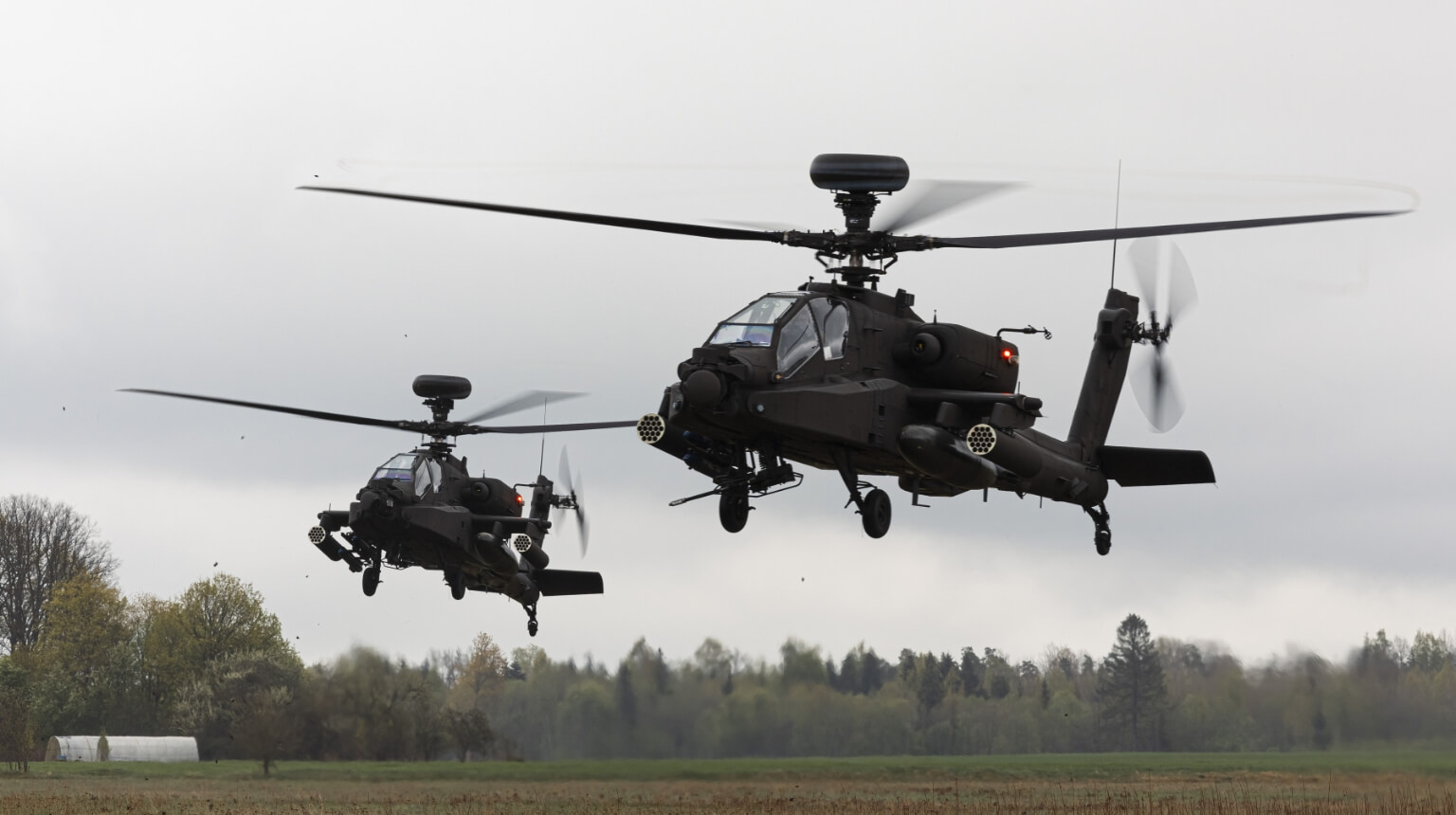
Under the LAND 4503 Phase 1 Armed Reconnaissance Helicopter Replacement program, Australia will acquire 29 Boeing Defence Australia-manufactured AH-64E Apache attack helicopters to replace its ageing ARH Tiger attack helicopter fleet as the country’s future attack helicopter.
It’s understood that the first fuselages are already underway at Boeing production facilities and the initial four aircraft are expected to be delivered by the end of this year. Under the program, Australia will become the 18th global customer to operate the attack helicopter.
The contract, through US foreign military sale, also includes ground support equipment, communications and sensor systems, information and communications technology, training systems, weapons and ammunition, support services, supply parts and spares.
Australia is unique as an international customer to receive the 'closest near exact example' of a currently in-service US Army Apache attack helicopter.”
Terry “TJ” Jamison, Boeing business development director for attack helicopter programs, speaking from Washington DC, says Australia is unique as an international customer to receive the “closest near exact example” of a currently in-service US Army Apache attack helicopter.
“(The Apache) is a combat-proven design. It continues to demonstrate the ability to absorb the newest capabilities throughout its life, enabling it to become a dominant element of the Army’s aviation force and a growing number of our international defence forces,” Jamison says during a recent AH-64E Apache capability briefing and Australian program update on 12 March.
“Here’s the hard truth, no drone or untrue platform or alone can do what an Apache can do today, particularly when you partner it with a drone or a unmanned aerial system capability … Each of the evolution of the Apache, whether it was from the Alpha to today’s Echo has delivered advanced helicopter capabilities that are operationally proven mature and low risk for optimised readiness.”
Helicopter “smarts” include Link 16 and other data links enabling sharing of information with other Apaches and ground command elements. It’s understood that the aircraft destined for Australia will use the 6.0 version software from delivery, with next generation 6.5 software currently being trialled for the US Army before being eventually upgraded for Australian models.
“The Link 16 data network, this is the ability for this aircraft to communicate, share situational awareness, provide targeting data across all joint four fighting capabilities on the battlefield through a secure network,” Jamison says.
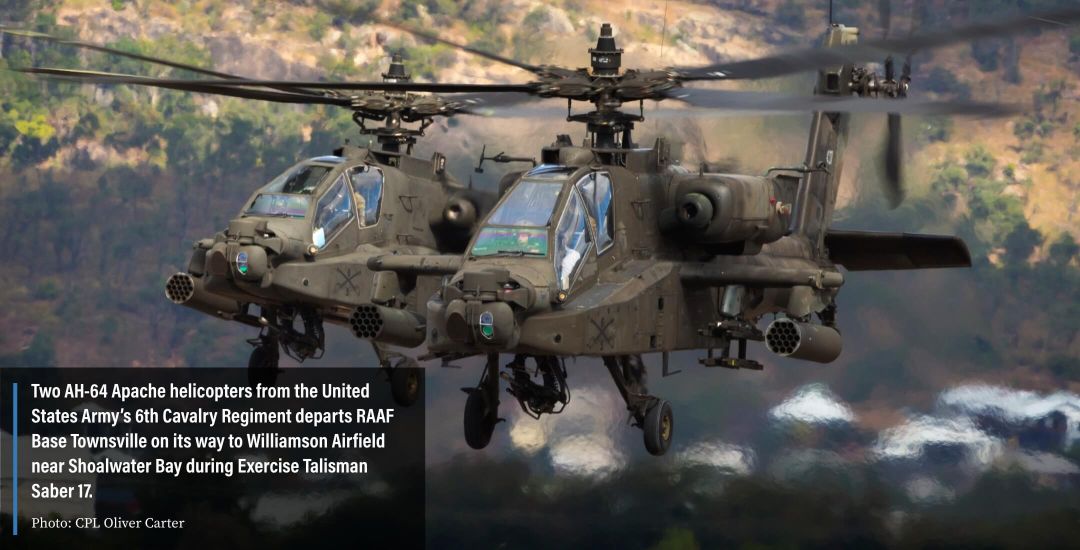
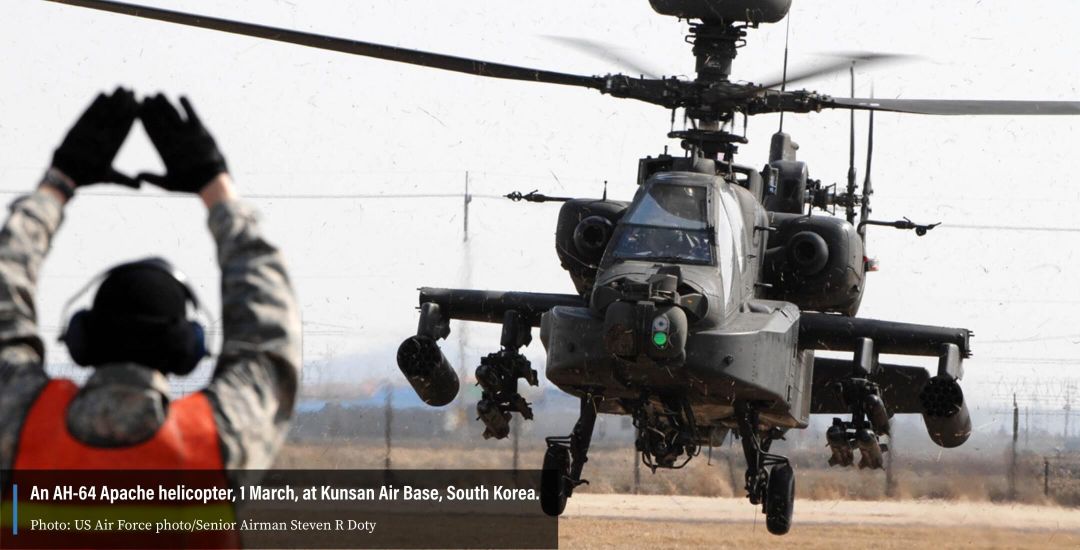
“Australia’s is getting 6.0 right now, but it will be a quick software add to update them to version 6.5 and the modular open system approach (MOSA) allows the seamless integration and update of software of new technologies into this aircraft as easily as your iPhone update in your home.
“MOSA has become a US Army requirement and we’re applying it to all of our version 6.5 aircraft, not just for the US Army before but all of our global customers as well. So this will again allow rapid integration of new technologies … These evolving technologies will ensure that this aircraft can stay relevant and dominant and adapt to the constantly changing conditions that we’re seeing on the modern battlefield.”
Already armed to the teeth, US Army AH-64 Apache attack helicopters have also reportedly been sighted with new Israeli-made Spike non-line-of-sight missiles in Iraq earlier this year. The first such instance of AH-64 Apaches operating in an active conflict zone with the modern weapons.
It’s understood that a new series of “launched effects” technology is also being developed by the US industrial base and US military for the aircraft.
There’s a lot of different ways to do (launched effects) … From a kinetic capability to electronic warfare capability … low-energy directed weapon.”
- Terry “TJ” Jamison
“The key to the next fight is going to the partnership between the crewed and the uncrewed platforms. Launch effects are being developed specifically for attack helicopters to operate and control. The launch effects greatly extends the range reach situational awareness without any survivability (detriment) of the attack helicopter fleet,” Jamison says.
“Launch effects are best described as small, medium and large class, unmanned attritable autonomous to semi-autonomous capabilities. They have a variety of payloads, from sensors, lethality and there’s even a counter-drone payload in the medium class of launch effects. They can be launched from attack helicopters or mules (cargo or carrier aircraft).
“There’s a lot of different ways to do (launched effects) … From a kinetic capability to electronic warfare capability … low-energy directed weapon.
“I can see in the future where you might even have a Loyal Wingman type mule capability that would carry these for you and preserve the stowed kills that you have in the Apache. So, the sky’s the limit and quite frankly, there’s a lot of different capabilities being developed. A lot of US Army energy is being spent on these right now and it’s a top priority program.”
The Australian Department of Defence has previously announced that the incoming Apache helicopter fleet will be based in Townsville from 2025.
Operationally, the Australian Defence Force is expected to deploy each helicopter in combat pairs with a mixed configuration of longbow radars and upper receivers, under a similar strategy to that employed by the United Kingdom.
“We’re on track at the moment (for Australia’s Apache program), we’re operating inside the Commonwealth systems, processes and tools, and we’re on track with all our staffing in each of those areas, in the three centres,” says Tony Scott, Boeing Defence Australia Apache program manager, speaking on 12 March.
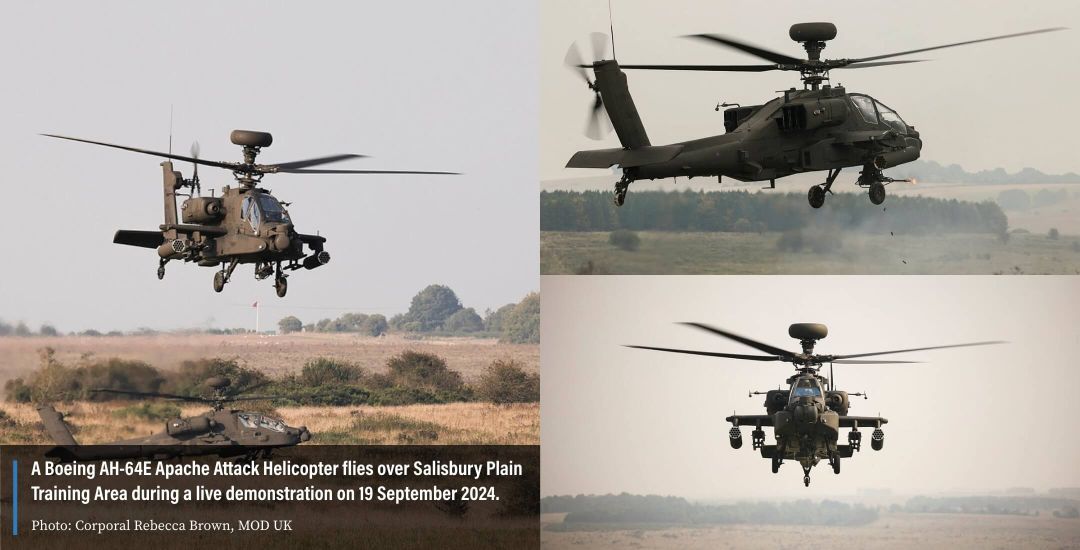
“The first four aircraft, as well as the entire Australian fleet and all new Apaches, will contain parts from Australian suppliers … We’re on track to receive our first four aircraft at the end of this year.
“The next cab off the rank for us is establishing the training pipeline for the next generation of technicians here in Australia. And we’re working on that with the Commonwealth about how to do that, and we look forward to making further announcements on that in the near future.”
Attack helicopters have been a mainstay of military forces for decades although recent discussion has questioned whether their famed destructive power in warfare is warranted or waning.
Speaking at a recent United States Military Academy West Point address, American special government employee and global businessman Elon Musk questioned the possible disadvantages of having personnel and crewed systems, such as helicopters and fighter jets, on the frontlines of the modern battlefield.
“My personal belief is that it’ll actually be too dangerous to have humans at the front. It’s drones at the front,” he says.
“At the front of the battle line, it’s just going to be just drones, and any humans caught in the crossfire are going to get killed … If you make the choice to be there, then you’re at a significant disadvantage.
“I’m not sure there’s a lot of room opportunity for fighter pilots. Because I think if you’ve got a drone swarm coming at you, the pilot’s a liability in the fighter plane, to be honest … If you compare a drone versus a fighter plane, how easy is it to make a drone? It’s an order of magnitude, maybe a hundred … At least 10, maybe a hundred times easier to make the drone, and you can afford to sacrifice the drones.”
Christina Upah, vice president of Attack Helicopter Programs and senior Boeing Mesa site executive, says there’s been a lot of “drone talk” lately but no drone or uncrewed platform can do what the Apache does today.
“This amazing piece of engineering has proven its mettle time and time again, evolving to meet the demands of the changing battlefield. That’s why over 1,300 Apaches are flying in service to 18 nations today and will continue doing so for decades more to come,” she says.
“Looking to the future, we don’t think it’s a matter of crewed platforms or uncrewed platforms, but crewed platforms and uncrewed platforms working together safely and seamlessly. You can count on Team Boeing to continue integrating the latest technologies onto the Apache so our customers can maintain the decisive mission advantage no matter the threat.
“We’re not just going to build and sustain the future fleet of 29 aircraft for Australia, but with Australia. I’ve been nothing but impressed by our Australian suppliers’ expertise, passion and commitment to our shared mission of building the world’s best attack helicopter.
“Axiom Precision Manufacturing, Cablex Pty Ltd, Ferra Group, Mincham, Rosebank Engineering and Thomas Global Systems are truly world class and together, we are strengthening Australia’s defence and Australian industry capability.
“Boeing is proud to support such an important customer and United States ally, and we look forward to sending Australia’s first Apache down the production line in 2025.”