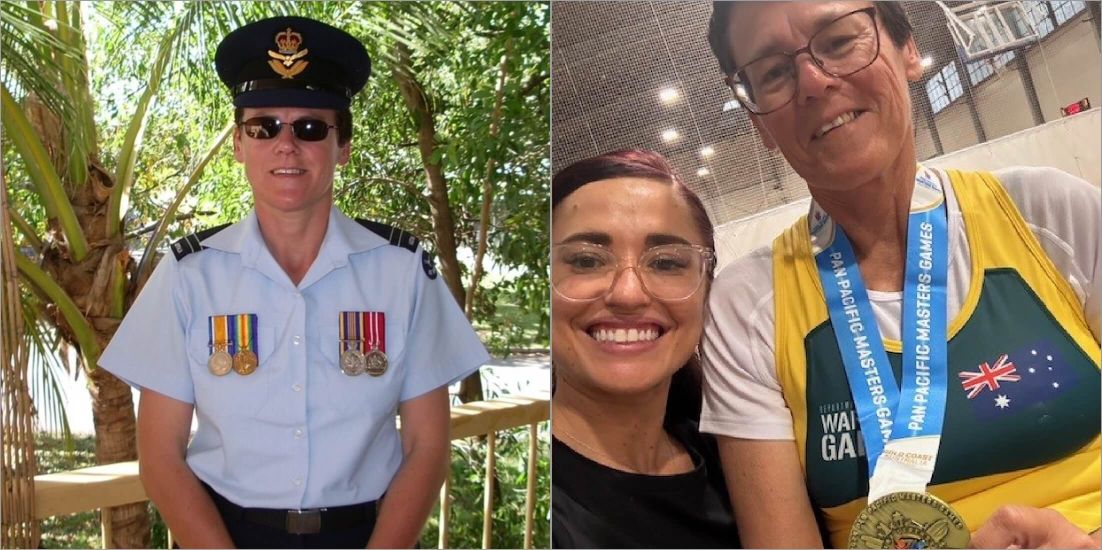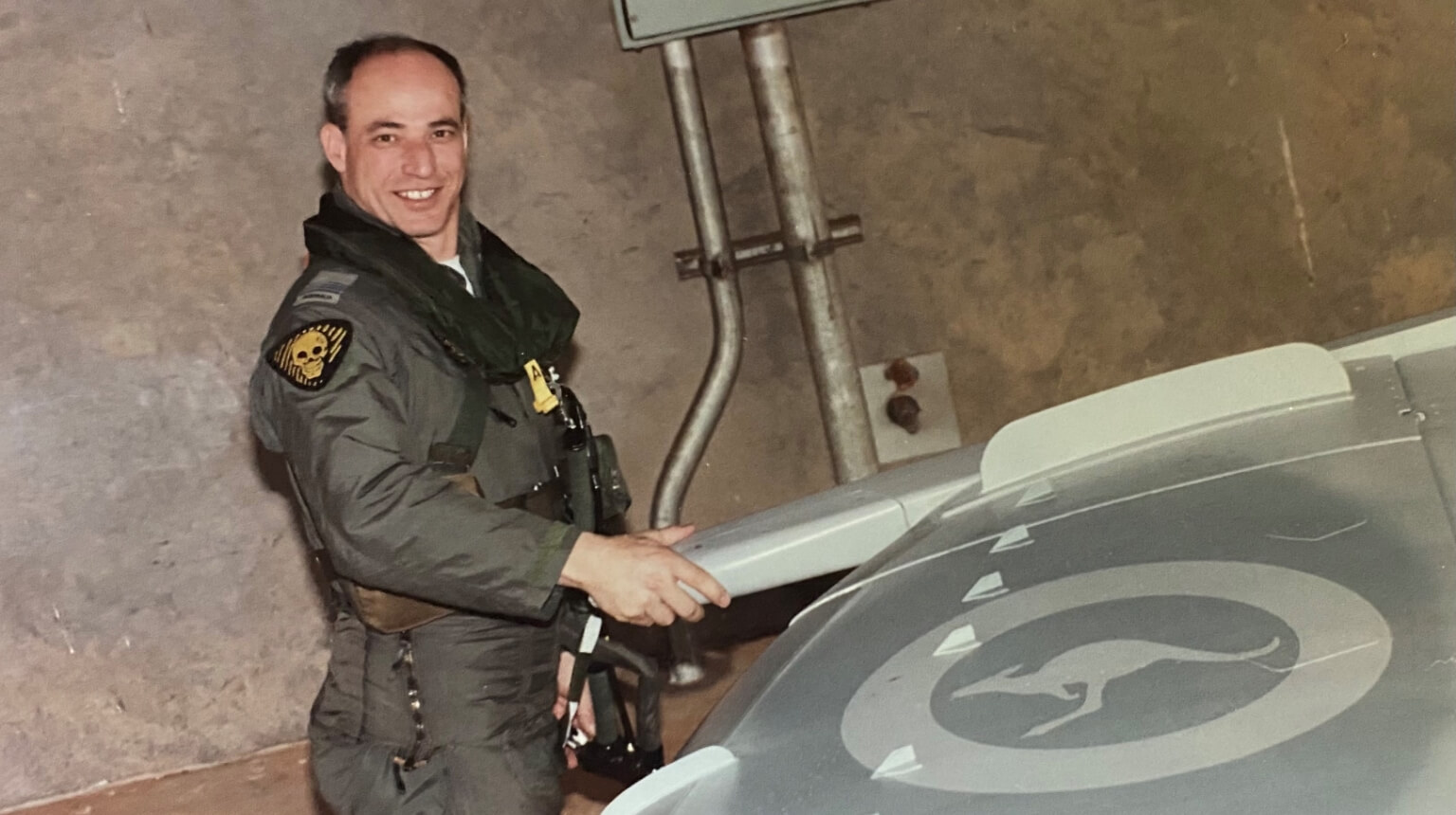


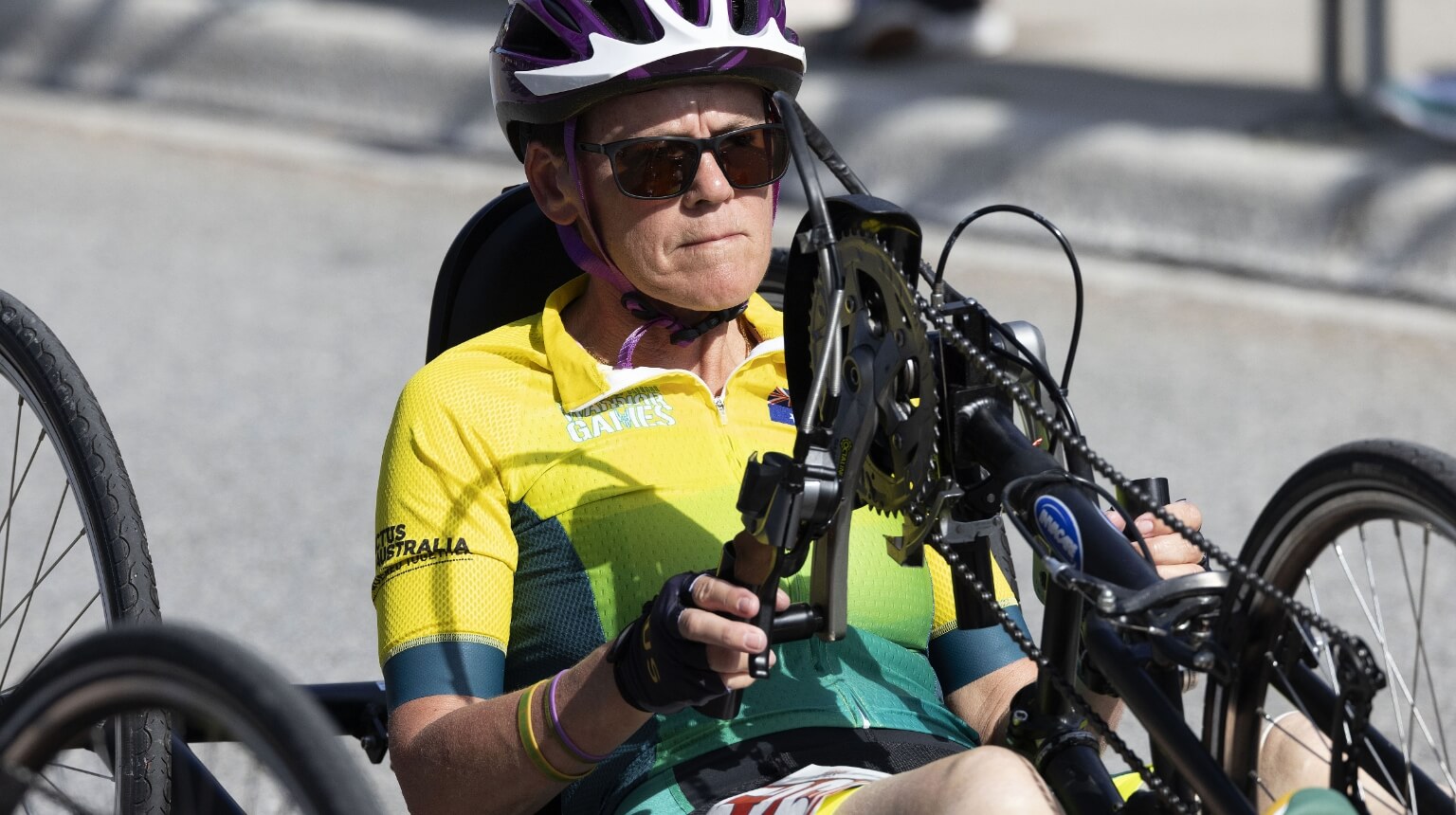
Diane Jackson has always been drawn to sport. A lifelong competitor, she played hockey at a high level with the Australian Defence Force.
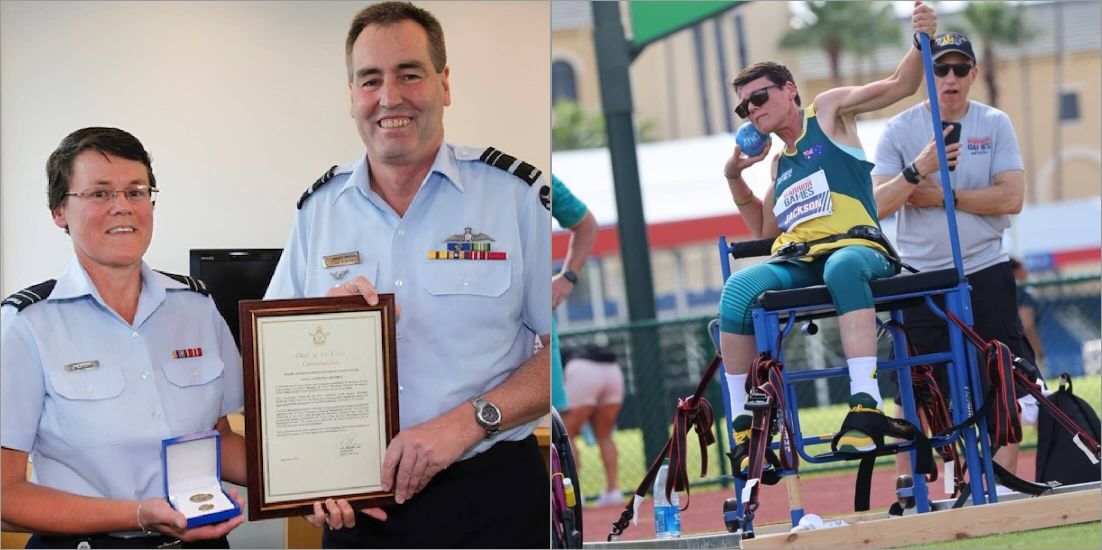
She joined the Royal Australian Air Force in 1990 as a supply clerk serving in Darwin and Amberley doing roles such as procurement, air movements and squadron logistics. In 2001 she commissioned to become a logistics officer serving in Darwin, doing roles such as tri-service logistics, catering, base operations and air movements. Her final posting to Canberra in 2010 saw a shift in skill set, with her taking on a role in work, health and safety.
Building muscle capacity really helps me face the challenges of my illness, the theory is that you can delay progression by increasing muscle mass.”
- Diane JacksonAdvertisementAdvertisement
Jackson held the position of hazardous chemicals project manager until her medical discharge in 2017. While serving she also attained a master of technology management (air transport management) and a master of aviation (human factors).
Her sporting journey took on even greater significance following her medical discharge from the Royal Australian Air Force (RAAF) in 2017 due to hereditary spastic paraplegia, a degenerative condition that progressively weakens the lower limbs.
“Building muscle capacity really helps me face the challenges of my illness, the theory is that you can delay progression by increasing muscle mass,” Jackson says.
Despite facing the challenges of her diagnosis, like spasticity, foot drop and neurogenic pain, she remained committed to staying active. Upon her discharge from the RAAF, Jackson took to lawn bowls and powerlifting to keep her active, strong and connected post service.
The role of sport in recovery
Jackson’s drive to stay active led her to the DoD Warrior Games Florida in 2024, an adaptive sports competition for current and former military personnel. The experience not only reignited her competitive spirit but also reconnected her with the camaraderie of service.
“The military is your family. When you discharge, it can feel like that family is gone. Sport helps you find that group again, where people understand military service, share your interests and support one another.”
Initially hesitant to apply, Jackson was encouraged by her physiotherapist who pushed her weekly to submit her application. “She nagged me every week to put it in. She said I should just put my name forward and see how it goes, then I got accepted!”
Competing alongside other veterans was life-changing. “They challenge you and inspire you to try things you never thought achievable.”
Research from the Invictus Games Foundation’s Beyond the Finish Line report highlights the critical role sport plays in veteran wellbeing, social connection and mental health. Jackson’s journey is proof of its power. For many veterans, structured sport programs provide not only a pathway to physical rehabilitation but also a renewed sense of purpose, direction and belonging – key factors in navigating the transition to civilian life.
Finding freedom in sport
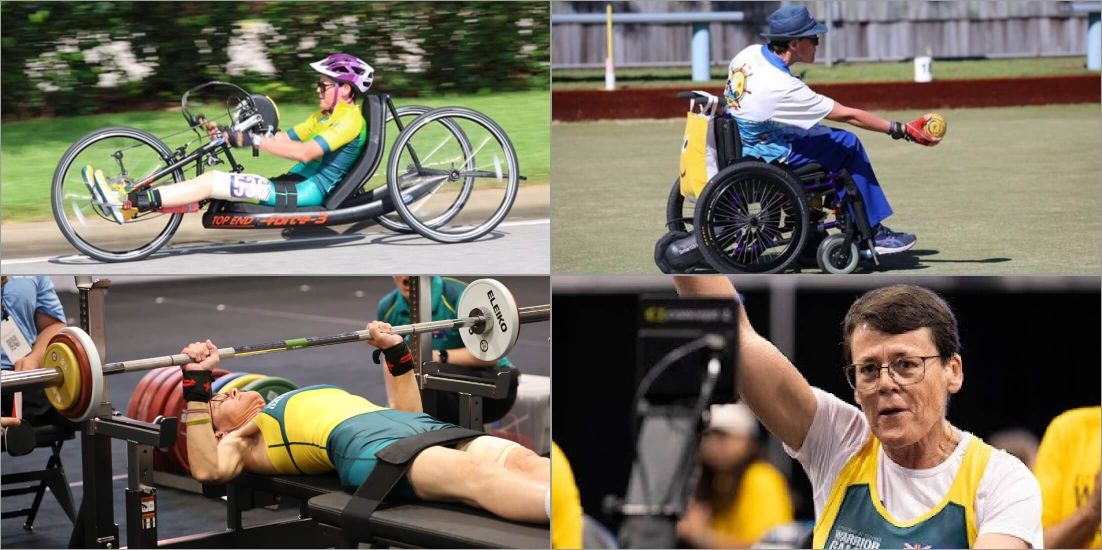
Since discharging, Jackson has explored multiple sports. Lawn bowls keeps her engaged with her community, archery and hand cycling help her focus on upper body precision and control, while powerlifting has pushed her to new personal bests. She recently competed in powerlifting at the Pan Pacific Masters Games alongside 64 other veterans competing in Team Veteran with the support of Invictus Australia, taking out the gold in her category.
For Jackson, archery and hand cycling were new sports which she came across during her Warrior Games experience. She picked up a bow for the first time at a training camp and competed in hand cycling at the Warrior Games. Now, archery has become a key focus for Jackson and she has been identified in the Green and Gold Talent Search, run by Archery Australia and the Australian Institute of Sport, as a potential paralympic pathway athlete. She’s following similar paths for hand cycling and powerlifting too, driving her to continue to train and utilise the power of sport to propel her forward with purpose.
“I never thought archery would be something I’d be able to competitively take up, but the Warrior Games gave me the opportunity to try. Now, it’s an exciting new challenge for me, and I want to see how far I can go.”
Sport has also provided Jackson with structure and clear goals. Whether it’s training for her next powerlifting meet or refining her archery technique, she believes that having something to strive for keeps her motivated and engaged.
“Sport gives you focus. It pushes you to train, improve, and set new goals. Without it, I think the transition out of service would have been much harder.”
The importance of community
Post-Warrior Games, Jackson has stayed connected with fellow competitors, drawing inspiration from their sporting journeys. “It’s great to see what people are still doing with their sport. It really is inspiring and pushes me to step out of my comfort zone and do my best too.”
Her husband, Russ, has been a constant source of support, ensuring she has the training spaces and equipment she needs. She is also greatly supported by Driven Athletica and Physio Plus. “You never do these things on your own, there’s always people alongside you, supporting you.”
Jackson also acknowledges the importance of adaptive sport programs in ensuring veterans like her have access to opportunities. “Programs like the ADF Adaptive Sport Program and Invictus Australia help people understand what’s possible. Without them, many veterans wouldn’t know where to start.”
Looking ahead
Focused on powerlifting and archery, Jackson remains determined to push her limits. Her next goal is to qualify for major para competitions and continue proving to herself and others that a diagnosis does not define one’s potential.
Her advice to other veterans is simple: “Give it a go because you’ll never look back. Find a pathway, follow it and see how far you can go. And don’t take no for an answer, just keep pushing ahead and achieving what you want to achieve.”