

With great-power tension surging in our northern approaches and conflict warning times shrinking below a decade, the RAAF must quickly evolve. The Defence Strategic Review (DSR) reframes Australia’s strategy around denial: making an adversary’s aggression prohibitively costly.
RAAF planners are now focused on expanding range, agility and lethality – from bolstering long-range strike to mastering unmanned systems – in order to defend the nation and deter war.
In the words of the Australian embedded officer and Deputy Commander in the US Indo-Pacific Command, Air-Vice Marshal Carl Newman, the new strategy is clear: Australia “must protect itself, deny any adversary’s attempt to project force through its northern approaches”.
RAAF planners are now focused on expanding range, agility and lethality – from bolstering long-range strike to mastering unmanned systems – in order to defend the nation and deter war.”
The review’s authors envisage an Australia that wields credible air power across the vast Indo-Pacific. Key recommendations include hardening and networking northern air bases and integrating new long-range munitions.
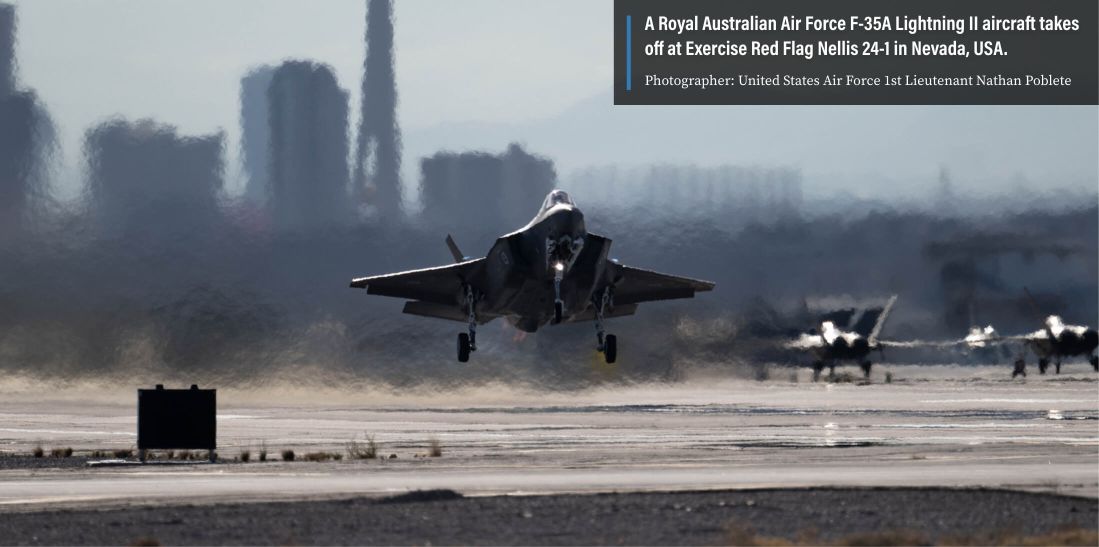
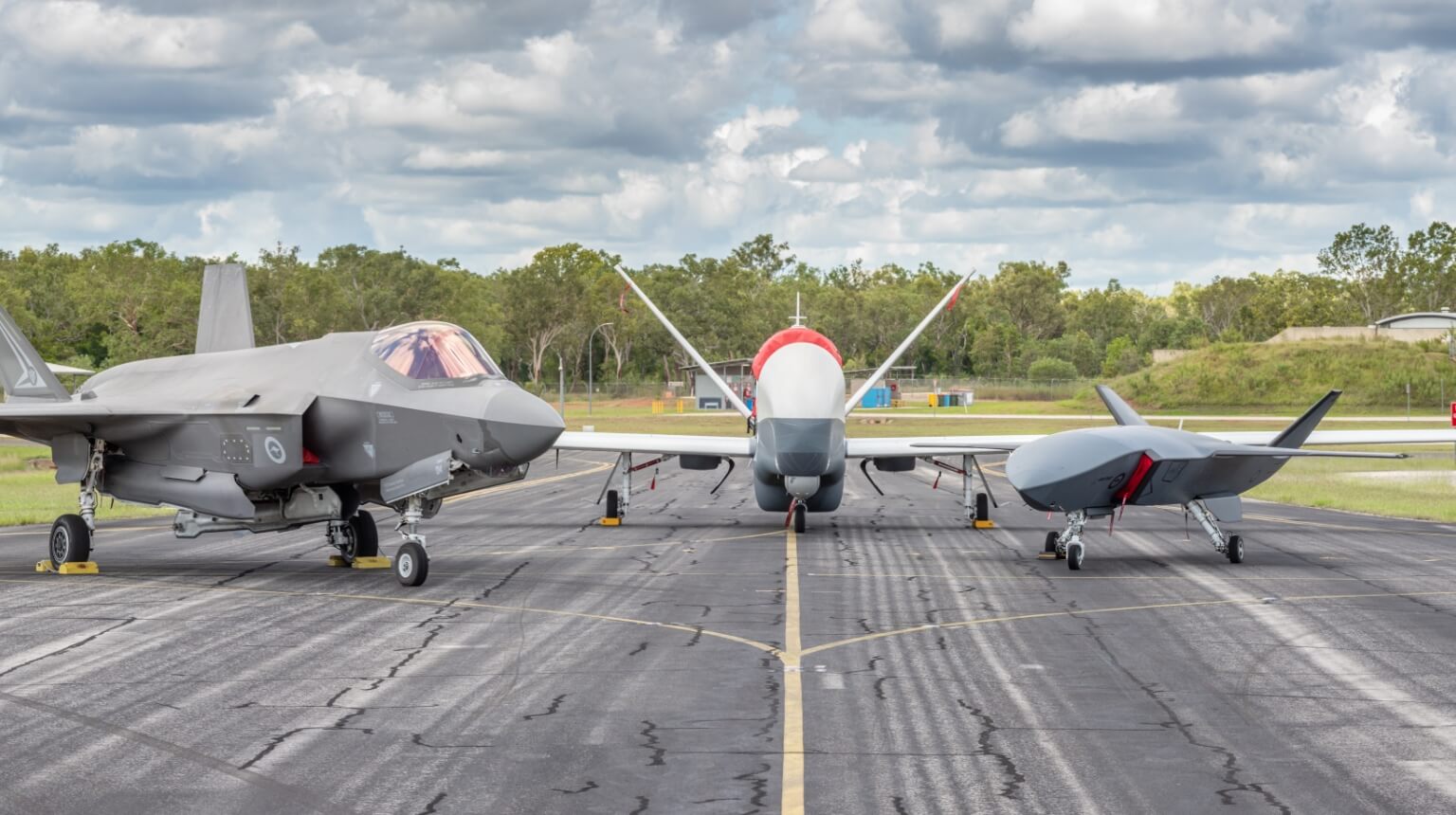
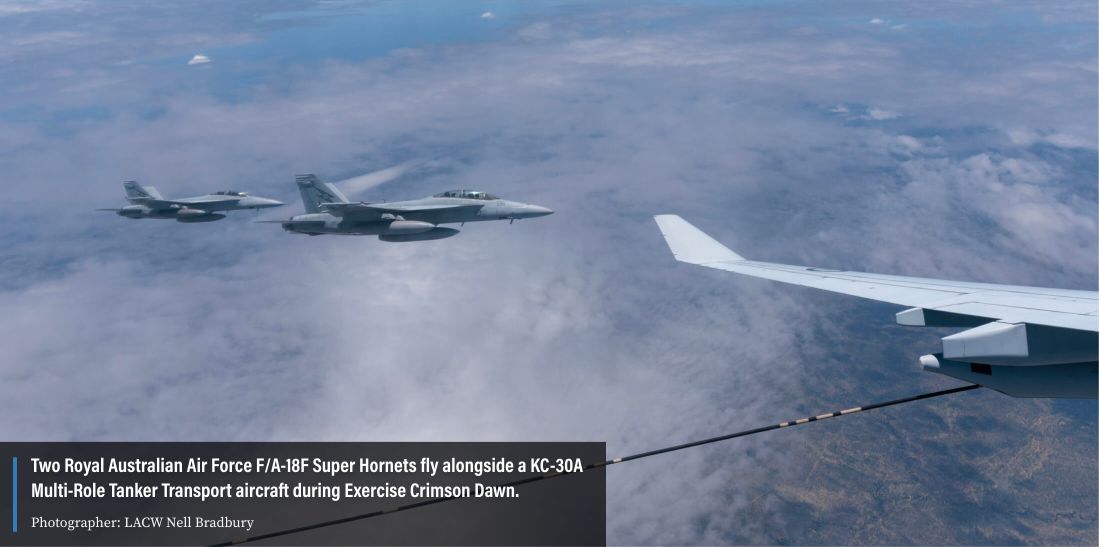
The RAAF will continue deploying fifth-generation jets – now 72 F-35A Lightning II in service plus 24 Super Hornets and 12 EA-18G Growlers – but with fresh emphasis on stand-off weapons.
For example, the AGM‑158C long-range anti-ship missile is being integrated onto Super Hornets and F‑35s, and the F-35 will soon field the Norwegian Kongsberg Joint Strike Missile (JSM).
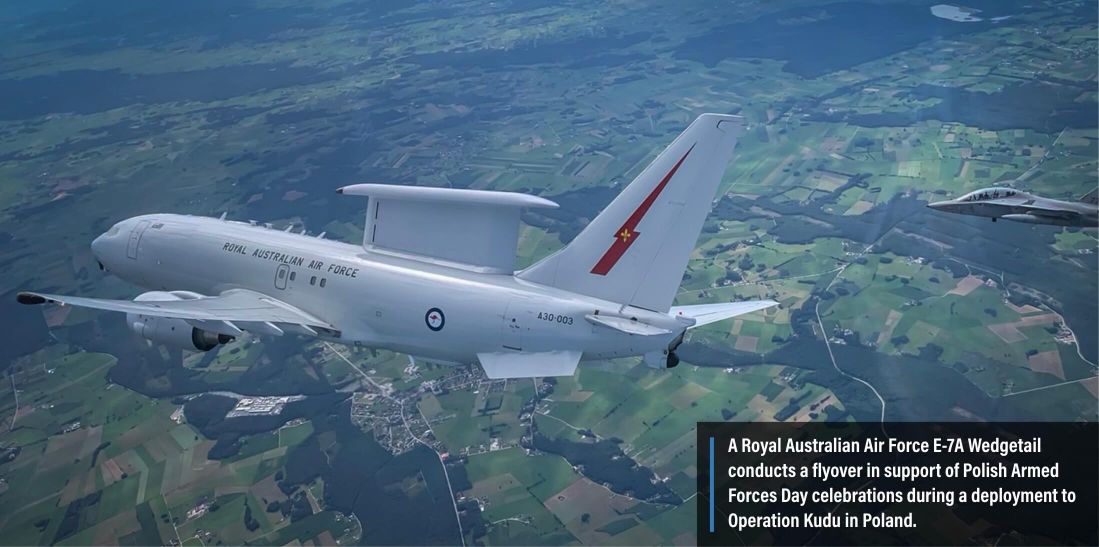
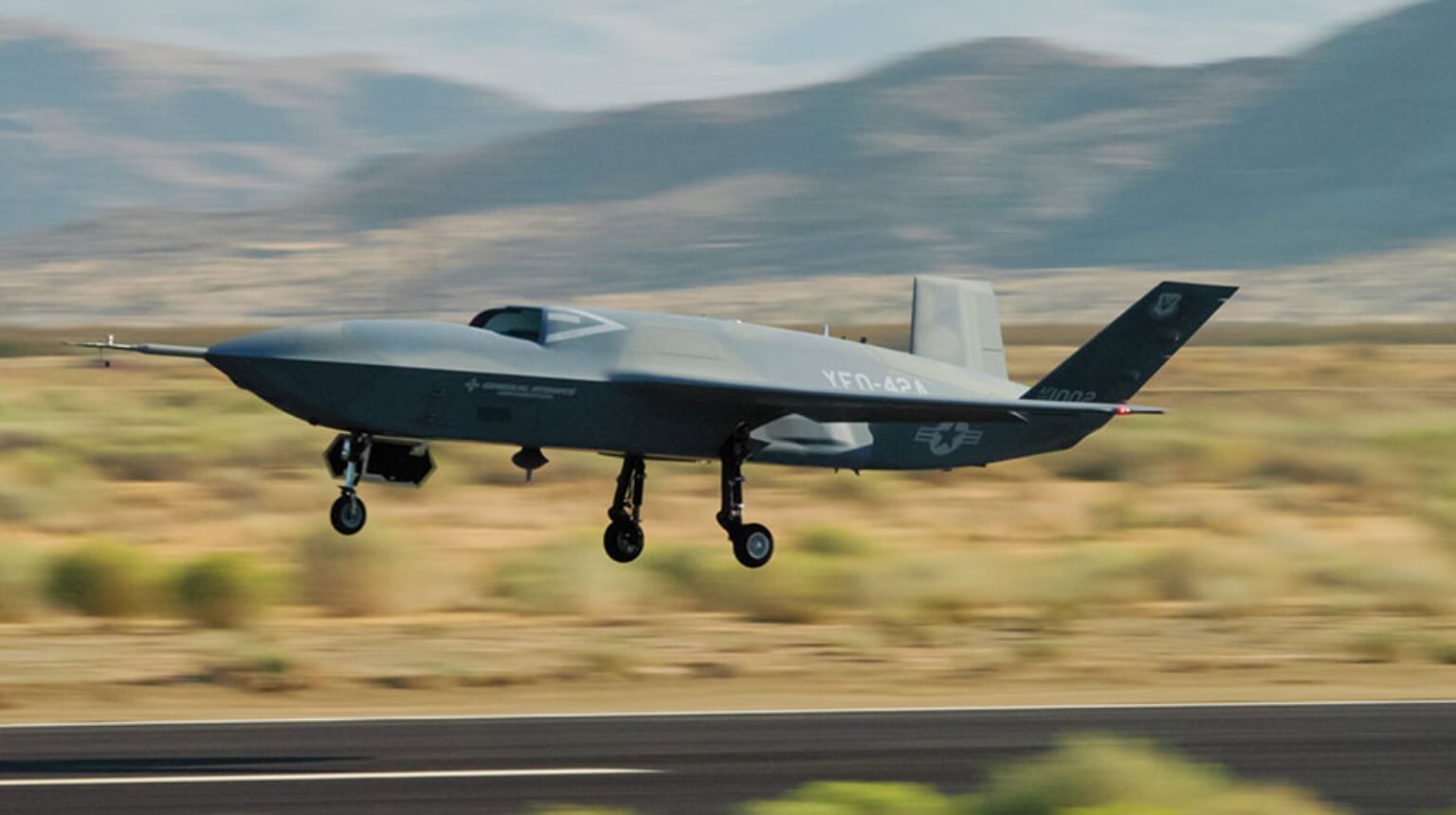
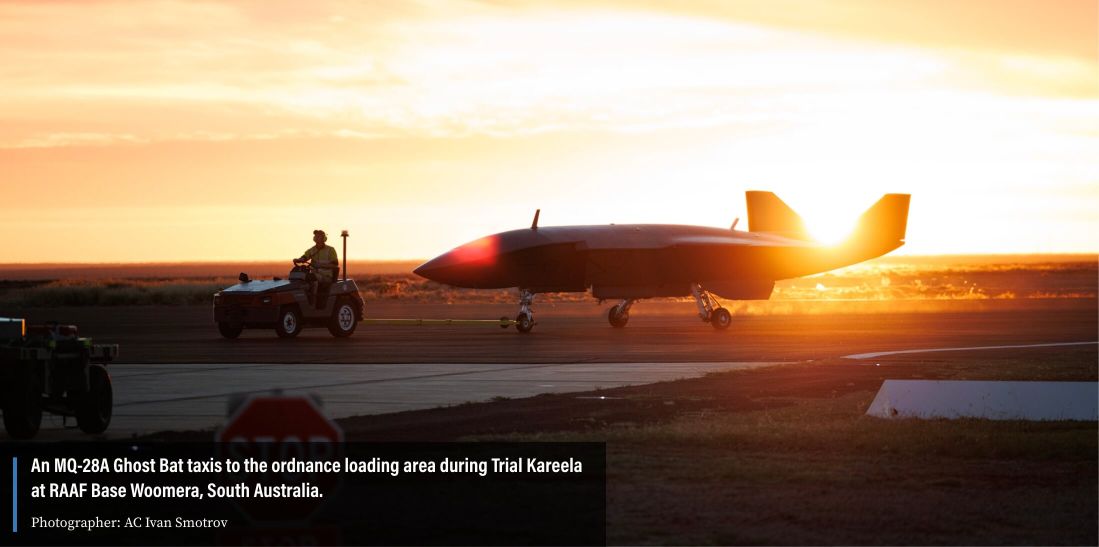
Even the government’s drone program is explicitly aimed at expanding RAAF “fighting depth”. As Defence Minister Richard Marles proudly notes, the Australian-designed MQ-28A Ghost Bat “has successfully engaged an aerial target with a live weapon”, acting as a loyal wingman to an RAAF F/A‑18F and E-7A in recent trials.
The 2024 National Defence Strategy makes “investment in uncrewed and autonomous systems” a priority, with over $10 billion set aside for drones over the next decade. “Australia is at the forefront of efforts to develop and field autonomous Collaborative Combat Aircraft to provide asymmetric advantage,” Minister Marles says after Ghost Bat’s live-fire success.
In short, the RAAF is doubling down on high-tech quality: stealth fighters working alongside attritable drones, backed by new cruise missiles.
Force generation as a tool of deterrence
Yet the DSR also recognises that numbers matter in denial. Unlike China’s air force (the People’s Liberation Army Air Force plus Naval Aviation, now over 3,150 aircraft, including some 2,400 fighters and attack planes), the RAAF is small.
Australia fields roughly 320 manned aircraft (including training and transports), of which around 108 are modern combat jets (F‑35s, Super Hornets, Growlers, Wedgetails). By comparison, Japan’s Air Self-Defense Force operates about 260 manned combat aircraft (mix of F-15Js, Mitsubishi F-2s, and soon ~100 F-35s).
Australia’s decision makers accept this disparity, emphasising that credibility comes from cutting-edge capability and readiness. AIRMSHL Chipman sums it up: “Force Generation” is itself a tool of deterrence.
It means having “the right people and the right capability” fully trained and ready so that when called upon, the RAAF can “generate, deliver and sustain highly effective air power”.
In practice, this has translated into an RAAF posture of agility and resilience. The Air Force has embraced agile combat employment, dispersing squadrons across multiple locations to complicate an enemy’s targeting.
The RAAF’s Air Commander reports that exercises now involve deploying aircraft “across various ‘bases and places,’ making it challenging for hostile forces to target RAAF air assets effectively”.
This dispersed posture is most developed in the north (Tindal, Darwin) and even into allied territory for force projection. For example, in 2024, RAAF F-35s trained alongside US B-52s in Guam, and RAAF crews practiced hot-pit refuelling of United States Air Force F-22 Raptors in Western Australia during Exercise Pitch Black.
Such deployments not only enhance deterrence but also practice the future reality of coalition warfare. As one RAF officer notes after a recent US-led exercise, the UK, Australian and US forces “came together seamlessly to command and control … a force that was able to punch well above its already considerable weight”.
These words ring true: teaming with allies exponentially multiplies Australia’s weight in any conflict.
However, operating at these high tempos and from austere locations exposes risks. The JIPA analyses that has followed the DSR warns of vulnerabilities in sustaining air operations.
The RAAF currently relies heavily on overseas supply chains for spares and munitions. In a real conflict, traditional suppliers could be cut off, making resupply uncertain. RAAF planners are therefore working to mitigate this: stockpiling critical parts for at least 6–12 months, expanding Australian production of key weapons and simplifying designs where possible.
For instance, Australia will start assembling rockets for the High Mobility Artillery Rocket System domestically from 2025 and is exploring final assembly of complex missiles to boost resilience.
Analysts even suggest how the RAAF might adapt Western missiles to use simpler electronics (much like Russia has done) to keep production going under sanctions or supply chain constraints.
On airbase defence, the DSR notes that current anti-air cover is adequate against drones and cruise missiles but lacks counter-ballistic missile capability.
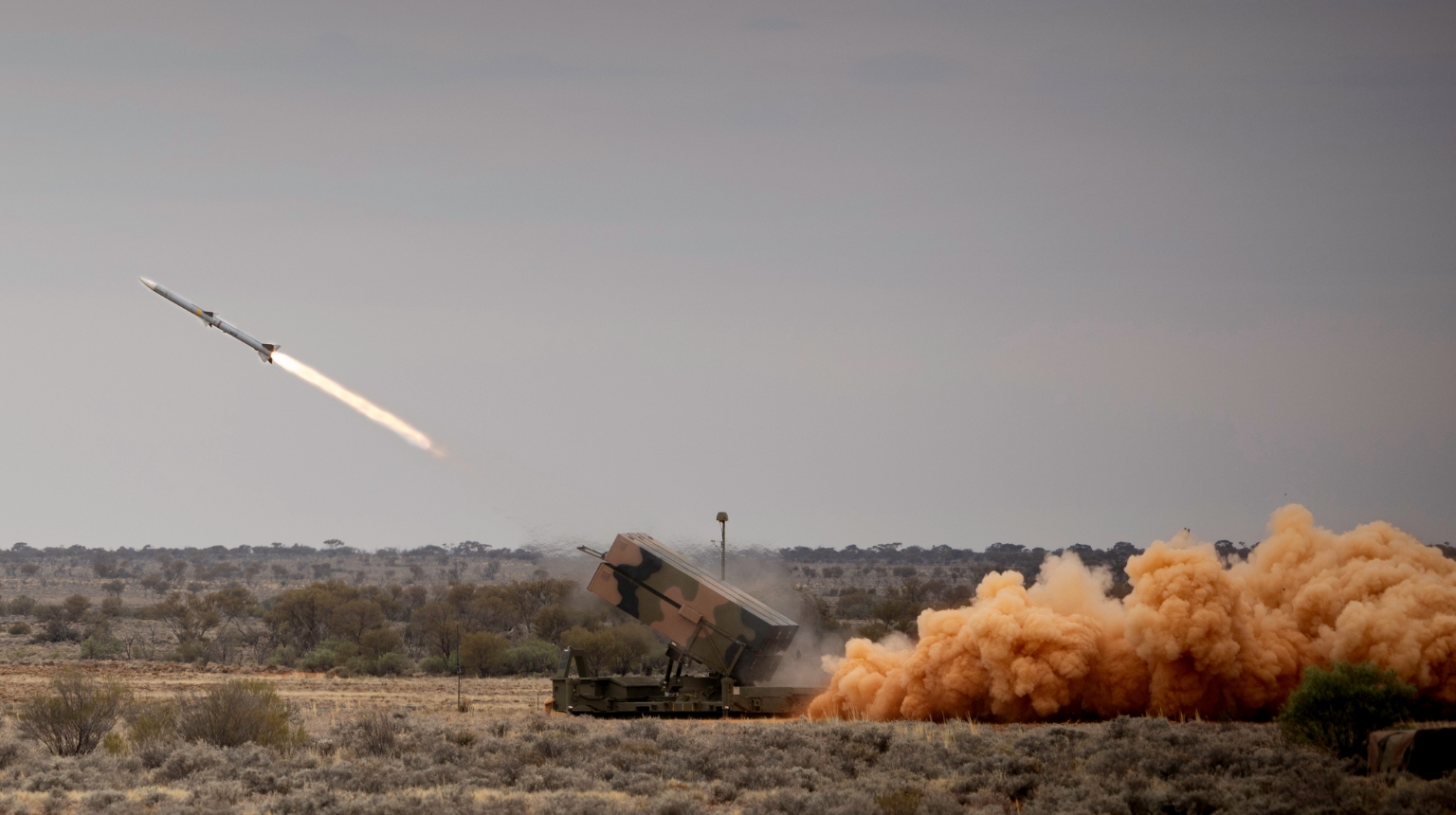
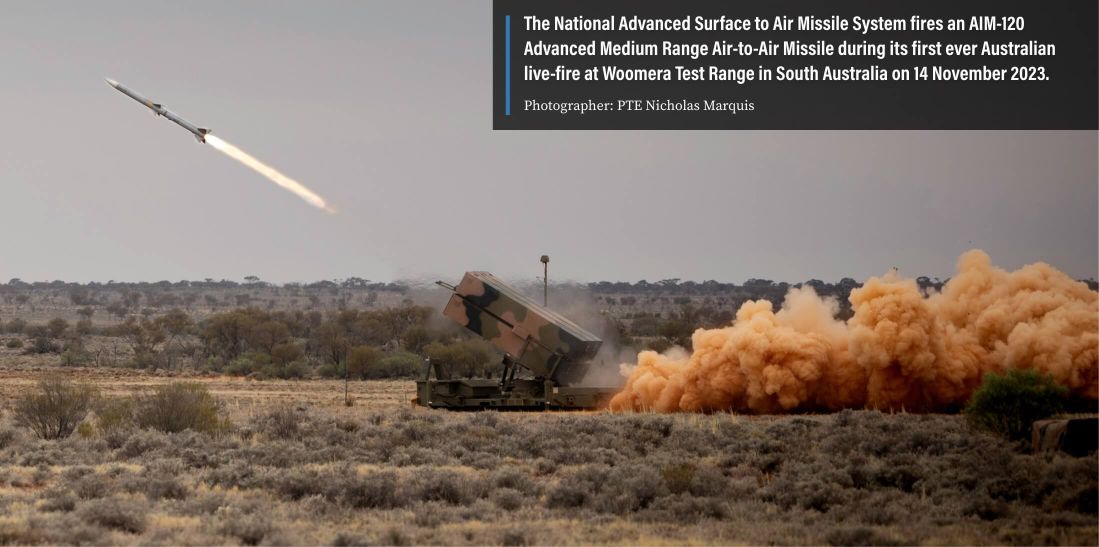
Upgrades are planned: the Army’s new National Advanced Surface-to-Air Missile System will layer in medium-range SAMs and the Integrated Investment Program budget’s new integrated air/missile-defence sensors and command systems.
These measures aim to ensure northern bases (long considered an Achilles’ heel since the Darwin raids of 1942) can weather sustained attack.
Scale of growth
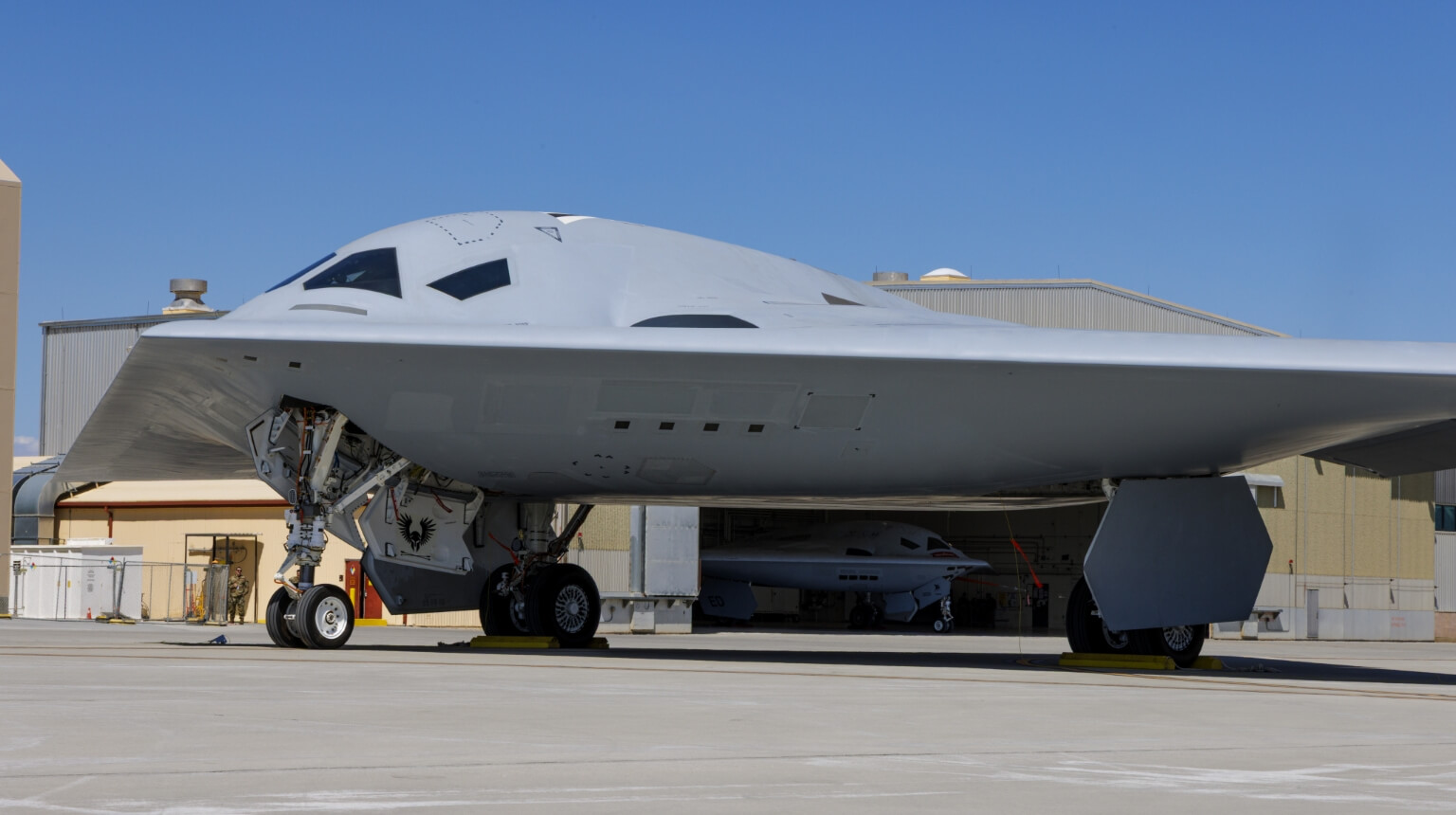
A key uncertainty remains scale of growth. The RAAF cannot instantly conjure hundreds of extra jets or pilots, but it is exploring every viable path. The DSR explicitly has rejected ultra-expensive “aircraft carriers for the air” like the US B-21 bomber for Australia.
Instead, it leans on distributed warfare: drones, distributed anti-ship missiles and tighter integration.
Nevertheless, some expansion is implicit. Long-range stand-off strike will grow: more AGM-158C and JSMs, perhaps even additional strike aircraft (the F-35 fleet is still building to 72 and could rise if budget permits).
Collaborative programs may help; for example, the AUKUS partners might share datalinks or even invite Australian participation in future platforms.
The RAAF’s global pilot exchanges (embedded officers with the Pacific Air Forces, NATO etc.) are preparing an ecosystem of coalition support if the need arises.
Compared with major allies and neighbours, the RAAF’s strengths and limitations are clear. The US Air Force dwarfs all with over 2,000 combat aircraft and a massive bomber fleet, but Australia’s focus is regional defence, not global reach.
The Royal Air Force, similarly, has modern Typhoons and growing F-35B squadrons (107 Typhoons plus 48 F-35Bs today), but the UK is now betting on the future Tempest/Global Combat Air Programme (GCAP) sixth-generation fighter.
In contrast, Australia has no immediate sixth-gen project of its own; its effort goes into making existing assets resilient. In Asia, Japan is moving fastest: about 260 fighters including its new F-35s and co-developing Tempest under GCAP. China’s PLA Air Force/PLA Navy aviation is numerically overwhelming (thousands of jets, including dozens of J-20 stealth fighters), but much of it is older design. Australia’s air doctrine acknowledges this: instead of air “parity”, it seeks proportional denial, leveraging geography and technology.
In practice, RAAF crews will seek to operate behind the layered missile barrages, electronic warfare screens, and allied support that Western forces bring.
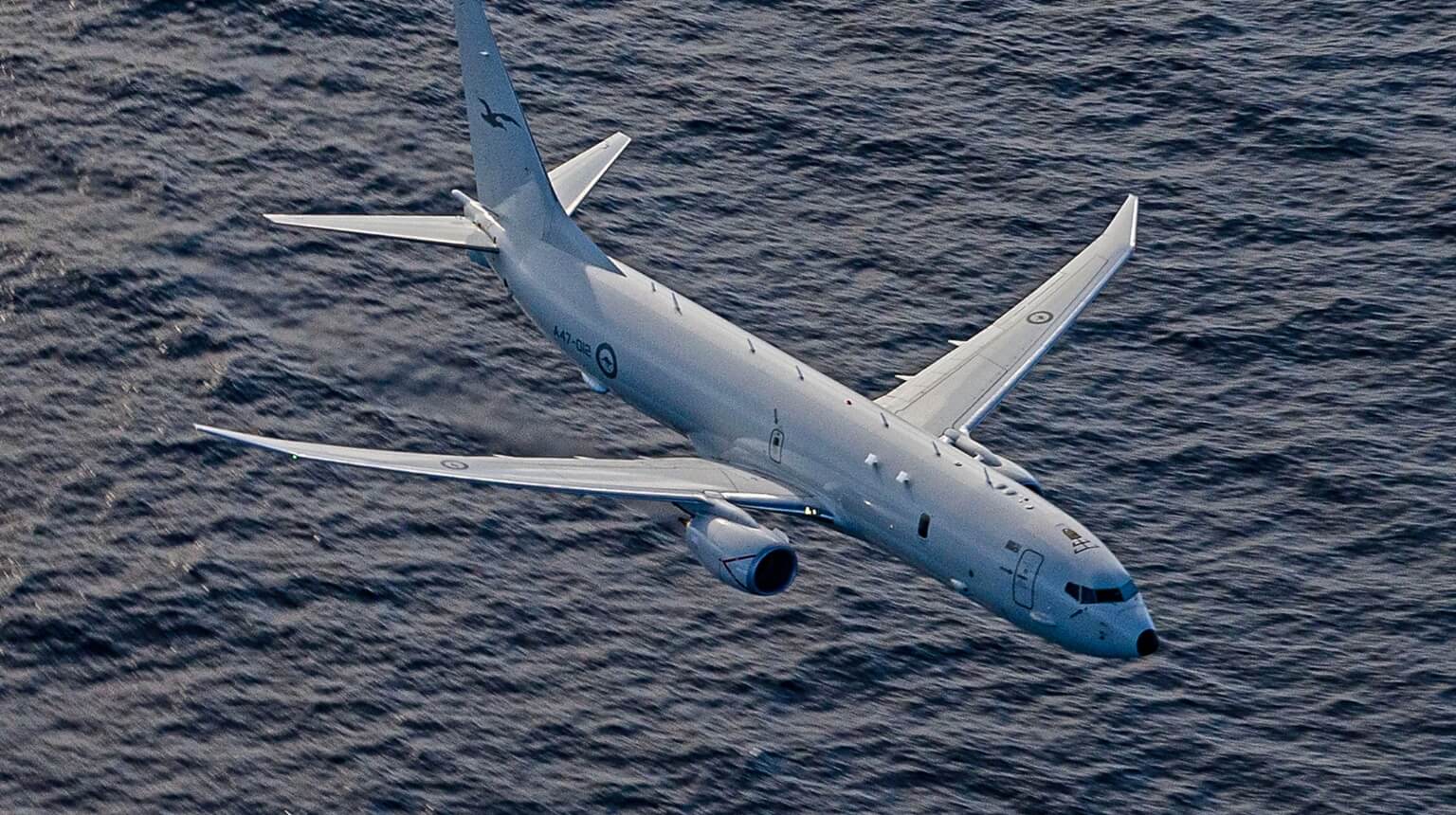
Even under a massive regional air threat, the RAAF’s growth path is steady rather than explosive. The immediate five-year horizon sees incremental increases: final deliveries of F-35s, new unmanned aerial vehicles and munitions, beefed-up surveillance (P-8 Poseidons, Triton drones) and support (more tankers?).
Recruitment is another pressure point – the RAAF is working to boost pilot and groundcrew intake, building on high-tech training pipelines. The workforce constraint was a finding of the DSR: a larger or more capable force is only useful if you have personnel to fly and maintain it.
So, retention initiatives and streamed training are part of the plan. The DSR has also accelerated the Crew Replace conceptual “attritable” model, essentially accepting some losses by cheaper drones and the recent $1.4 billion investment in Ghost Bat Block‑2 aircraft shows that emphasis.
In a conflict, Australia will fight both alongside the US (at bases like Guam or Japan) and by itself, so it is forging multinational command structures (e.g. Pacific Command/AUSMIN exercises) while also ensuring it can “stand up” modest forces independently along northern chokepoints.
The next half decade will see the RAAF consolidate a potent, networked air force: denial-oriented, stealth-laden and coalition-integrated. This will involve no single “silver bullet” but many threads, new missiles on old jets and new jets, plus a swarm of supporting drones; hardened runways and digitised C2; stocks of munitions and repairs at the ready.
As AIRMSHL Chipman has urged, Australia must present weight to deter attacks. “We must lift the concept of Force Generation as a direct contributor to deterrence,” he says, ensuring “we have done the right training … to undertake current tasks and potential future tasks”.
If realised, the combination of modern RAAF platforms and steadfast alliances means Australia could indeed “punch above its weight”. As one allied commander notes, in recent combined drills, Australia’s contribution helped create a force that operates “well above [its] already considerable weight”.
The clock is ticking in the Indo-Pacific, but Canberra has drawn a bold vision. By sharpening its long-range strike, bolstering agile basing, ramping up industry and leaning into the Five Eyes network, the RAAF aims to be a formidable air service for a tough era.
Even under severe duress, the plan is for Australian airpower to grow not by pure numbers but by depth of effect, deterring aggression by turning any conflict into a nightmare for an adversary.
In short, the RAAF’s future will be as a high-tech “bee” rather than a big elephant, small in bulk but able to sting unpredictably hard.