

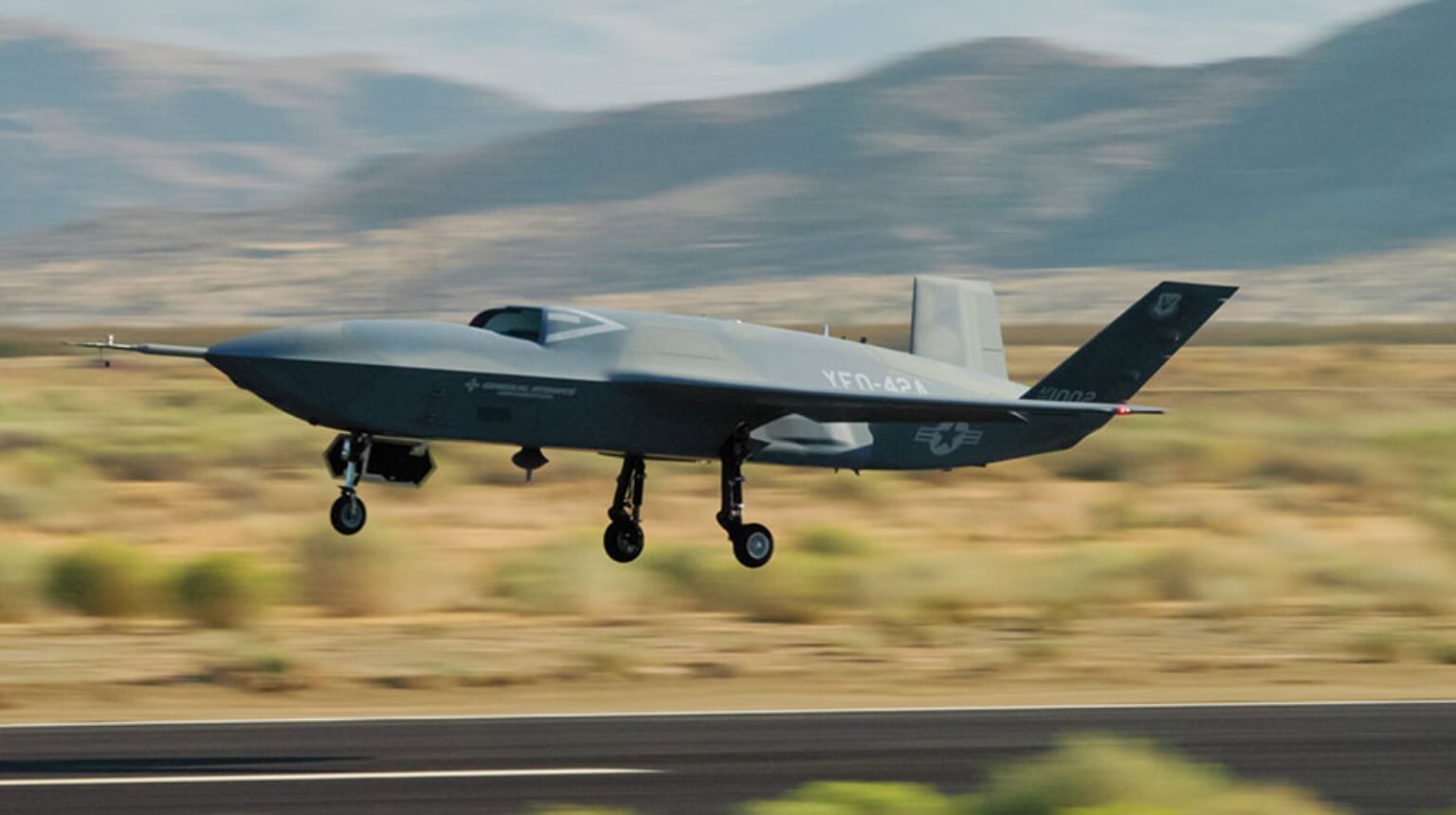
The Collaborative Combat Aircraft (CCA) is not a single drone so much as a concept: affordable, semi-autonomous “loyal wingmen” that fly alongside crewed fighters, share sensor data, absorb risk and multiply the combat power of a manned platform.
Over the past 18–24 months, the program has hit several notable milestones – from competitive downselects to the christening of design series and the first flights of a prototype – that, together, suggest the CCA is no longer a speculative project but an operational priority for the Department of the Air Force.
A competitive turn: Two designs chosen
The most consequential early development came in April 2024, when the Air Force narrowed the list of companies to carry prototype work forward.
In a surprise to some industry watchers, established prime contractors such as Boeing, Lockheed Martin and Northrop Grumman were not selected for the next phase; instead, the service handed money to two companies viewed as more agile and lower cost – General Atomics and Anduril.
Each was funded to deliver “production-representative” test articles: machines built to be close proxies for what would eventually enter service. That decision signalled a program leaning towards speed, affordability and architectural openness rather than a single big-ticket design.
From Skyborg to CCA: Technical lineage
The CCA program draws heavily on a string of autonomy efforts that the Air Force has been running for several years. Initiatives such as Skyborg – a vanguard project dedicated to modular, open autonomy – provided the software architecture and concept of operations that the CCA now seeks to operationalise.
Skyborg’s tests on platforms like the Kratos XQ-58 and surrogate systems gave the Air Force early lessons in human-machine teaming, algorithmic safety and how to plug multiple air vehicles into a single tactical picture. In short, the CCA isn’t a sudden pivot; it’s the maturing of an autonomy stack that has been iterated in flight.
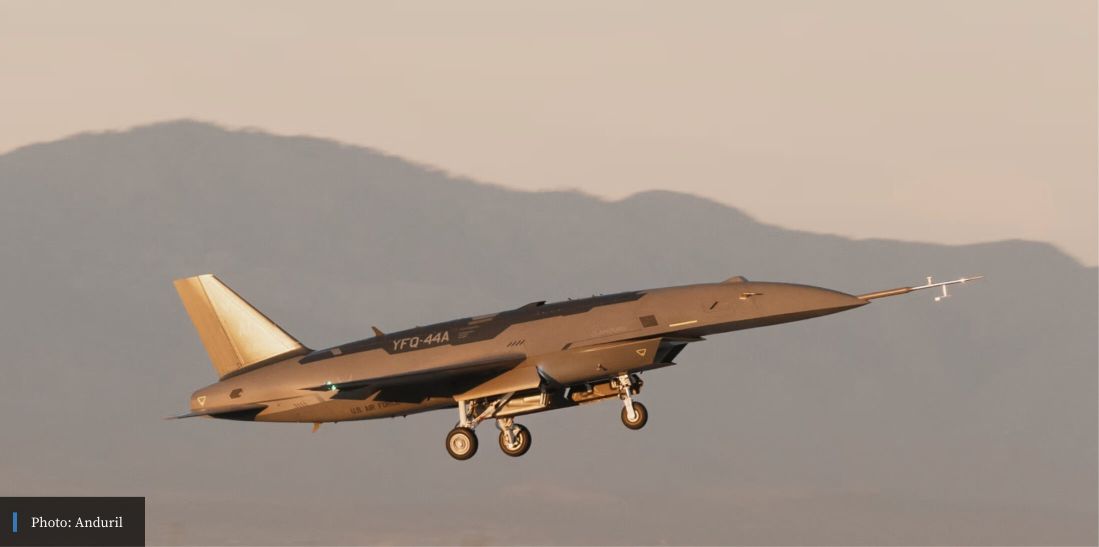
In early March 2025, the service publicly designated two “Mission Design Series” for the CCA effort: the YFQ-42A from General Atomics and the YFQ-44A from Anduril.
The move formalised the two trajectories the Air Force will compare – different approaches to speed, stealth, payload and affordability – and set the rhythm for rigorous flight testing and experimentation.
That experimental push has already produced hardware. By August 2025, the Department of the Air Force has announced that one of its prototype CCA platforms has taken to the sky for flight testing, a visible and symbolic milestone that turns documents and computer models into moving, measurable aircraft.
For program managers, the first flights are not just publicity; they are the moment when autonomy software meets airframe behaviour, sensors, communications and the messy physics of the real world.
Why the program matters
There are three broad reasons militaries and analysts are watching CCA closely.
First, force multiplication. In doctrine, a single crewed “quarterback” aircraft could be accompanied by multiple cheaper, attritable CCAs, creating a “high-low” mix in which expensive manned jets perform the most delicate tasks while smaller uncrewed platforms draw fire, carry weapons or extend sensor reach.
That could change calculations about risk, dispersion and mass in contested airspace.
Second, economy of scale. The Air Force’s industrial pitch is that affordable CCAs could be bought in much larger numbers than manned fighters, enabling new operational patterns and attrition tolerance.
This is partly a software story: if open autonomy stacks and standardised mission interfaces work, a wider supplier base and iterative upgrades become feasible.
Third, alliance and industrial implications. CCA architecture and procurement choices will ripple internationally.
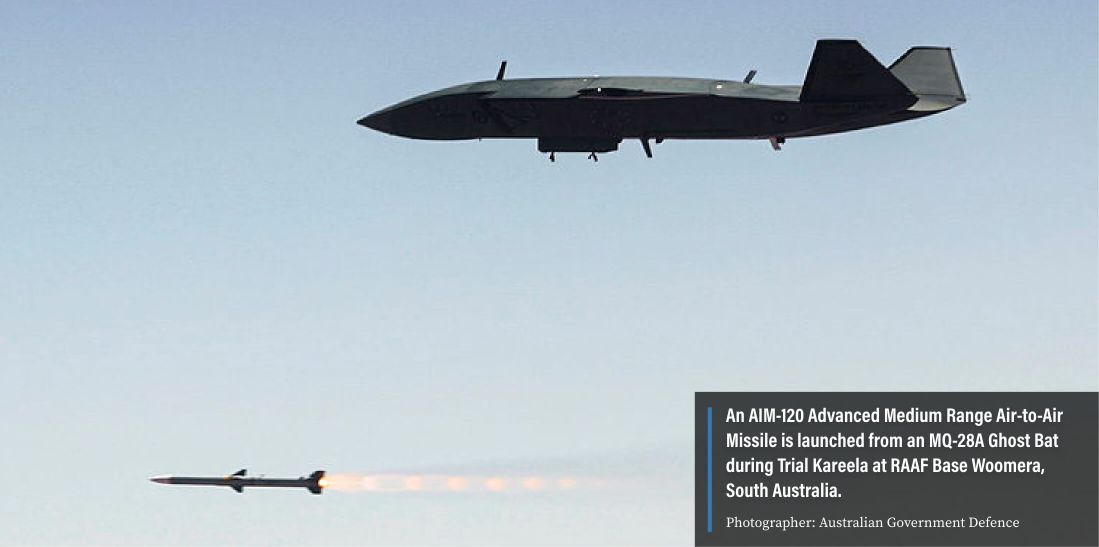
Partners, notably Australia, have their own “loyal wingman” programs; Canberra’s MQ-28 Ghost Bat effort and broader Royal Australian Air Force interest in teaming concepts suggest interoperability will be a recurring conversation. Australia’s defence planners will watch US choices carefully to align exports, doctrine and training.
Milestones to date: A short timeline
-
2019–2023: Skyborg and related autonomy experiments test the software and operational concepts on a range of surrogate platforms.
-
April 2024: Air Force narrows prototype contracts to General Atomics and Anduril, funding detailed design and production-representative prototypes.
-
March 2025: The designation of two Mission Design Series – YFQ-42A and YFQ-44A – formalises the two primary prototype lines.
-
Mid-2025 to August 2025: Development continues and at least one prototype achieves flight testing, moving the program into a new, demonstrable phase.
Where to next?
Program officials have been candid that the coming 12–24 months will be decisive.
The Air Force has signalled that a competitive production decision could come as early as fiscal 2026 and service leaders have talked about achieving initial fielding by the end of the decade, milestones that will require successful prototype testing, resolute software-in-the-loop validation, and tightly managed integration with manned aircraft.
Technically, the near term will be about proving four capabilities: secure, low-latency datalinks to enable shared situational awareness; robust autonomy that avoids catastrophic errors in complex air combat scenarios; sensors and weapons integration; and cost models that make the attritable commercial case.
The Air Force is also exploring engine development, sustainment models and “family of systems” logistics that would let multiple CCA types operate from the same basing and support structures. Early contracts with vendors for engines and subsystems suggest an industrial momentum is building.
Risks and questions
For all the momentum, CCA faces persistent technical and operational challenges.
Autonomy in contested electromagnetic environments remains an open question. Algorithms that work in benign test ranges may struggle when GPS is denied, datalinks jam or deceptive sensor returns appear.
The safety case for allowing an autonomous aircraft to employ lethal force is both legal and ethical, and militaries are proceeding cautiously with human-in-the-loop or human-on-the-loop control regimes.
Procurement risk is also real. The April 2024 downselect represented a bet on emerging companies and new business models.
Established primes that were excluded have signalled they could continue self-funding efforts, creating a fragmented market with interoperability hurdles. Analysts warn the program could experience cost growth if the attritable price point proves elusive. A sober study from think tanks noted there is “good news and bad news” in the program’s progress: decisive milestones exist but they are accompanied by structural and integration challenges that could delay full operational capability.
Wide-reaching implications, including for Australia
Australia has been an attentive observer.
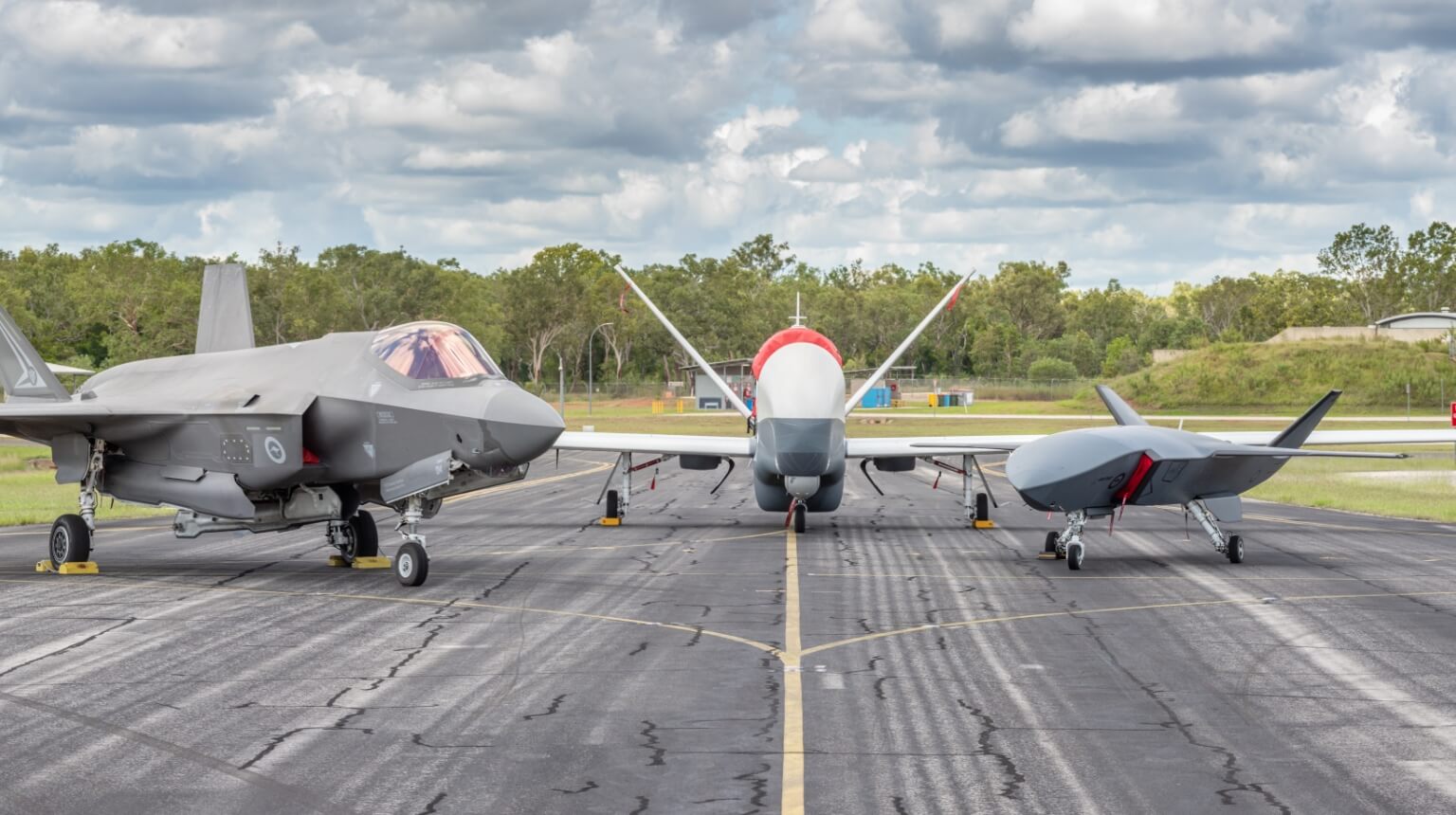
The Royal Australian Air Force’s MQ-28 Ghost Bat is Canberra’s answer to unaffordable fighter numbers, an autonomous “wingman” concept designed to fly alongside F-35s and Super Hornets.
The US decisions on CCA design, exportability and mission set will influence Canberra’s decisions on arming, data sharing and tactical integration. If the US proceeds to large-scale procurement and offers foreign military sales packages, allies could more easily align their doctrines and logistics.
The US decisions on CCA design, exportability and mission set will influence Canberra’s decisions on arming, data sharing and tactical integration.”
Conversely, if the US framework is closed or heavily restricted, partners will need to build national solutions or pursue alternative collaborations.
Beyond procurement: Doctrine and air combat
Perhaps the most interesting shift will be doctrinal. CCA forces commanders to rethink formations and mission sets.
No longer is air combat an exchange between a handful of expensive jets; it becomes a combined arms ballet with networks of sensors, missiles and attritable platforms. For pilots, human-machine teaming will demand new training, new cockpit interfaces and new rules of engagement.
For air planners, it offers options feints, distributed sensor webs, and sacrificial platforms to probe defences that were impractical when every sortie required a multimillion-dollar crewed jet.
The cultural change inside the Air Force is already visible. Younger officers raised on networks and autonomy see CCAs as force multipliers; some older hands worry about command-and-control robustness.
That tug of war over how much authority to grant machines will be central to the program’s social licence inside the services.
Final word: Rapid iteration, cautious optimism
The Collaborative Combat Aircraft program has moved fast, and the milestones achieved so far are tangible: competitive prototype awards, mission-series designations and the first prototype flights.
Yet the leap from demonstrator to combat-ready force is large.
Technical challenges in autonomy, hardened communications and weapons integration will have to be solved in a contested environment, while procurement discipline must keep the attritable promise affordable.
For Australia and other partners, the calculation is straightforward: stay close, shape standards and ensure interoperability.
The CCA era promises new tactical options but only if the software, industry and doctrine mature together.
The next two years will tell whether the loyal wingman becomes an operational reality or another promising but incomplete experiment.