

From protecting fisheries and border enforcement to countering smuggling, piracy and great-power competition, “there is always something that [Australia’s] maritime forces need to be doing”, Royal Australian Navy Fleet Commander Rear Admiral Chris Smith has recently observed.
With strategic tensions rising in the Indo-Pacific, as highlighted by a surge in piracy, drug trafficking and contested waterways in south-east Asia, Canberra is pivoting to high-end aerial intelligence, surveillance and reconnaissance (ISR) and autonomous systems.
The 2023 Defence Strategic Review explicitly calls for “maritime drones that can perform intelligence, surveillance and reconnaissance missions on the surface and underwater”.
But it is in the air where Australia can rapidly maximise the suite of capabilities currently in the inventory, and drawing on international experience, leverage proven, scalable technologies.
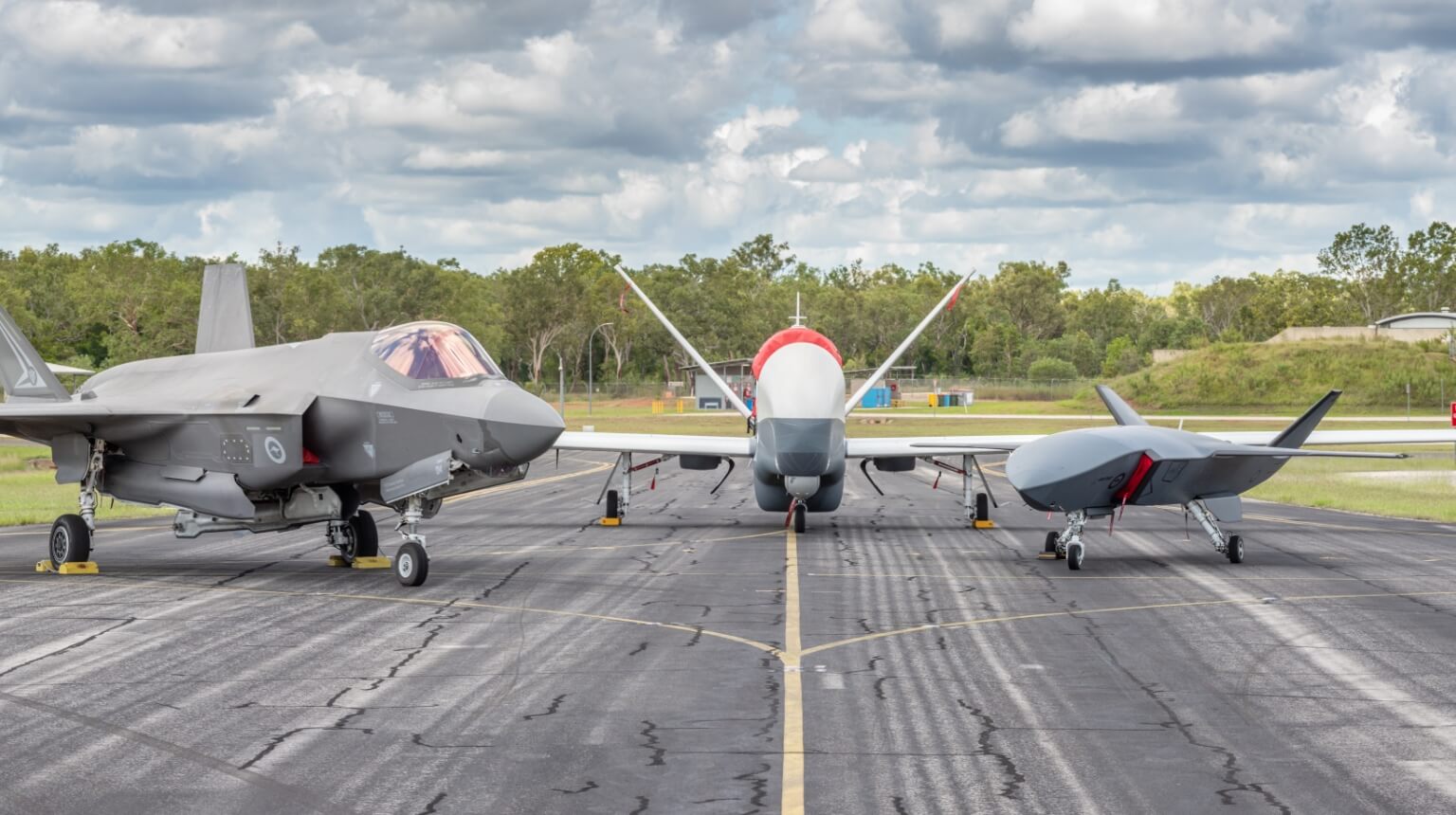
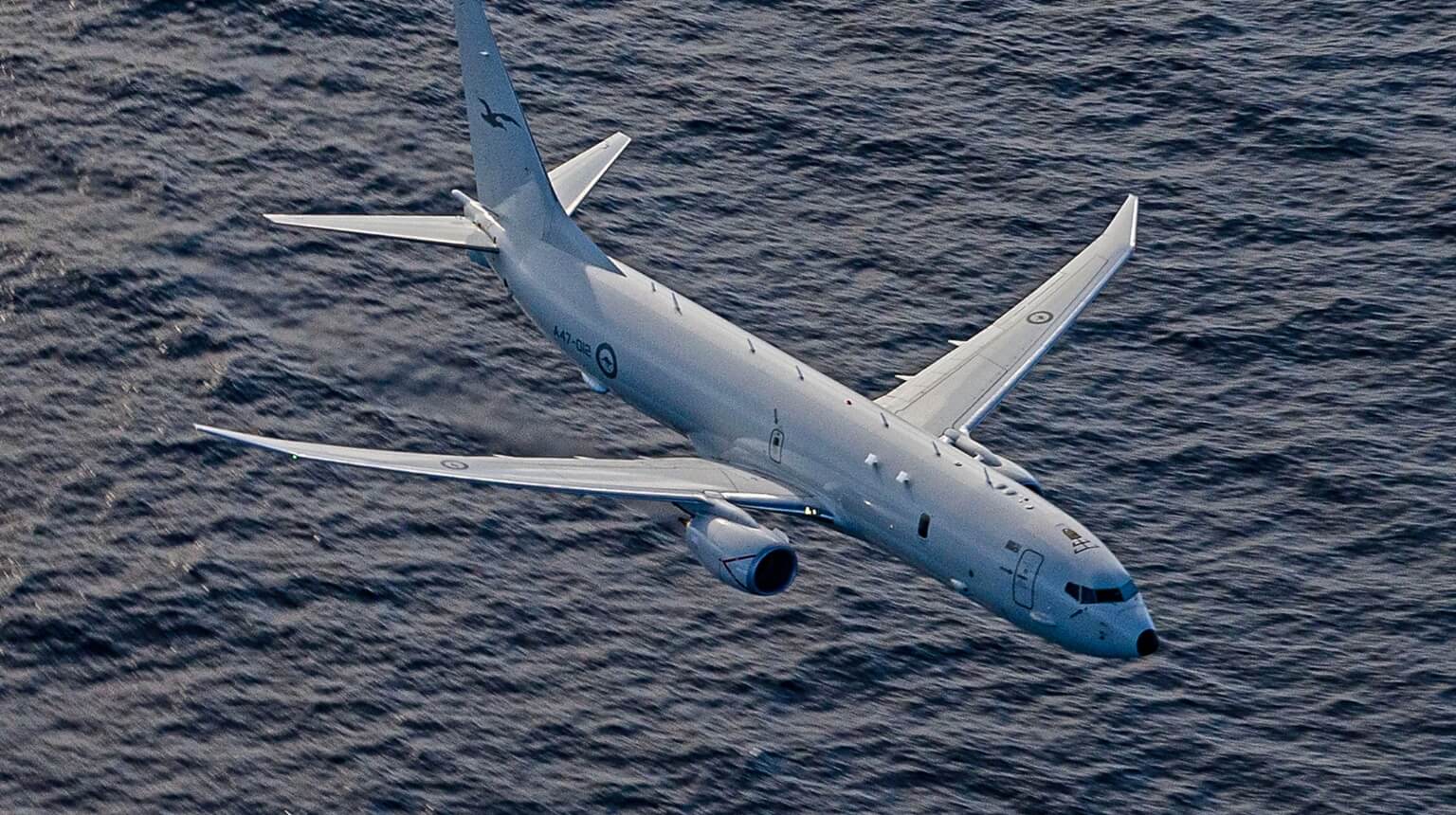
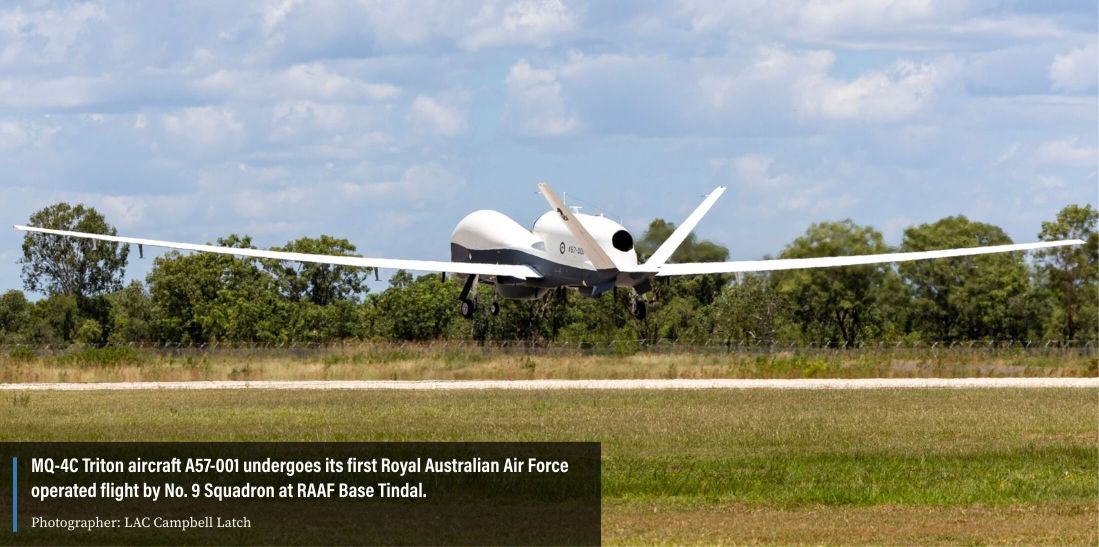
Australia’s current maritime aviation posture already includes advanced manned assets. The Royal Australian Air Force operates Boeing P-8A Poseidon maritime patrol aircraft and, as of 2024, high-altitude MQ-4C Triton uncrewed aerial vehicles (UAV) to keep watch over northern approaches.
These “family of systems” offer long-range radar and sensor coverage, complementing one another to patrol the nation’s seas. The first Australian Triton (AUS 1) has entered service, and four are on order, based at RAAF Base Tindal.
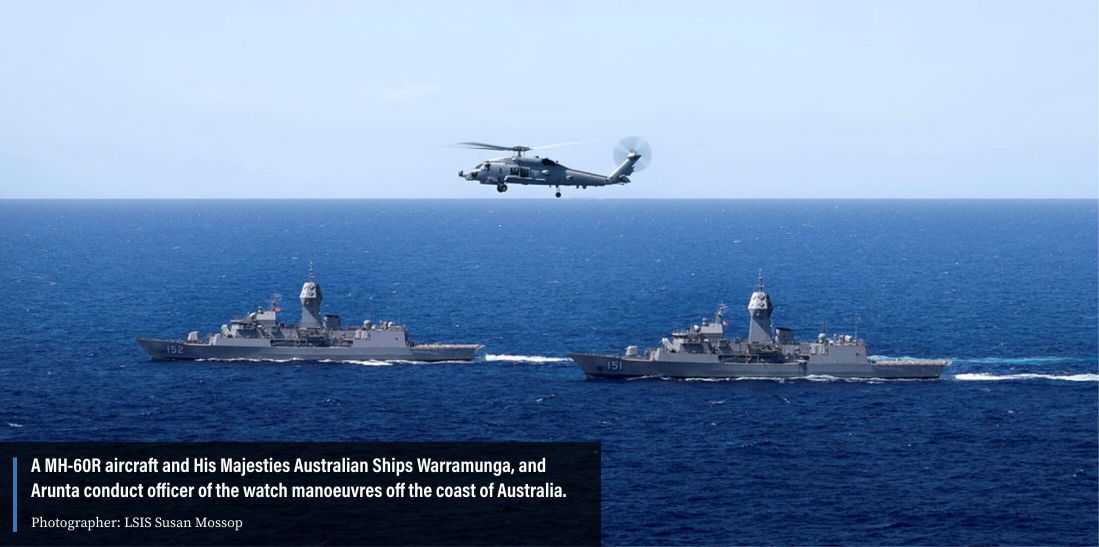
While at the same time, helicopters (MH‑60R and MRH-90) provide shipborne anti-submarine warfare and search and rescue support, and the Australian Border Force uses Dash 8 aircraft and light UAVs for littoral patrol.
However, even this robust fleet struggles to monitor Australia’s enormous area of interest continuously.
As Air Marshal Stephen Chappell notes, uncrewed aerial systems offer “enormous potential to capitalise on the opportunities provided by modern payloads and increased endurance”.
The Triton, he adds, will give “unprecedented persistence and awareness over the maritime domain”, underscoring the endurance advantage of autonomously piloted platforms.
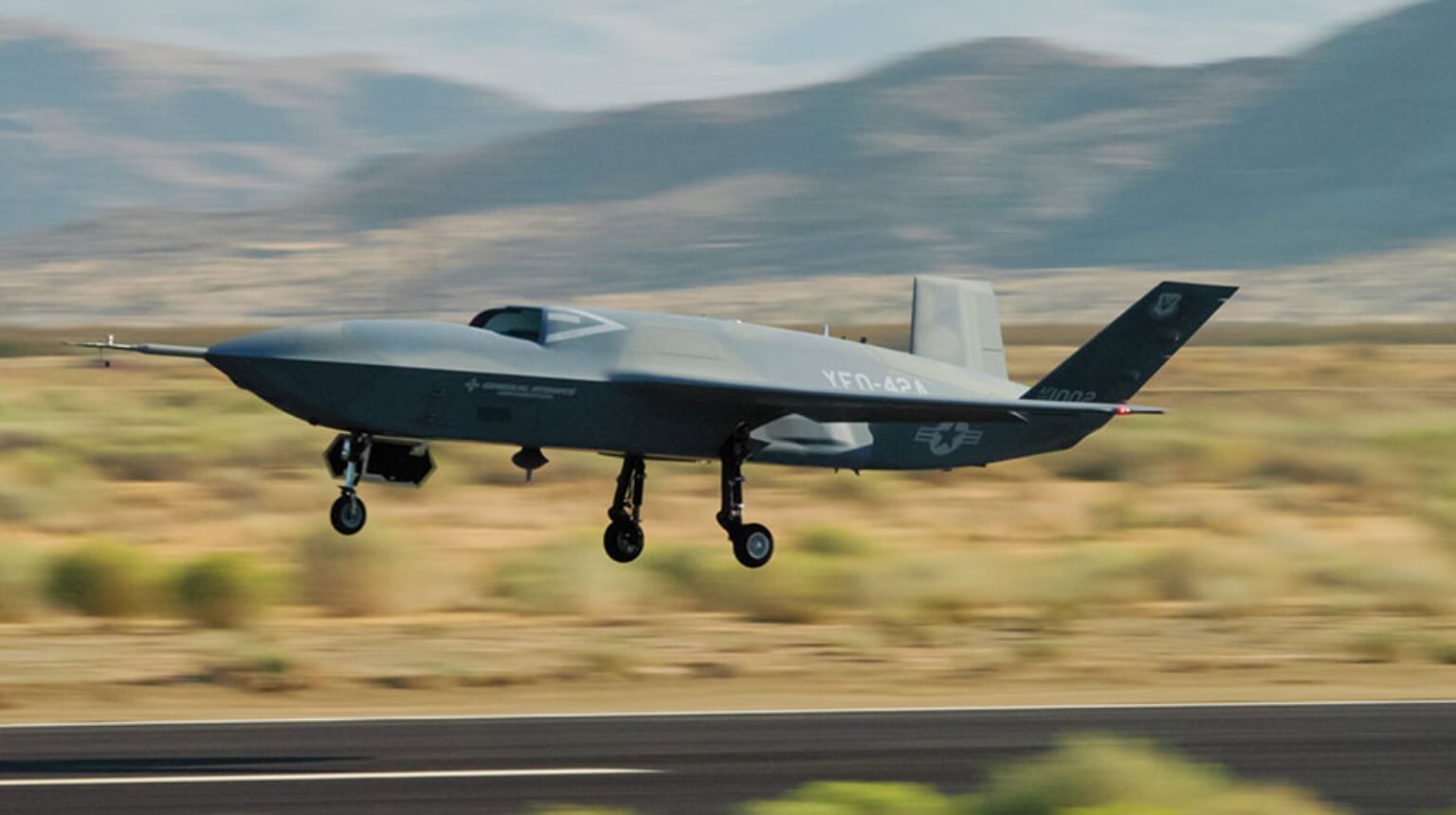
Moreover, the Australian government is investing heavily in uncrewed aviation. A recent media release confirms that the Albanese government will spend over $10 billion on drones in the next decade. Of which roughly $4.3 billion specifically on uncrewed aerial systems, this includes cutting-edge projects like the MQ-28A Ghost Bat “loyal wingman” drone for the RAAF, designed to team up with manned fighters.
Yet gaps remain. Routine patrols over remote waters and swift responses to fast-moving threats (like low-visibility illegal fishing fleets or drug-smuggling skiffs) challenge even our long-range aircraft. Crew fatigue and the high cost of manned flights limit how much ground can be covered.
Here, uncrewed systems promise to extend coverage and focus human pilots on critical tasks. For instance, shielded vertical take-off and landing (VTOL) drones can be deployed on any ship, inserting persistent eyes into the sky without dedicating a whole helicopter crew.
Autonomous swarms or multi-vehicle teams could cover multiple areas simultaneously. Enhanced sensors on drones – AI-powered cameras and radar – can alert operators to threats that human observers might miss.
As Australia looks to a future of “all-domain maritime capabilities” and more networked, expeditionary air power, integrating drones alongside our new Poseidons and Tritons will be essential.
As Australia looks to a future of ‘all-domain maritime capabilities’ and more networked, expeditionary air power, integrating drones alongside our new Poseidons and Tritons will be essential.”
Drawing on allied case studies
Regional partners offer lessons in maritime autonomy. Japan’s Maritime Self-Defense Force (JMSDF), faced with similar challenges around its own remote islands, is moving aggressively towards unmanned aviation.
In 2019, Japan announced plans to buy about 20 shipborne unmanned helicopters (later widely reported to favour Northrop Grumman’s MQ-8C Fire Scout) to augment early warning patrols around the contested Senkaku Islands.
The goal is clear: to free manned P-3C Orion aircraft and helicopters for other tasks by using uncrewed sensors in contested approaches.
More recently, in January 2025, JMSDF selected the Shield AI MQ-35A V-BAT VTOL drone to operate from its surface combatants. This will be JMSDF’s first embarked unmanned ISR platform, fitted to typical flight decks and linked with ship command.
As Shield AI notes, the V-BAT’s ducted-fan design lets it take off and land vertically aboard ships, and its autonomous avionics can function “in an environment where GPS signals are denied”, vital for operations near sophisticated adversaries. (In fact, V-BAT trials in Ukraine have already tested its GPS-denial resilience.) JMSDF’s adoption highlights the utility of small, affordable drones: as Shield AI’s CEO puts it, Japan recognises “the future of warfare – [in which] operational success requires blending high-cost assets with intelligent, affordable unmanned systems like V-Bat”.
In practice, shipborne UAVs could extend a destroyer’s watch circle well beyond radar horizon, providing real-time reconnaissance on contacts or littoral traffic.
In the United States, the Coast Guard – a maritime service with arguably comparable duties to Australia’s Border Force and Navy combined – has pioneered similar solutions. In mid-2024 the United States Coast Guard (USCG) awarded a $198 million contract to Shield AI for “cutter-based” unmanned aircraft services.
Under this deal, Shield AI will deploy V-BAT drones on National Security Cutters under a contractor-owned/contractor-operated model. The requirements are revealing: 24/7 availability, fully automated launch and recovery, 12+ hour endurance each day, and payloads (electro-optical/infrared cameras and communications relays) that can “provide surveillance, detection, classification and identification for all of the host cutter’s operational missions”.
In other words, Coast Guard cutters will gain a ship-launched ISR platform that watches continuously, even in day/night and no-GPS conditions. This approach sidesteps having to train a whole new UAV wing; instead, contractors fly the drones, but at the direction of the Coast Guard.
Real-world results have been encouraging. In one high-profile case, a USCG cutter used a V-BAT to hunt smugglers off the Pacific coast.
The uncrewed drone provided a live video feed as it scoured the sea, and when it spotted a suspicious wake, it vectored a Coast Guard helicopter onto the target. In a single night, the drone helped the cutter intercept three separate drug-running vessels, netting dozens of arrests and around 12,000 kilograms of cocaine.
Overall, as Defence News reports, V-BAT-equipped cutters have dramatically boosted the Coast Guard’s reach. One 2025 press story attributed a record-breaking 22-metric tonne cocaine seizure ($362 million) to the presence of the drone, noting its 13+ hour endurance and resistance to GPS jamming.
Similarly, a US Coast Guard video release describes how a V-BAT “tracks a suspected smuggling vessel … enhancing the Coast Guard’s ability to detect, monitor and stop illicit maritime activity before it reaches US shores”. The Coast Guard itself says that the “persistent ISR capacity” from such UAS is “critical” to covering its diverse missions.
These allies’ experiences offer clear guidance: unmanned aviation at sea can greatly extend situational awareness. Long-endurance drones spot contacts beyond the horizon, enabling timely interdiction. Shipboard VTOL drones relieve manned helicopters so crews can focus on mission execution. And operating as part of a distributed sensor network – in concert with satellites, automatic identification system (AIS) data and allied information sharing – UAVs multiply the force effectiveness of each vessel. For Australia, which similarly patrols vast sea lanes with a limited fleet, the message is that persistent, layered surveillance can no longer rely on crewed assets alone.
Bridging the gaps: Australia’s future mix
Against this backdrop, Australia is charting a strategy that blends crewed and uncrewed aviation into a layered surveillance system.
The key will be integration. Triton and Poseidon provide over-the-horizon coverage, but the Torrid Gap in between – littoral zones, archipelagos of our neighbours, and the approaches off northern Australia – may be better watched by smaller, flexible platforms.
Ship-based UAVs (like V-BAT) could operate from future frigates or offshore patrol vessels, feeding live targeting data to Australian Defence Force headquarters and combat units. Medium-altitude drones or even high-performance fixed-wing UAS could carry synthetic-aperture radars to fill in clouds or night-time gaps.
Autonomous sensor networks (surface drones with AIS/radar payloads) might complement aviation assets in chokepoints.
The government’s investments signal this direction. The 2023 Strategic Review calls for “Maritime drones … for ISR missions” and “all-domain maritime capabilities for sea denial”.
Defence has already awarded contracts to Australian companies (such as Shield AI’s Melbourne-based Sentient Vision) to integrate advanced AI payloads into UAVs.
Exercises are increasingly incorporating drones: for example, RAN’s recent Exercise Kakadu included multiple unmanned aerial systems alongside manned maritime patrol aircraft. And multilateral efforts – like planned trilateral drills with the US and UK – will trial AI-driven maritime drone swarms in 2024.
In short, policymakers envision a more distributed, networked force: fighters and frigates are multiplying their eyes and ears with drones.
Importantly, this shift is meant to augment, not replace, existing capabilities. Experienced pilots and crews will still handle complex maritime missions; drones will perform routine surveillance, acting as force multipliers.
A good analogy is border security: unmanned systems can watch and report, while ships and aircraft concentrate on intercept and response. And as industry points out, autonomy improves safety and efficiency. Shield AI’s executives note that modern conflicts demand ISR “deep in denied territory”, with targets relayed in real time – exactly what integrated drone networks provide.
The benefits are already being sold to defence leaders. Australia’s Minister for Defence Industry proudly states that the MQ-4C Triton “will significantly enhance the security of Australia’s maritime borders”, while RAAF’s chief highlights its “persistent patrol” capabilities. Defence industry investment in systems like the Ghost Bat highlights Australia’s ambition to lead in drone technology.
Yet the focus remains squarely on enhancing maritime security: ensuring illegal fishing, terror threats or strategic surprises don’t slip through unnoticed.
In summary, the evolving demands of the Indo-Pacific mean Australia’s maritime aviation assets must evolve, too. Allies like Japan and the US Coast Guard have demonstrated that unmanned aerial vehicles – from large high-altitude, long-endurance drones down to shipborne mini-drones – are force multipliers for maritime security.
By weaving autonomous systems into its fleet and patrol force, Australia aims to maintain vigilant coverage over its expansive waters and up its deterrence. As one defence commentary notes, the combination of “AI pilots, [advanced] sensors and teams of affordable drones … will provide the same … surveillance and targeting” as much larger assets.
For policymakers and naval planners, the message is clear: invest in autonomy to close the gaps and turn cutting-edge drones into an asymmetric edge over future threats.