

 iscover
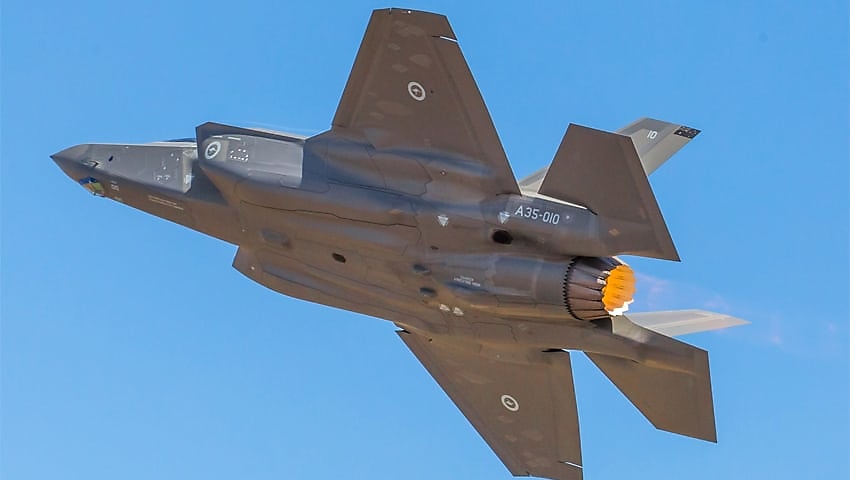
A Defence spokesperson has confirmed that the Royal Australian Air Force will continue to fly their fleet of F-35As despite the discovery of a faulty ejector seat part in the US.
Defence has confirmed that the RAAF will continue to fly the F-35As, following an independent risk assessment on the aircraft’s ejector seat cartridge actuated device (CAD).
“Air Force is aware of the issues surrounding the ejection seat in the F-35A fleet,” a Defence spokesperson said.
“The F-35A Joint Program Office (JPO) – the engineering authority for F-35s globally – is investigating a possible cartridge actuated device quality assurance issue. The CADs are used in the F-35 pilot ejection system.
“Air Force has undertaken an independent risk assessment based on information provided by the F-35A JPO and will continue flying the F-35A.
“Air Force will continue to engage with the US Air Force and JPO and review its risk assessment if new information is received.”
It was revealed late last week that the US Air Force grounded their fleet of F-35s due to the discovery of a fault in an aircraft’s ejection seat in April, with the US Navy and Marine Corps shortly following suit.
The ejection seat’s manufacturer, Martin-Baker, has discovered a fault within the seat’s explosive cartridges, finding the part incorrectly fitted and missing a fundamental component to the functioning of the explosive – magnesium powder.

It is believed that an operator discovered the flaw after noticing how light the part was.
According to a news report from the Air Force Times, US military representatives originally determined the case to be an isolated fault, but later concluded that the fault, in fact, originated within the production line.
“During a routine maintenance inspection at Hill [Air Force Base, Utah,] in April '22, an anomaly was discovered with one of the seat cartridge actuated devices in the F-35 seat,” spokesperson for Martin-Baker, Steve Roberts, said.
“This was quickly traced back to a gap in the manufacturing process, which was addressed and changed.”
Over the weekend, Breaking Defense had confirmed that the US Navy had completed their inspections of the aircraft, with reports that three faults had been detected throughout 2,700 inspections.
While the US military has begun removing the temporary stand down orders, Israel has grounded their fleet of F-35s in response to the reports.
[Related: Israel grounds F-35 fleet following US lead]

Want to see more stories from trusted news sources?
Make Defence Connect a preferred news source on Google.
Click here to add Defence Connect as a preferred news source.