

 iscover
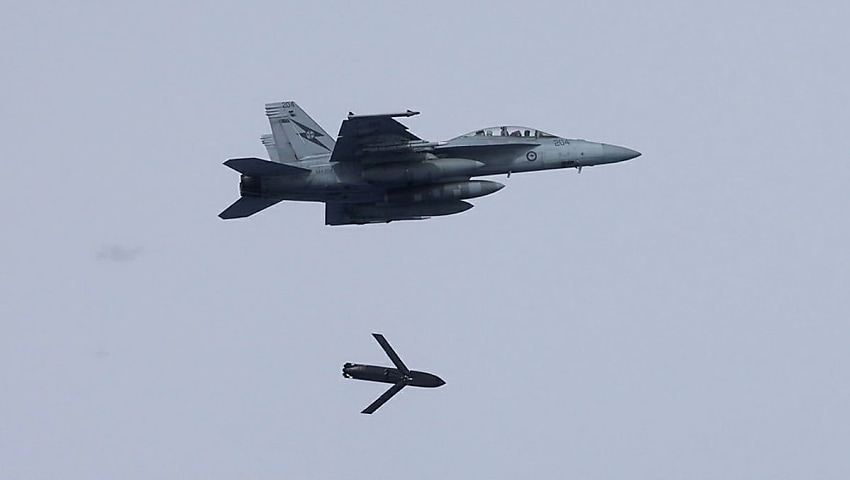
A Royal Australian Air Force F/A-18E/F Super Hornet has successfully completed the test-firing for the Long Range Anti-Ship Missile (LRASM), marking the certification for operational use by the RAAF.
The test, conducted last month by Royal Australian Air Force F/A-18F Super Hornets off the coast of California, with support from the United States Navy, confirmed that the LRASM is now ready for operational service.
A total of AU$895.5 million has been allocated for acquiring the LRASM, which will extend the RAAF’s maritime strike reach to over 370 kilometres.
This missile, developed with advanced autonomous guidance and precision targeting capabilities, is specifically engineered to counter sophisticated threats in high-risk maritime environments.
Deputy Prime Minister and Defence Minister Richard Marles said, “Capabilities such as the LRASM will help the Australian Defence Force protect against threats to Australia and our national interests. These weapon systems equip our forces to better protect Australia’s maritime approaches and when necessary, conduct operations in our region. It will be seen across the Super Hornet, Poseidon and F-35 fleets.”
The LRASM represents a major technological leap for the ADF. Its integration into Australian service is set to complement the existing fleet of Super Hornets and pave the way for future upgrades, including potential integration with next-generation aircraft.
“The successful firing of the LRASM wouldn’t have been possible without the participation of our allies and industry partners, like the United States and Lockheed Martin,” the Deputy Prime Minister added.
The missile’s stealth design and extended range provide a critical edge in modern maritime warfare, allowing for discreet, long-range strikes against potential adversaries.

Minister for Defence Industry and Capability Delivery Pat Conroy said, “The acquisition of LRASM is a significant step up in long-range strike for our Air Force and underscores the Albanese government’s commitment to equipping the ADF with the capabilities it needs to keep Australians safe.”
In addition to the live-firing test, the operational evaluation included a comprehensive validation of weapon preparation, loading procedures and targeting systems. The ADF also simulated a long-range maritime strike scenario, supported by an Australian E-7A Wedgetail and EA-18G Growler alongside a United States Navy P-8A Poseidon. These coordinated efforts underscore the strategic partnership between Australia and its allies, reinforcing the nation’s commitment to maintaining robust and responsive defence capabilities.
This exercise is part of a broader investment initiative by the Albanese government, which is set to invest between $28 billion and $35 billion over the next decade to enhance targeting systems and long-range strike capabilities across Defence. The LRASM’s successful introduction underpins the National Defence Strategy’s objective to create an integrated, focused force capable of operating across maritime, land and air domains.
The deployment of the LRASM is a significant milestone in modernising Australia’s military assets, ensuring that the ADF remains well-equipped to meet evolving threats in an increasingly contested Indo-Pacific region.
Want to see more stories from trusted news sources?
Make Defence Connect a preferred news source on Google.
Click here to add Defence Connect as a preferred news source.