

 iscover
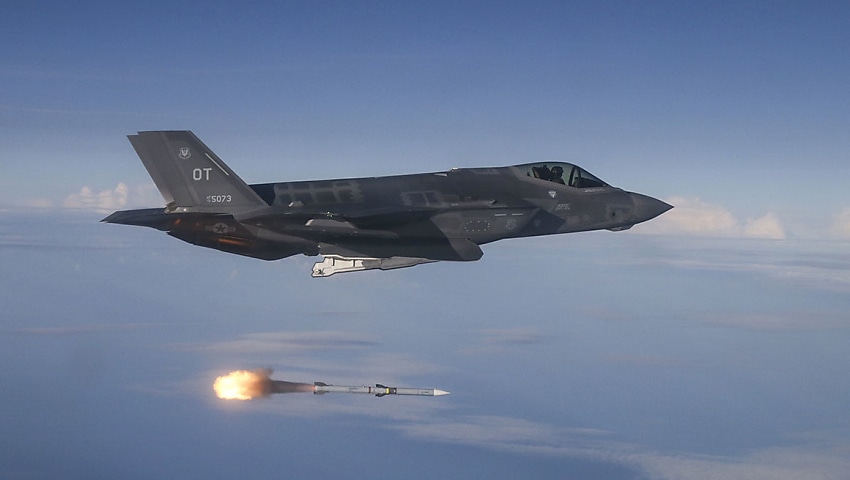
The US State Department has formally approved a US$1.04 billion ($1.7 billion) sale of AIM-120C and AIM-120D Advanced Medium Range Air-to-Air Missiles to Australia.
The Australian government has been approved to purchase up to 200 AIM-120C-8 and an additional 200 AIM-120D-3 Advanced Medium Range Air-to-Air Missiles (AMRAAMs) in a deal estimated at US$1.04 billion ($1.7 billion).
The expansive package also includes missile containers, vital support equipment, spare parts, consumables and accessories, repair and return support, weapons system support and software, classified documentation, transportation support, studies and surveys, as well as US Government and contractor engineering, technical and logistics services.
The proposed sale is in line with Australia’s ongoing commitment to modernising its defence capabilities and ensuring its air forces remain at the cutting edge of technology. According to officials, the integration of the new AIM-120 variants will improve the survivability of Australia’s combat aircraft, enabling them to counter emerging threats more effectively.
The transaction not only reinforces the long-standing security partnership between Australia and the US but underlines the strategic importance of Australia in the Western Pacific. US officials have highlighted that supporting Australia’s self-defence capability is integral to maintaining peace and economic stability in the region.
The deal is viewed as essential to assisting one of America’s most important allies while ensuring a credible air superiority posture among allied forces.
The AIM-120 AMRAAM has been a backbone of the Royal Australian Air Force’s (RAAF) air-to-air combat capability for decades. Originally introduced to provide beyond-visual-range engagement, the AMRAAM series gives Australia’s fighter fleet, which includes platforms such as the F/A-18F Super Hornet and the F-35 Lightning II, a modern, agile solution for intercepting and neutralising aerial threats.
The AIM-120 missile series has evolved considerably since its initial deployments. Early variants, such as the AIM-120B and AIM-120C models, were phased in during the early 2000s and proved pivotal for the Classic Hornet fleet.

The latest AIM-120D-3 variant, now set to be acquired alongside the AIM-120C-8, offers enhanced performance features including greater range, improved guidance with GPS-aided navigation, an advanced two-way data link, and superior manoeuvring capabilities to engage agile targets.
These upgrades ensure that the RAAF not only remains interoperable with US forces and other allied nations but is also well-equipped to address the evolving challenges posed by new and emerging aerial threats.
The principal contractor for the deal is RTX Corporation, based in Tucson, Arizona. At this stage, the US government has not indicated any offset agreements linked to the sale, with any such arrangements to be discussed directly between the purchaser and contractor during ensuing negotiations.
Want to see more stories from trusted news sources?
Make Defence Connect a preferred news source on Google.
Click here to add Defence Connect as a preferred news source.