

 iscover
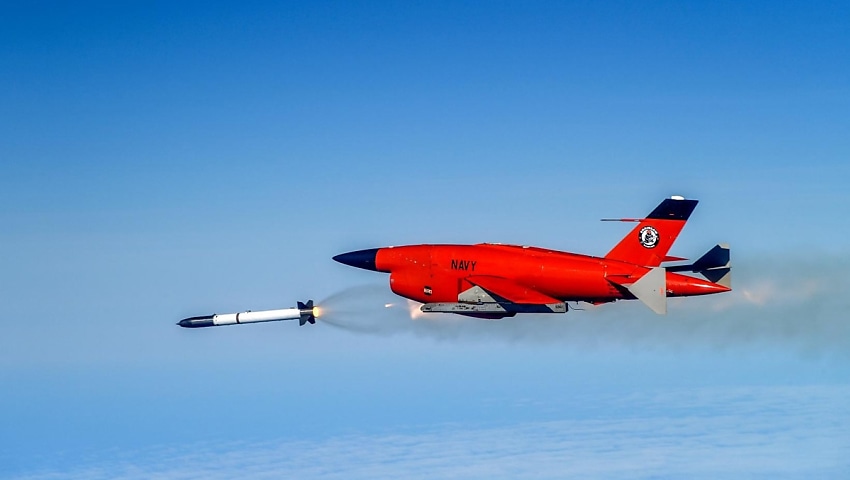
An unmanned vehicle has successfully air-launched a solid fuel integral rocket ramjet for the first time, according to the US Naval Air Warfare Center Weapons Division.
A BQM-34 unmanned target vehicle conducted the live-firing, which is designed to simulate missile launch from an unmanned vehicle, allowing warfighters to safely engage targets from greater distances.
The recent advance is part of the US Navy’s ongoing efforts to ensure technological superiority.
The US Naval Air Warfare Center Weapons Division (NAWCWD), the lead prototype integrator, combined advanced propulsion, avionics and fire control technologies into the technology demonstrator over 12 months.
“This successful integration validates key aspects of our design and moves us closer to delivering an advanced propulsion system that will provide warfighters with greater range and speed,” said Abbey Horning, NAWCWD Advanced Concepts, Prototyping and Experimentation office product director.
“We’re not just revisiting an old idea; we’re refining and modernising it to fit today’s mission.
“SFIRR offers a balance of affordability, reliability and performance tailored to the Navy’s operational needs.”
The solid fuel integral rocket ramjet (SFIRR) is expected to simplify missile propulsion by eliminating the complexity found in liquid fuel ramjet propulsion. The missile technology is envisioned to significantly reduce weight, allow missiles to carry more payload and travel greater distances with increased manoeuvrability.

Ephraim Washburn, deputy director for energetics at NAWCWD, stated that technology evolution occurs across many industries. He compared SFIRR advancements to automotive improvements, where early designs laid a foundation, and ongoing developments continue to enhance performance.
“We’ve been driving cars since the early 1900s, but that doesn’t mean we stopped improving them,” Washburn said.
“Solid fuel ramjet technology had significant investment in the 1970s and 1980s, but we’re making it a modern propulsion solution for the fleet today.
“This is a combat-credible technology … We are working to refine its range, endurance and targeting capabilities.”
Lessons learned from recent tests directly informed the development of a next-generation missile prototype aimed at enhancing speed, range and operational flexibility for future US Navy strike capabilities.

Want to see more stories from trusted news sources?
Make Defence Connect a preferred news source on Google.
Click here to add Defence Connect as a preferred news source.