

 iscover
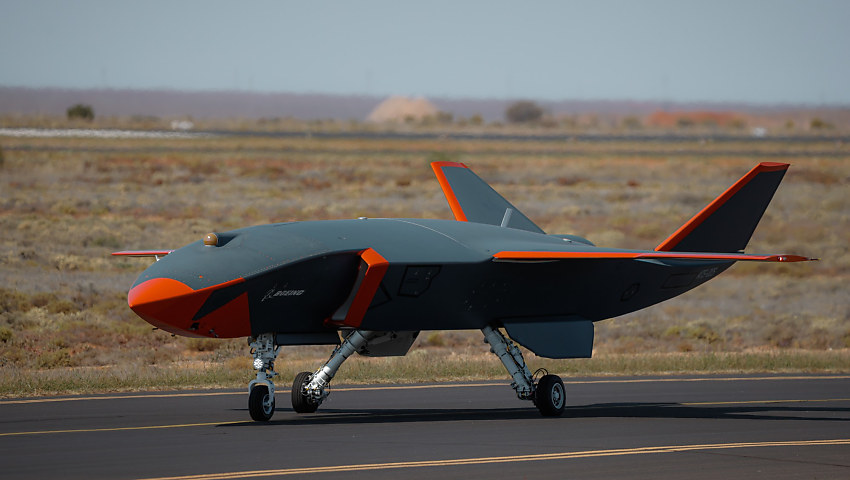
The MQ-28A Ghost Bat uncrewed aerial vehicle has achieved a significant milestone, with a single operator taking control of two Ghost Bat aircraft to conduct a mission against an airborne target in South Australia.
The operator, acting from aboard an airborne E-7A Wedgetail aircraft, was able to conduct the capability demonstration at Woomera Test Range in South Australia.
Developed in cooperation with Boeing Defence Australia, the MQ-28A Ghost Bat is Australia’s first exploration into collaborative combat aircraft technology. Collaborative combat aircraft are uncrewed air vehicles that have the ability to team with crewed platforms performing mission roles and responsibilities typically associated with fighter aircraft.
“This is an important step forward in the development of this world-leading, Australian designed and made autonomous aircraft,” said Minister for Defence Industry, Pat Conroy.
“The Ghost Bat has the potential to turn a single fighter jet into a fighting team, with advanced sensors that are like hundreds of eyes in the sky.
“Autonomous collaborative platforms enhance the integrated force’s ability to deliver a strategy of denial, by increasing the lethality and survivability with a reduced risk to our forces.”
The Ghost Bat is the first military combat aircraft to be designed, engineered and manufactured in Australia in more than 50 years.
The federal government’s investment in uncrewed and autonomous systems is one of the key priorities outlined in the 2024 National Defence Strategy. The government is investing over $10 billion in drone capabilities, including at least $4.3 billion in uncrewed aerial systems.

This project supports 350 high-skilled jobs across the nation, including those employed at Boeing Defence Australia and more than 200 Australian suppliers.

Want to see more stories from trusted news sources?
Make Defence Connect a preferred news source on Google.
Click here to add Defence Connect as a preferred news source.