

 iscover
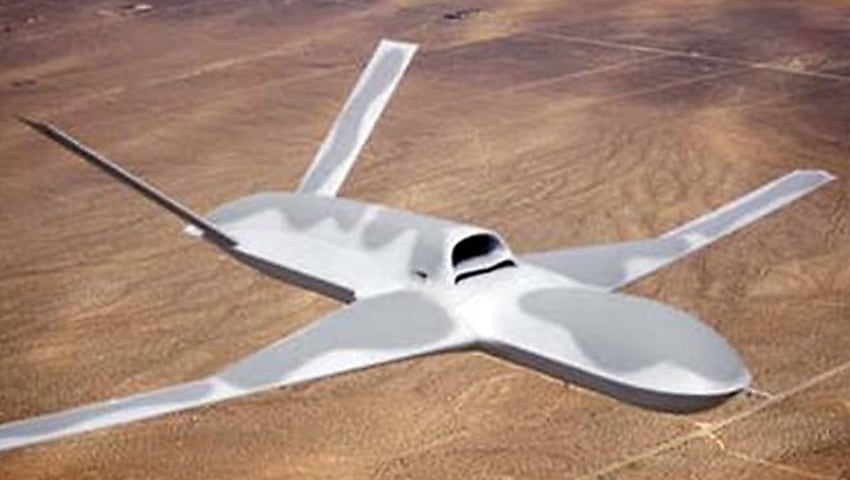
In a major milestone for unmanned combat aviation, US defence contractor General Atomics Aeronautical Systems Inc has successfully demonstrated a simulated autonomous shoot down during a cutting-edge test involving both live and virtual aircraft.
The test, conducted on 11 June, saw General Atomics Aeronautical Systems Inc’s (GA-ASI) MQ-20 Avenger unmanned jet perform a series of autonomous combat functions using advanced government-supplied reference software, complemented by systems developed by US autonomy firm Shield AI.
The MQ-20, operating as an autonomous collaborative aircraft, undertook a range of complex activities, including midair coordination with crewed and uncrewed aircraft, simulated patrol of a contested battlespace, autonomous decision making, and cooperative engagement with a human command element. Crucially, the Avenger autonomously intercepted and simulated a successful missile engagement against two live airborne targets.
The “live-on-live” exercise employed representative Group 5 unmanned aerial vehicles, the largest class of military drones, and provided a rare demonstration of the maturity of autonomous air combat capabilities.
Michael Atwood, GA-ASI’s vice president of advanced programs, said the exercise highlights the importance of adaptable and interoperable systems, saying, “This event reflects the kind of interoperability and adaptability we believe is essential for future autonomy efforts,” he said.
“Being able to rapidly integrate and test autonomy elements from multiple vendors helps ensure the most effective capabilities are available to the warfighter, regardless of origin,” he added.
A key innovation during the flight was a mid-mission switch from the government’s software suite to Shield AI’s Hivemind autonomy platform. The transition occurred seamlessly, with no degradation in aircraft stability or mission continuity demonstrating the practical benefits of a common, standards-based digital architecture.
This “plug-and-play” approach to autonomy, likened to a future “app store” model, could reshape how air forces develop and deploy combat AI. By enabling easy integration of software from a wide range of vendors, governments can avoid being locked into proprietary systems, foster continuous innovation and speed up capability delivery to front-line forces.

GA-ASI’s June flight builds on a series of recent tests showcasing the power of autonomy built on shared reference architectures; defence analysts say this model allows for faster technology integration, greater resilience and mission adaptability in future combat environments.
While the tests were conducted in US airspace, the results have global relevance including for Australia, which is investing heavily in collaborative combat aircraft and autonomous teaming under its AIR 7000 and AIR 7209 programs.
The MQ-20 and systems like it are viewed as critical enablers of next-generation air power in the Indo-Pacific.
Want to see more stories from trusted news sources?
Make Defence Connect a preferred news source on Google.
Click here to add Defence Connect as a preferred news source.