

 iscover
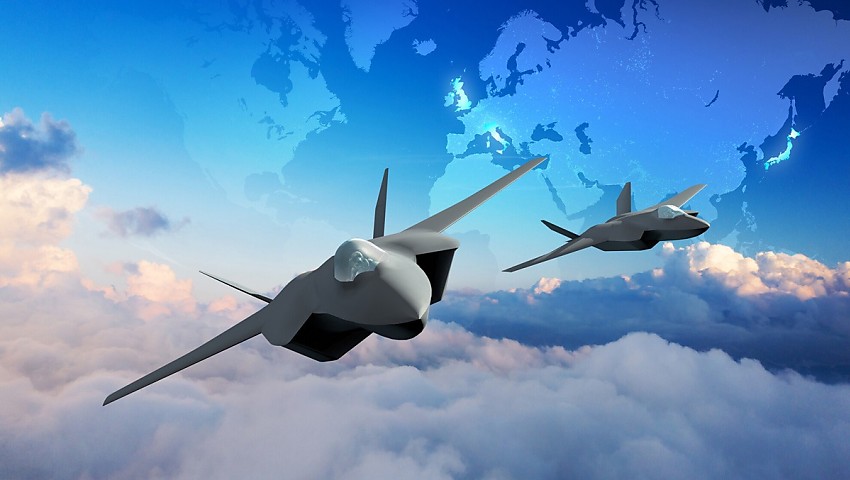
A major milestone has been marked in the Global Combat Air Program (GCAP), with the official opening of its new international headquarters in Reading outside of London.
The program is a strategic partnership between the United Kingdom, Japan, and Italy, which aims to deliver a next-generation stealth fighter aircraft to replace the existing Typhoon and Mitsubishi F-2 fleets by the mid-2030s.
The newly established global HQ will house both the GCAP International Government Organisation (GIGO) and a joint industry venture known as Edgewing, comprising BAE Systems (UK), Leonardo (Italy), and Japan Aircraft Industrial Enhancement Co Ltd. The facility will act as the central nerve centre for the design and development of the advanced combat aircraft, combining cutting-edge technology and engineering expertise from all three partner nations.
The headquarters was officially opened today by the UK’s Minister for Defence Procurement and Industry, Maria Eagle MP. Speaking at the event, Defence Secretary John Healey MP said the launch of the global HQ underlined the UK’s firm commitment to GCAP.
“Opening this global HQ in Reading underlines the UK’s full commitment to GCAP and demonstrates the steps we are taking with our partners to deliver for defence,” Secretary Healey said.
The multinational headquarters is designed to foster deep collaboration between governments and industry, bringing together engineers, designers, systems specialists and strategic planners under one roof. It also aligns with the UK’s Strategic Defence Review, which identified GCAP as not just a critical future capability for air combat, but also a key driver of industrial growth and technological innovation.
“The Strategic Defence Review captured that GCAP will deliver more than cutting-edge military capabilities. It already supports over 3,500 UK jobs, with many more to follow as the program develops. It is also sustaining a world-leading skilled workforce for the UK’s combat air industry and delivering on the government’s Plan for Change,” Secretary Healey added.
The headquarters’ opening coincided with a virtual trilateral meeting between Secretary Healey, Italian Defence Minister Guido Crosetto, and Japanese Minister of Defense Gen Nakatani. The three leaders discussed progress on GCAP and reaffirmed their nation’s commitment to joint innovation in combat air power.

The GCAP initiative, first announced in late 2022, seeks to field an advanced sixth-generation fighter aircraft by 2035, integrating artificial intelligence, advanced stealth capabilities, and manned-unmanned teaming. The platform is also expected to be compatible with future collaborative combat drones, networked sensors and long-range precision strike capabilities.
The program is already generating thousands of high-skilled jobs across all three countries. In the UK alone, over 3,500 engineers, programmers and defence specialists are directly engaged in GCAP work, with more than 1,000 apprentices and trainees having undertaken GCAP-related training – a figure expected to grow significantly in the years ahead.
New data published by the Ministry of Defence highlights the economic impact of the UK’s defence sector, with 151,000 jobs directly supported by defence spending – an increase of 14,000 from the previous year. In the south-east of England, including Reading, job numbers rose to 38,700, with 4,500 new roles created.
The opening of the GCAP HQ follows the UK government’s historic announcement to increase defence spending to 2.6 per cent of gross domestic product by 2027 – the largest sustained increase since the Cold War. The commitment underscores the government’s efforts to ensure national security while boosting industrial capability and economic resilience.
“Through this work we are helping to ensure the UK remains at the forefront of combat air power innovation for decades to come – and that defence continues to serve as an engine for growth across the country,” Secretary Healey added.
The GCAP fighter is expected to enter service in the mid-2030s, replacing key platforms in the Royal Air Force, Italian Air Force, and Japan Air Self-Defense Force, while offering export opportunities and future upgrades through sustained trilateral cooperation.
Want to see more stories from trusted news sources?
Make Defence Connect a preferred news source on Google.
Click here to add Defence Connect as a preferred news source.