

 iscover
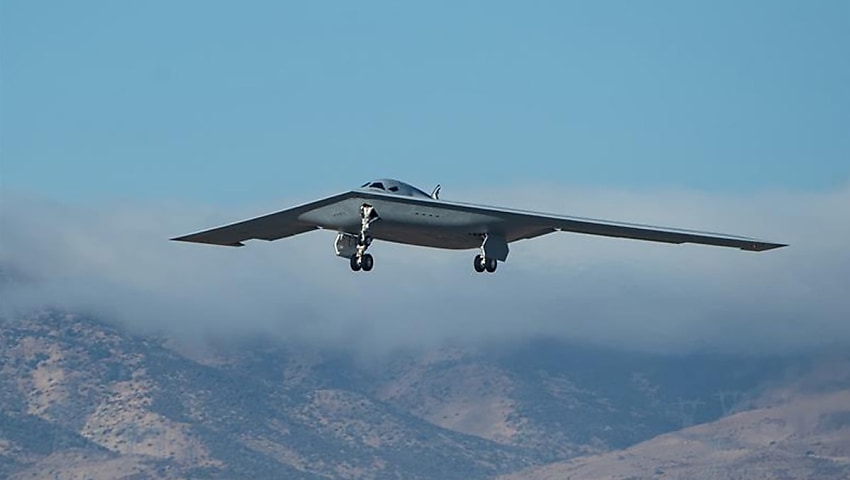
The United States Air Force has received its second B-21 Raider stealth bomber for flight testing, after the newest aircraft completed its maiden flight from Northrop Grumman’s manufacturing facility in Palmdale, California, to Edwards Air Force Base.
The addition of the second bomber marks a significant milestone in the program, allowing engineers and aircrew to expand testing of what has been described as the most advanced long-range strike aircraft in history.
According to Northrop Grumman, the arrival will enable a shift in focus from basic flight performance towards the B-21’s weapons integration, mission systems and next-generation software.
The company said these capabilities are designed to give the United States an enduring edge in stealth, strike range and adaptability, even against the most sophisticated adversaries.
With more than one test aircraft now airborne, the program is entering a phase that will examine the bomber’s ability to deploy advanced weapons while remaining undetectable by modern air defences. Central to this testing is a new software package that Northrop Grumman says will allow the B-21 fleet to receive seamless upgrades over its service life.
The aim is to ensure the aircraft’s weapons and mission profiles can be rapidly modernised to outpace evolving threats. Defence analysts in the United States have stressed that the ability to continuously update software will be as critical to the B-21’s effectiveness as its stealth design and range.
This phase of testing builds on a comprehensive ground-based campaign that has already subjected multiple B-21s to rigorous trials. Engineers have simulated years of flight conditions to assess durability and resilience under extreme operational scenarios.
Northrop Grumman reports that results so far have not only validated digital modelling but in many cases outperformed it, strengthening confidence in the bomber’s reliability.

In parallel with aircraft testing, preparations are under way to train the next generation of US Air Force pilots, maintainers and support personnel who will operate and sustain the bomber fleet.
Northrop Grumman is working with the Air Force to establish a dedicated training unit at Ellsworth Air Force Base in South Dakota. This will feature high-fidelity simulators, immersive laboratories and virtual training environments designed to replicate real-world conditions as closely as possible.
Training programs are being developed for pilots, weapons loaders, technicians and ground crew, ensuring that operational capability keeps pace with the aircraft’s technical sophistication.
Maintenance will be supported by a new B-21 Fleet management tool, which is already being tested using performance data collected from the flight program. Drawing on decades of sustainment experience across other advanced aircraft, namely the Northrop Grumman B-2 Spirit bomber, the system is intended to streamline servicing and maximise mission readiness.

Want to see more stories from trusted news sources?
Make Defence Connect a preferred news source on Google.
Click here to add Defence Connect as a preferred news source.