

 iscover
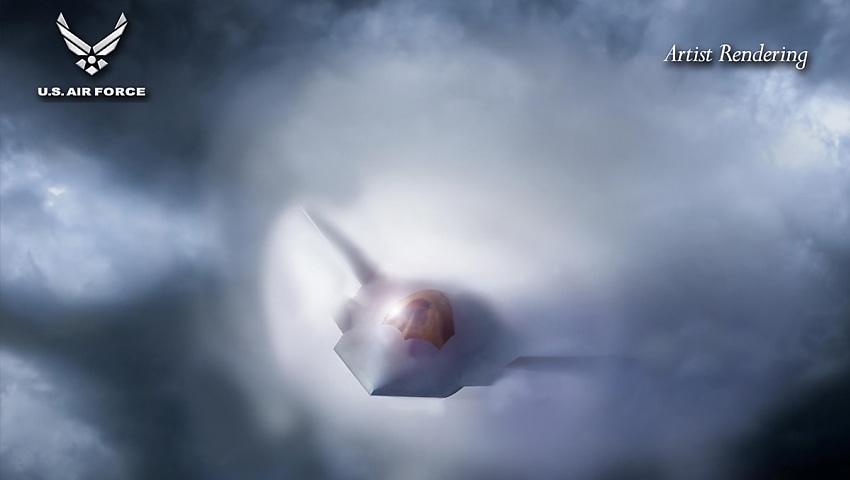
RTX business Pratt & Whitney is accelerating the development of its XA103 adaptive cycle engine for the United States Air Force’s Next Generation Adaptive Propulsion program.
The company, a subsidiary of RTX (formerly Raytheon Technologies), has introduced comprehensive digital data packages that set stringent requirements for internal teams and suppliers.
These packages integrate advanced digital design models, enabling faster iteration, reduced costs and improved efficiency. The approach also allows seamless integration with supplier systems, enhanced resource forecasting for manufacturing and accelerated digital model validation.
Jill Albertelli, president of Pratt & Whitney’s military engines business, said digital transformation was central to the company’s efforts to deliver the XA103 at speed. “We are paving the way with digital on NGAP, so much so that the rate at which we are delivering XA103 technical data packages has doubled,” she said.
“Model-based design ties all the puzzle pieces together, fostering constant collaboration, and we are applying these learnings across our engine portfolio.”
In addition to government-backed funding, Pratt & Whitney has invested more than US$30 million (AU$46 million) of its own capital in 2025 to expand its model-based engineering environment. More than 1,000 engineers, suppliers and support staff are now contributing to the program, which the company said is delivering quality outcomes at a significantly accelerated pace.
The XA103 is part of the Air Force’s effort to field advanced propulsion systems for its future combat aircraft, including the Next Generation Air Dominance (NGAD) fighter.
Adaptive cycle engines like the XA103 are designed to switch between high-thrust and fuel-efficient modes, offering substantial performance gains in range, speed and thermal management compared to current-generation F135 engines that power the F-35 Lightning II.

Pratt & Whitney’s Next Generation Adaptive Propulsion (NGAP) team is now preparing for the assembly readiness review, a key milestone that will validate the prototype’s build and testing schedule. The XA103 is expected to begin testing in the late 2020s, ahead of planned integration into the Air Force’s sixth-generation fighter fleet.
For the United States, NGAP is regarded as a critical technology in maintaining air superiority into the 2030s and beyond, particularly as competitors such as China and Russia continue to develop advanced stealth fighters and long-range weapons.
Pratt & Whitney’s push to accelerate development underscores the strategic importance of propulsion technology as the foundation of next-generation air combat capability.
Want to see more stories from trusted news sources?
Make Defence Connect a preferred news source on Google.
Click here to add Defence Connect as a preferred news source.