

 iscover
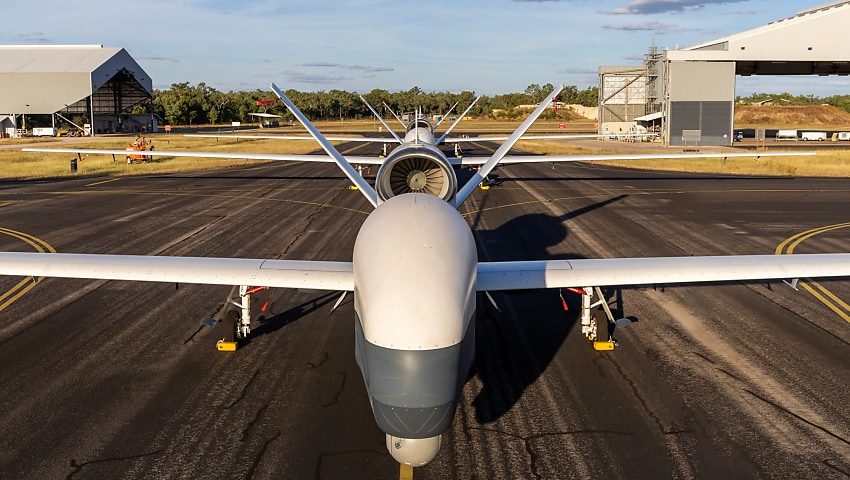
A temperature controlled, networked hangar for the Australian Defence Force’s MQ-4C Triton aircraft is reportedly almost complete and expected to finish four months ahead of schedule.
The fit-for-purpose facilities and infrastructure to support the introduction into service of the MQ-4C Triton aircraft system are being delivered under the Department of Defence’s AIR 7000 Phase 1B Project.
A scope of works at RAAF Base Tindal for AIR 7000 Phase 1B includes two maintenance hangars, a building for support and maintenance, a deployable mission control system to support operations, aircraft pavements, an aircraft wash and engine run-up area, a ground support equipment shelter, internal access roads, car parking, general pavements and landscaping as well as a local building services plant and site wide engineering services.
“The Royal Australian Air Force Tritons at RAAF Base Tindal will soon be housed in state-of-the-art facilities,” said Luke Gosling, special envoy for Defence, Veterans’ Affairs and Northern Australia.
“Delivered under AIR 7000 Phase 1B and valued at $300 million plus, the facility will support up to six MQ-4C Tritons. Very proud that the hangar has been delivered by the Territory’s own Sitzler Pty Ltd who are on track to finish four months ahead of schedule.
“RAAF Base Tindal itself is also increasing its preparedness with the construction of survivable bunkers on base ... built by the US to a spec that has already been thoroughly trialled and will keep our ADF personnel safe from a range of potential threats once rolled out.
“There will be more of it too because our northern bases need to be hardened as the capability of regional powers strengthens and geostrategic intent can change quickly. We are gearing up to be better prepared to defend Australia at a distance and that means platforms and fires but also includes greater resilience and survivability of assets and personnel on our own territory.
“The federal government continues to deliver on infrastructure investments that make a contribution to Defence capability and resilience, particularly in Northern Australia.”

Want to see more stories from trusted news sources?
Make Defence Connect a preferred news source on Google.
Click here to add Defence Connect as a preferred news source.