

 iscover
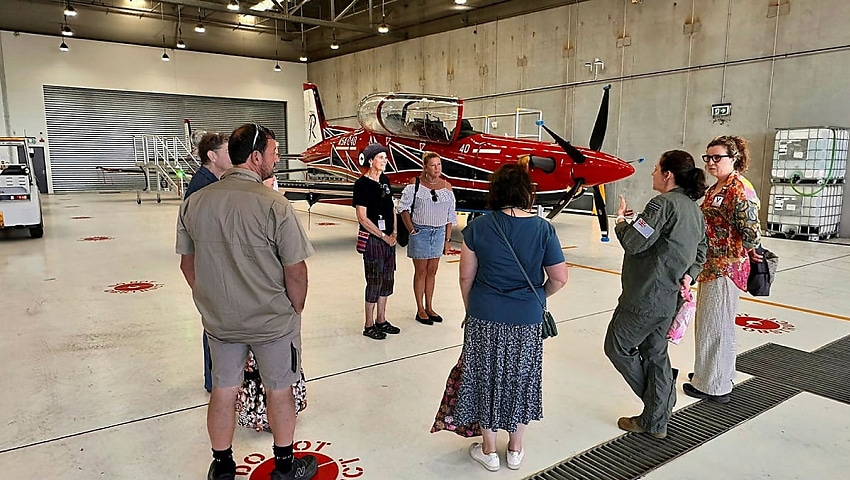
Members of the Australian Women Pilots’ Association have been given a closer look at the Royal Australian Air Force’s evolving pilot training system during a visit to RAAF Base East Sale, highlighting how modern training methods and technology are shaping the next generation of Australian military aviators.
The visit, hosted by No. 1 Flying Training School (1FTS), showcased significant changes to the Air Force’s training pipeline since the Australian Women Pilots’ Association (AWPA) members last toured the facility in 2022.
According to Flight Lieutenant Aimee Heal, one of the most important developments has been the introduction of parallel training schools operating alongside No. 2 Flying Training School (2FTS) under the Air Force Training Group.
“The most significant change has been the introduction of parallel training schools operated by Air Force Training Group alongside 1FTS and 2FTS. This has created a more streamlined pipeline that now takes trainees from their first flight through to receiving their wings within a single, integrated system,” FLTLT Heal said.
Under the revised model, trainees now remain at No. 1 Flying Training School for around 16 months, compared with roughly six months under the previous system. Instructors said the extended period allows stronger professional relationships to develop between trainees and instructors, improving learning outcomes and supporting students as they progress from basic flying skills to more advanced operational competencies.
The approach is designed to build deeper confidence and capability among trainee pilots before they move on to later stages of their flying careers. Another major change to pilot training is the increasing use of advanced simulation technology. Flight training devices are now embedded throughout the pilot training syllabus, allowing students to practise complex manoeuvres and procedures in a controlled environment before flying the aircraft.
“Simulation allows trainees to rehearse tasks and procedures before they perform them in the air. This reduces cost and risk while accelerating skill development by giving students a broader understanding of each task before they fly it,” FLTLT Heal said.
The visit also highlighted the strong and growing partnership between the Royal Australian Air Force and the Australian Women Pilots’ Association, which continues to support women pursuing aviation careers in both the military and civilian sectors.

Currently, the Air Force has 51 full AWPA members and six student members, reflecting steady engagement between the organisations. The service also maintains a visible presence at AWPA’s annual presentation night, where Air Force personnel regularly attend and present awards.
AWPA Victorian president Peta Denham Harvey said the partnership played an important role in supporting women throughout their aviation careers: “Our partnership with the Air Force is about more than exposure to training systems – it’s about actively supporting women to thrive in both military and civilian aviation.”
Denham Harvey added: “AWPA is committed to strengthening the professional networks, mentorship and visibility that help women build long and successful flying careers.”
She said the organisation’s collaboration with the Air Force, combined with its strong links across the civilian aviation sector, ensured women had access to support and opportunities at every stage of their careers.
Defence officials said the partnership is also helping attract more women into military aviation.
Exposure to Air Force personnel and flying pathways at AWPA events has already encouraged several women to pursue careers in the Royal Australian Air Force, while some recipients of AWPA scholarships – originally aimed at aspiring civilian pilots – have later joined the service.
Beyond recruitment, leaders said the relationship also supports retention by strengthening professional networks and reinforcing a sense of community among female aviators.
By maintaining strong connections between Defence and the broader aviation sector, the partnership helps pilots remain engaged and supported throughout demanding training and operational careers.
The visit to RAAF Base East Sale highlighted the shared commitment between the Royal Australian Air Force and the Australian Women Pilots’ Association to expand opportunities for women in aviation while demonstrating how modern training systems are preparing pilots for the complexity and pace of contemporary air operations.

Want to see more stories from trusted news sources?
Make Defence Connect a preferred news source on Google.
Click here to add Defence Connect as a preferred news source.