

 iscover
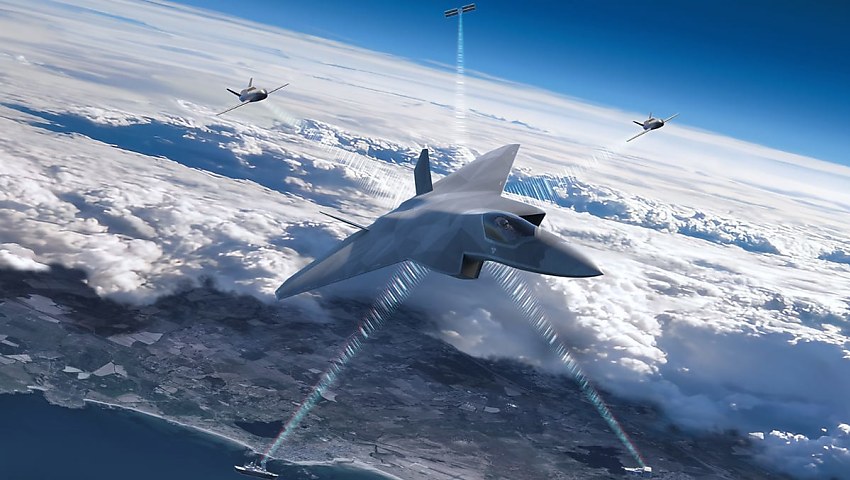
The United Kingdom has announced a further £708 million (AU$1.4 billion) investment in next-generation combat air technologies as Team Tempest celebrates eight years of progress towards delivering the Global Combat Air Programme, with Canada’s decision to join as the program’s first observer underscoring its growing international momentum.
The United Kingdom has reaffirmed its commitment to maintaining a sovereign sixth-generation combat air capability, unveiling a further £708 million investment in advanced technologies for the Global Combat Air Programme (GCAP) as Team Tempest hailed eight years of rapid technological progress towards delivering the future fighter by 2035.
Announced by the UK Ministry of Defence, the funding will support the continued development of critical technologies that will underpin the UK’s contribution to GCAP, the trilateral partnership between the United Kingdom, Japan, and Italy to develop one of the world’s most advanced combat air systems.
UK Prime Minister Andy Burnham said: “GCAP is already one of the world’s most ambitious defence and industrial partnerships – supporting 4,500 jobs across the UK. Today’s announcement makes it even stronger.”
Echoing this sentiment, new UK Defence Secretary Wes Streeting MP said: “The first duty of any government is to keep our country safe. That’s why I’m pushing this programme forward on my very first day in the job. GCAP continues to strengthen our security, drive technological innovation and create highly skilled jobs across the UK. ”
The investment will accelerate work across low-observable technologies, advanced sensors, autonomous systems, digital engineering, propulsion, mission systems and next-generation weapons integration, while sustaining thousands of highly skilled engineering and manufacturing jobs across Britain’s defence industrial base.
Charles Woodburn, chief executive of BAE Systems, said the latest investment reflected both the maturity of the program and the strategic importance of retaining sovereign combat air capability.
“This significant investment builds on years of research and development and demonstrates the UK’s commitment to maintaining world-leading combat air capability. Together with our government and industry partners, we are developing the technologies, skills and industrial capacity that will deliver the next generation of combat air systems while supporting economic growth across the UK,” Woodburn said.

The announcement coincides with Team Tempest marking eight years since its formation in 2018, with partners BAE Systems, Rolls-Royce, Leonardo UK, and MBDA UK highlighting the transformation of the UK’s combat air enterprise through unprecedented levels of industrial collaboration.
According to the consortium, digital engineering, model-based systems engineering and advanced manufacturing techniques have dramatically accelerated aircraft development, reducing design timelines while improving design maturity before physical prototypes are constructed.
Richard Berthon, director Future Combat Air at the UK Ministry of Defence, said sustained investment in advanced technologies remained essential to delivering the aircraft on schedule.
“The work being undertaken today is ensuring the UK retains the sovereign technologies, industrial capability and highly skilled workforce needed to deliver GCAP into service from 2035 while strengthening our national security and economic prosperity,” Berthon said.
Beyond technology development, Team Tempest says the program has helped create thousands of highly skilled jobs while strengthening the UK’s broader aerospace supply chain and preserving critical design and manufacturing expertise that might otherwise have been lost.
The latest funding announcement also comes as assembly continues on the UK’s flying combat air technology demonstrator, which will validate many of the systems and design concepts expected to transition into the operational GCAP aircraft.
Adding further momentum to the program, Canada this week became the first nation to join GCAP as an official observer, gaining access to selected technical discussions, industrial collaboration and future capability planning without becoming a full partner.
Prime Minister Burnham said: “So today, we are not just recommitting to our state-of-the-art GCAP fighter programme – but I am delighted to announce that Canada will join the programme as the first observer nation.”
Streeting said: “We are proud to welcome Canada to this new phase of engagement and look forward to sharing expertise and working on technological advances as we continue to deliver this groundbreaking programme.”
Canada’s observer status represents a significant step for GCAP as an open, scalable, and internationally relevant partnership, designed to meet the threats of the future, and it opens the door for future Australian participation.
The move is widely viewed as a significant endorsement of the program’s growing international credibility and its potential to become one of the Western world’s leading sixth-generation combat aircraft initiatives. Program leaders have emphasised that Canada’s participation will not alter the project’s ambitious timeline, with the multinational partnership remaining on track to deliver the next-generation combat aircraft into operational service by 2035.
As the United States, Europe, and China race to field sixth-generation air combat capabilities, the latest investment and Canada’s participation underscore GCAP’s emergence as one of the world’s most strategically significant defence aviation programs, combining sovereign capability development with increasingly broad international collaboration.

Want to see more stories from trusted news sources?
Make Defence Connect a preferred news source on Google.
Click here to add Defence Connect as a preferred news source.