

 iscover
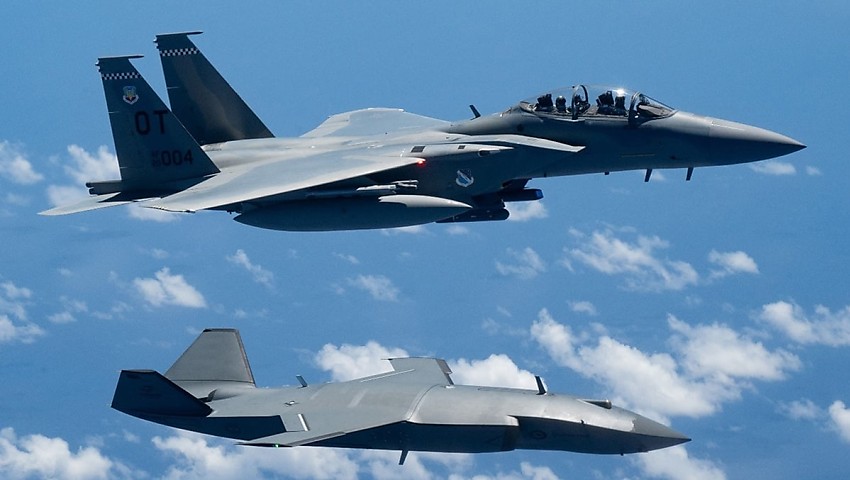
Boeing and Rheinmetall are positioning Australia’s MQ-28A Ghost Bat as a mature pathway for Germany to rapidly develop a sovereign collaborative combat aircraft capability, with German sensors, weapons and mission software potentially integrated into the uncrewed combat aircraft.
Germany could accelerate the development of its collaborative combat aircraft (CCA) capability by adopting the MQ-28A Ghost Bat as an established platform, according to Boeing and Rheinmetall.
The companies are positioning the Australian-designed uncrewed combat aircraft as a way for the German Air Force to move rapidly from CCA concept development towards operational capability while retaining sovereign control over key technologies.
CCA programs are increasingly being pursued by air forces worldwide, with uncrewed aircraft expected to operate alongside crewed fighters in air-to-air and air-to-ground missions.
Boeing said the MQ-28 has already progressed through significant development and flight-testing milestones, including participation in multinational exercises such as the US military’s Exercise Valiant Shield.
“While many CCA programs worldwide are still in the concept, definition or early test phase, the MQ-28A Ghost Bat has already gone through these essential development steps,” said Glen Ferguson, Boeing Defence Australia global director of the MQ-28 program.
The platform’s maturity could allow Germany to focus its efforts on developing sovereign mission capabilities rather than undertaking the lengthy process of designing a new aircraft.
The proposed approach would see German sensors, weapons, mission systems and software integrated onto the MQ-28, supported by an independent German system-integration capability established by Rheinmetall.

“Germany does not have to choose between speed and independence. We offer a way to achieve both at the same time,” Rheinmetall CEO of air, uncrewed and space Mike Schmidt said.
“The MQ-28 enables us to bypass the lengthy development phase of a new aircraft and go directly to the decisive task: making the capabilities of unmanned combat air systems available to the German Air Force.”
Rheinmetall is working with Boeing, Rohde & Schwarz, Diehl Defence and HENSOLDT to establish an industrial ecosystem capable of supporting German development and integration.
The companies also see the MQ-28 as a practical testbed for Germany to develop tactics, training, force structures and procedures for crewed-uncrewed teaming.
Ferguson said this work would need to begin immediately if Germany wants to establish a CCA capability by 2029.
The MQ-28’s modular architecture is intended to facilitate rapid adaptation to new missions, including air-to-ground operations, with Boeing continuing to develop the platform using flight-test data and digital-twin technology.
“The MQ-28 Ghost Bat has been designed from the outset as an extremely adaptable platform,” Ferguson said.
The experience gained through a German MQ-28 program could ultimately inform the development of future CCA platforms, providing Germany with both an operational capability and a sovereign industrial foundation for autonomous combat air systems.

Want to see more stories from trusted news sources?
Make Defence Connect a preferred news source on Google.
Click here to add Defence Connect as a preferred news source.