

 iscover




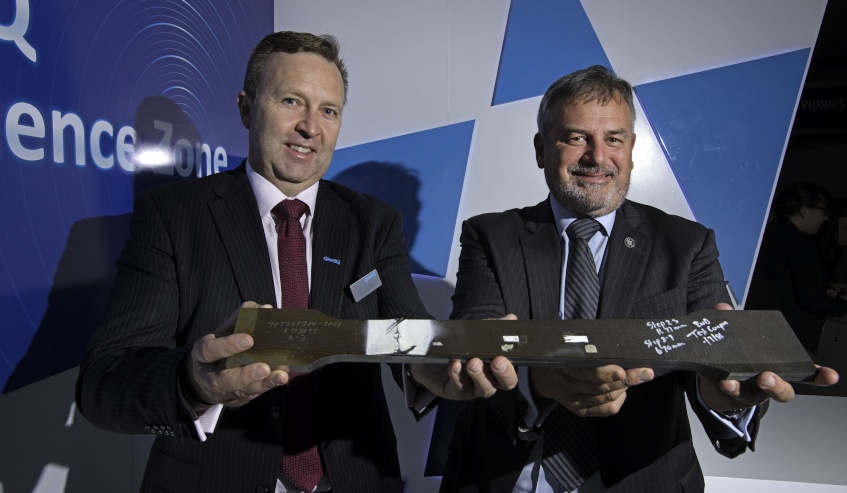
QinetiQ Australia and the Defence Science and Technology Group (DST Group) have commenced work on world-leading collaborative research in composites testing and analysis to model and predict damage growth in Australian Defence Force (ADF) aircraft.
QinetiQ and DST Group engineers will test and analyse composite structures in ADF aircraft to better understand the causes, characteristics, detectability and growth of damage, and develop methods for predicting the life of damaged structures. The outcomes will benefit both current fleets and future designs.
Greg Barsby, managing director of QinetiQ Australia, said “The combined strength of QinetiQ Australia’s team of aircraft structural integrity (ASI) engineers with DST Group’s scientific innovation will aim to bring real capability outcomes to the ADF's current and future fleet.”
Michael Houston, chief engineer of QinetiQ Australia, said this collaborative research will allow the ADF to benefit from what composite structures offer.
“Composites, in particular carbon fibre reinforced polymers, are increasingly being used for significant structural components in both commercial and military aircraft. Together with DST Group, we will utilise our decades of experience in ASI and structural testing to develop damage assessment methods that will allow the ADF to maximise the benefits that composite structures offer.”
Dr Alex Zelinsky, chief defence scientist, added that “collaborating with QinetiQ Australia on this research project has excellent potential to deepen our understanding of the performance of composites and how they fail in service, leading to improved detection and modelling techniques. This will result in significant savings and capability enhancements for the ADF.”
This is the first collaborative research project to be conducted under the strategic alliance signed in March 2016 between QinetiQ Australia and DST Group.
The strategic alliance aims to capitalise on the long-standing and deep partnership between the organisations with a commitment to undertake collaborative research and development in areas of strategic importance to the ADF.
Under the strategic alliance, QinetiQ Australia and DST Group will also support the ongoing professional development, retention and career progression of each other’s staff through training activities and employee rotations.
Want to see more stories from trusted news sources?
Make Defence Connect a preferred news source on Google.
Click here to add Defence Connect as a preferred news source.