image-1 = images/FA-18F-Super-Hornet-flies-over-Mosul.jpg
title-1 =
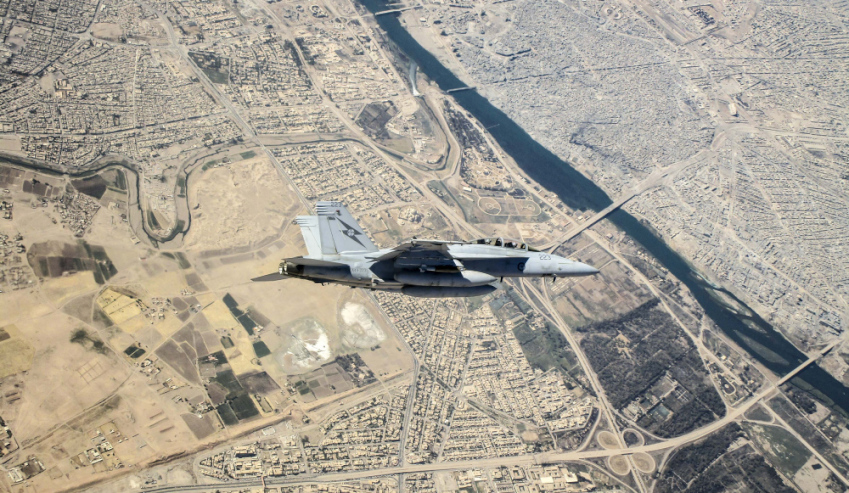
description-1 = Operation OKRA is Australia's air combat commitment to countering the spread of ISIL in Iraq and Syria.
The Royal Australian Air Force has played a key role in directly engaging ISIL forces and supporting coalition air operations.
status-1 = 1
image-2 = images/Aircraft/20190216raaf8206953_020.jpg
title-2 =
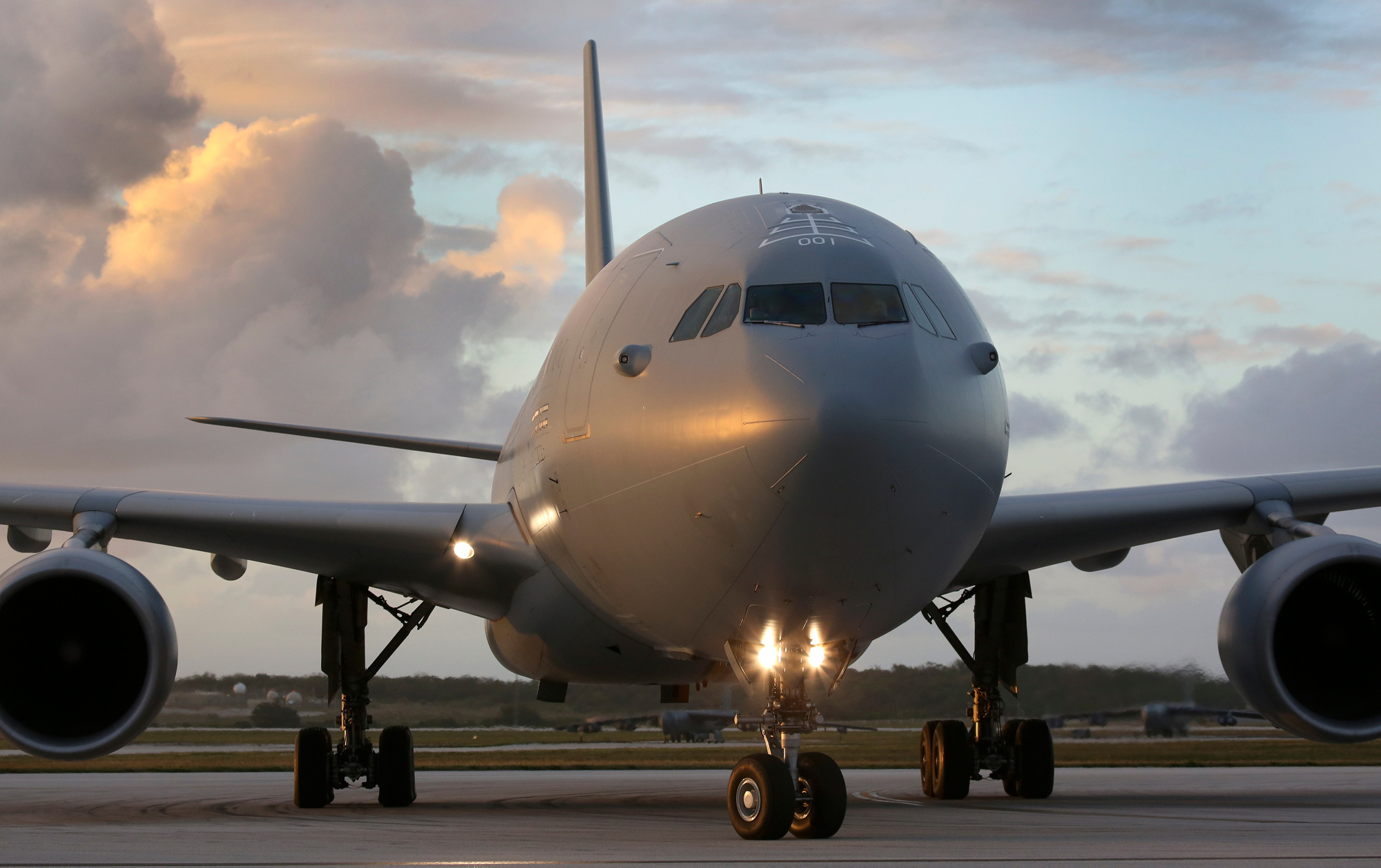
description-2 = The Airbus-designed KC-30A MRTT is fitted with two forms of air-to-air refuelling and is capable of carrying more than 100 tonnes of fuel.
status-2 = 1
image-3 = images/OperationOkra/OperationOkra-006.jpg
title-3 =
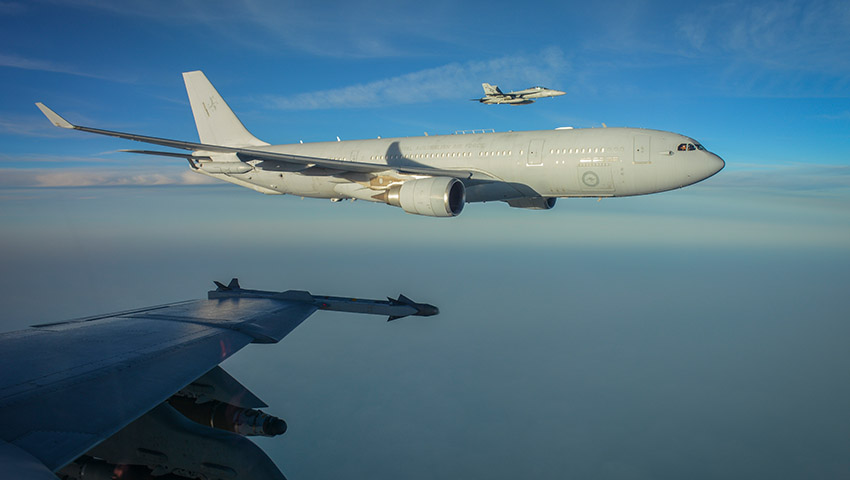
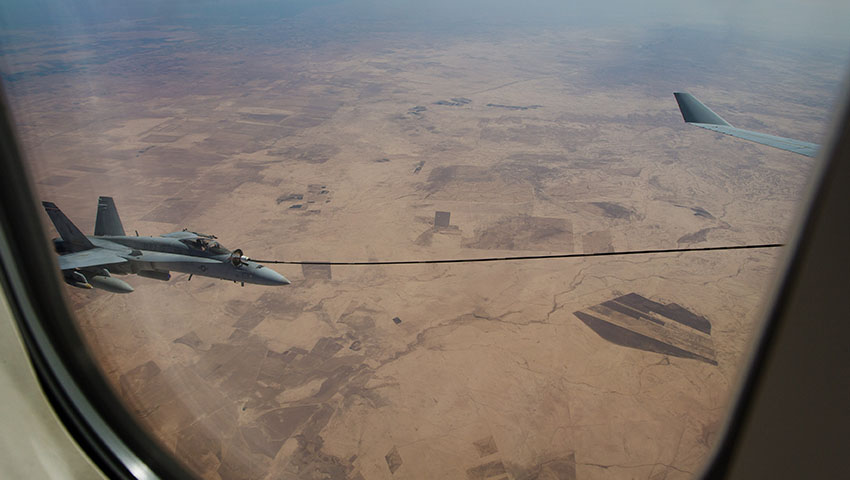
description-3 = KC-30A can refuel a range of compatible aircraft, including;
F/A-18 Classic Hornets, F/A-18F Super Hornets, E/A-18G Growlers, E-7A Wedgetails and C-17A Globemaster IIIs.
status-3 = 1
image-4 = images/OperationOkra/OperationOkra-013.jpg
title-4 =
description-4 = KC-30A can remain 1,800 kilometres from its home base, with 50 tonnes of fuel available to offload for up to four hours supporting Australia's expeditionary air power capabilities.
status-4 = 1
image-5 = images/OperationOkra/OperationOkra-009.jpg
title-5 =
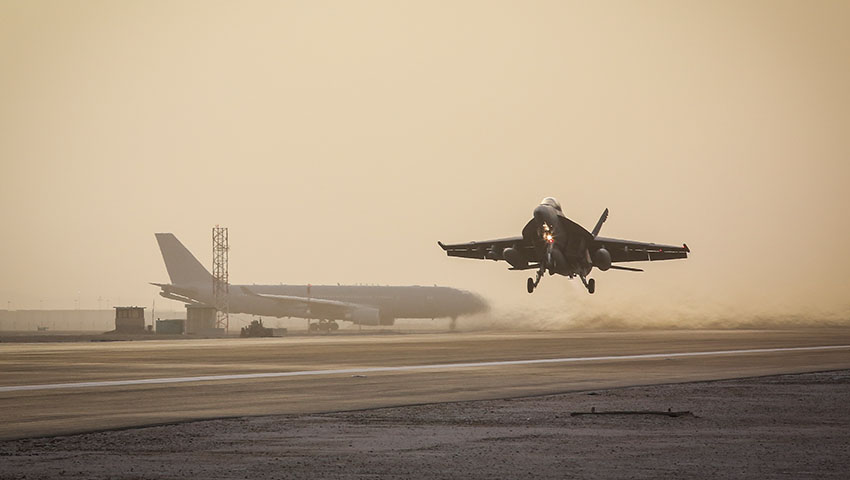
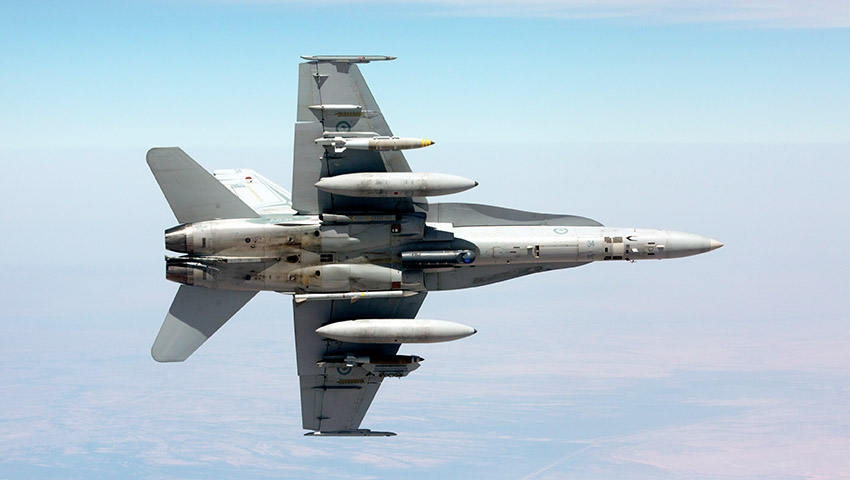
description-5 = The RAAF's 71 'classic' Boeing F/A-18A/B Hornets have served as the backbone of Australia's air combat capability since their introduction in 1984.
Based at RAAF Base Williamtown, NSW and RAAF Base Tindal, NT, the classic Hornets are operated by No. 3 Squadron, No. 75 Squadron, No. 77 Squadron and No. 2 Operational Conversion Unit.
status-5 = 1
image-6 = images/OperationOkra/OperationOkra-002.jpg
title-6 =
description-6 = The RAAF Hornets undertake a variety of mission profiles, including air interception, air combat, close air support and interdiction operations.
The Hornet has a top speed of Mach 1.8 (2,200km/h) with an interdiction range over 1,000 kilometres and a combat radius of 740 kilometres.
status-6 = 1
image-7 = images/OperationOkra/OperationOkra-005.jpg
title-7 =
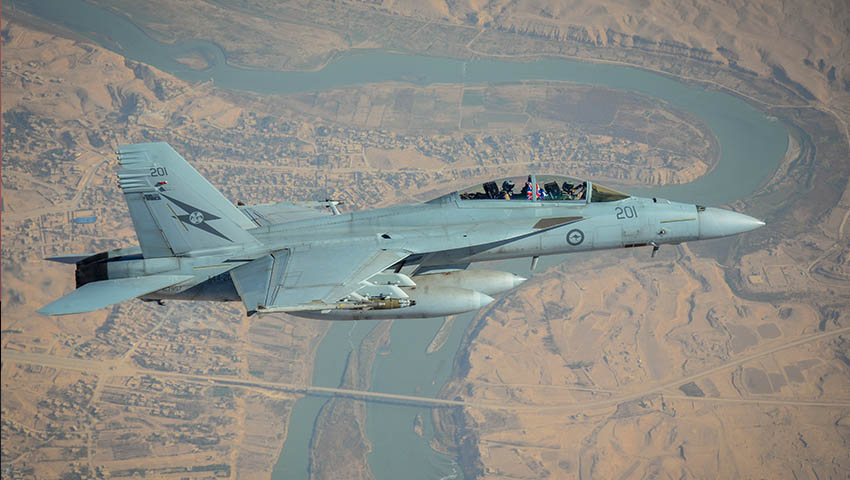
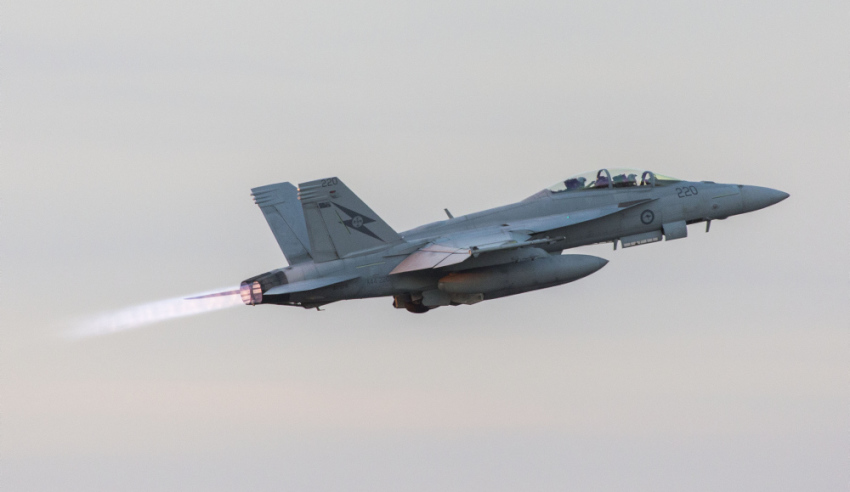
description-7 = Australia's fleet of Hornets has been supported by the introduction of the larger, twin-seat, Boeing F/A-18F Super Hornets.
The RAAF operates a fleet of 24 Super Hornets based at RAAF Base Amberley, Queensland.
status-7 = 1
image-8 = images/Super-Hornet-take-off.jpg
title-8 =
description-8 = Like the Classic Hornets, the Super Hornets undertake a variety of mission profiles, including air interception, air combat, close air support and interdiction operations.
The Super Hornet has a top speed of Mach 1.6 (1,960km/h) with a range of 2,700 kilometres.
status-8 = 1
image-9 = images/OperationOkra/OperationOkra-010.jpg
title-9 =
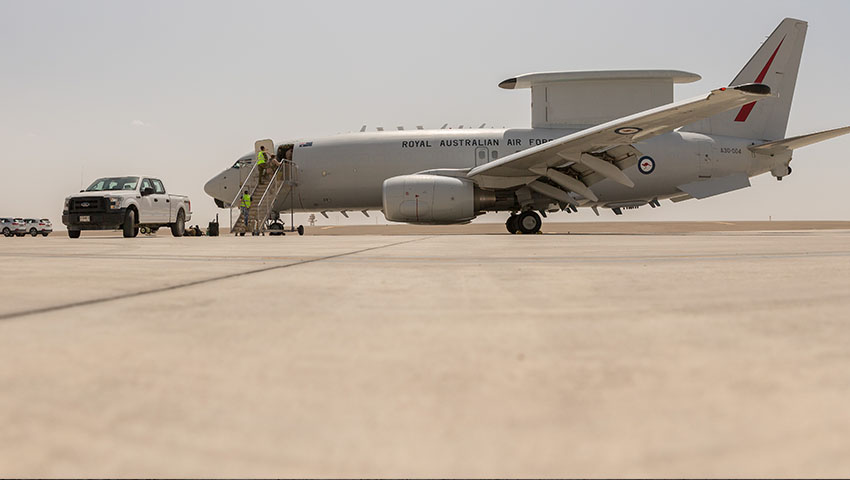
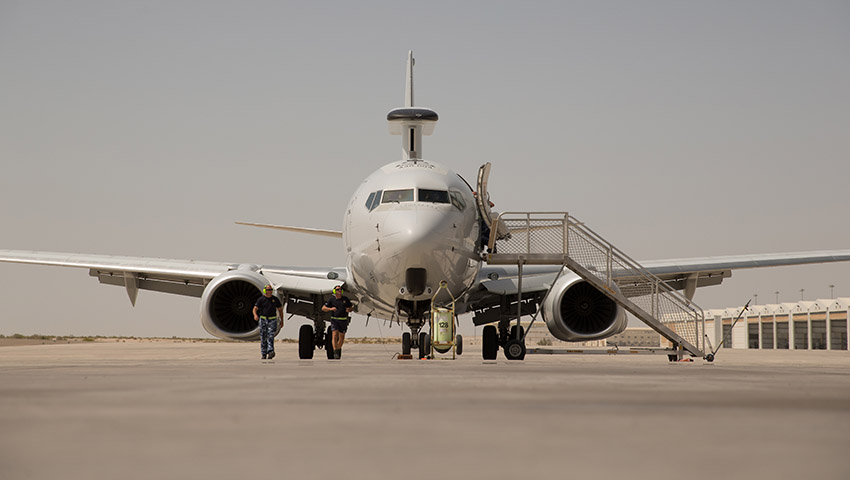
description-9 = The Boeing E-7A Wedgetail provides Australia with one of the most advanced air battlespace management capabilities in the world.
Based at RAAF Base Williamtown, NSW, the six Wedgetails are capable of communicating with other aircraft and providing air control from the sky, and can cover 4 million square kilometres during a single 10-hour mission.
status-9 = 1
image-10 = images/OperationOkra/OperationOkra-014.jpg
title-10 =
description-10 = Based on the civilian Boeing 737-700 variant, the Wedgetail includes an advanced Multi-Role Electronically Scanned Array (MESA) radar, and 10 state-of-the-art mission crew consoles that can track airborne and maritime targets simultaneously.
status-10 = 1
image-11 = images/OperationOkra/OperationOkra-010.jpg
title-11 =
description-11 = The E-7A Wedgetail can control the tactical battlespace, provide direction for assets in the air, at sea and on land, and support tanker and intelligence platforms.
status-11 = 1
image-12 = images/AvalonPhoto/avalon-2.jpg
title-12 =
description-12 = Australia's E-7 Wedgetail aircraft provided extensive command and control support for allied and Australian aircraft throughout the area of operations.
This included supporting US Air Force, US Navy and US Marine Corps, Royal Air Force and other allied strike aircraft.
status-12 = 1
image-13 = images/OperationOkra/OperationOkra-011.jpg
title-13 =
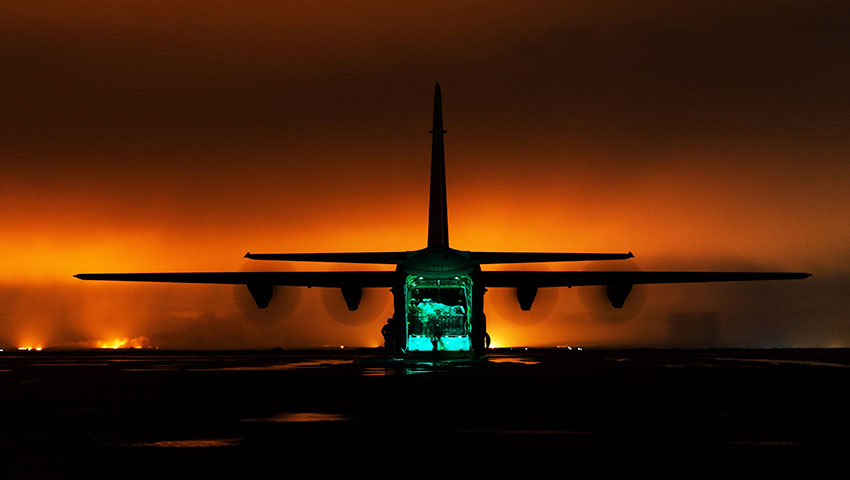
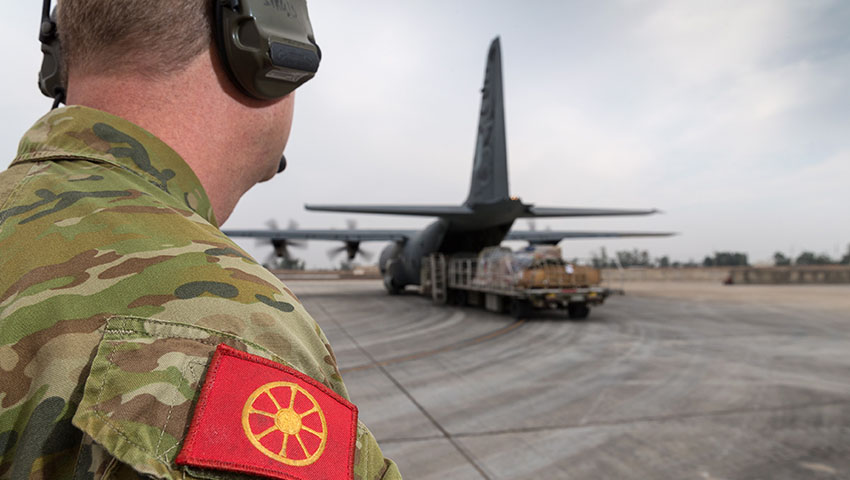
description-13 = The C-130J Hercules is listed as a medium-sized tactical air lifter that delivers cargo to airfields with short unsurfaced runways, as well as airdropping cargo and paratroops by parachute. The RAAF operates 12 of these aircraft out of RAAF Base Richmond by No.37 Squadron.
status-13 =
image-14 = images/OperationOkra/OperationOkra-003.jpg
title-14 =
description-14 = Australia's C-130J Super Hercules aircraft provided air lift support for the ATG and Australia's Special Operations Task Group (SOTG) operators conducting ground operations against ISIL forces.
status-14 = 1
image-15 = images/OperationOkra/OperationOkra-012.jpg
title-15 =
description-15 = The C-130J Hercules can carry up to 128 passengers, and recently the government announced that five of the aircraft would receive Honeywell Ka-band satellite communications (SATCOM) systems to provide broadband internet connectivity for crew and passengers.
status-15 = 1
image-16 =
title-16 =
description-16 =
status-16 =
image-17 =
title-17 =
description-17 =
status-17 =
image-18 =
title-18 =
description-18 =
status-18 =
image-19 =
title-19 =
description-19 =
status-19 =
image-20 =
title-20 =
description-20 =
status-20 =
Photo Essay: Australia’s air campaign – Operation OKRA

Click to launch gallery
Scroll to read and see more
Operation OKRA is the Australian Defence Force’s contribution to the international effort to combat the Daesh (also known as ISIL) terrorist threat in Iraq and Syria.
Operation OKRA is the Australian Defence Force’s contribution to the international effort to combat the Daesh (also known as ISIL) terrorist threat in Iraq and Syria.
Australia's contribution is being closely co-ordinated with the Iraqi government, Gulf nations and a broad coalition of international partners. About 600 ADF personnel are deployed to the Middle East in support of Operation OKRA. The operation commenced on 31 August 2014 and its initial stated aim was to combat ISIL threats in Iraq.
You’re out of free articles for this month
The original ATG deployed in September 2014 consisted of up to eight Boeing F/A-18F Super Hornets, a single Boeing E-7A Wedgetail Airborne Early Warning and Control (AEW&C) aircraft and a single Airbus KC-30 Multi Role Tanker Transport (MRTT) aircraft.
Designated Air Task Group 630 – Australia's air campaign against Daesh has been commanded by a number of RAAF commanders, including:
- Air Commodore Steve Roberton (to 5 January 2015);
- Air Commodore Glen Braz (from 5 January 2015);
- Air Commodore Stuart Bellingham;
- Air Commodore Antony Martin (early 2016); and
- Air Commodore Mike Kitcher (early 2017).
In late 2015, the US government asked the Australian government, along with other members of the coalition, to expand its military commitment to the war.
The Australian government rejected this request in January 2016, but stated that it would increase the number of Australian personnel attached to the coalition headquarters from 20 to 30 and was considering increasing the amount of humanitarian aid it provides to people affected by the war in Iraq and Syria.
In June 2017, flights in Syria were temporarily halted in response to American forces shooting down a Syrian Air Force jet, before later being resumed.
The Strike Component of the Air Task Group for Operation OKRA concluded its operations in January 2018, with the F/A-18 Hornets and Super Hornets conducting over 2,700 sorties in their nearly four-year deployment. The decision was made following the recapture of the last remaining ISIL held areas of Iraq.
Stephen Kuper
Author
Steve has an extensive career across government, defence industry and advocacy, having previously worked for cabinet ministers at both Federal and State levels.
Know More
No Tags


 iscover