

 iscover
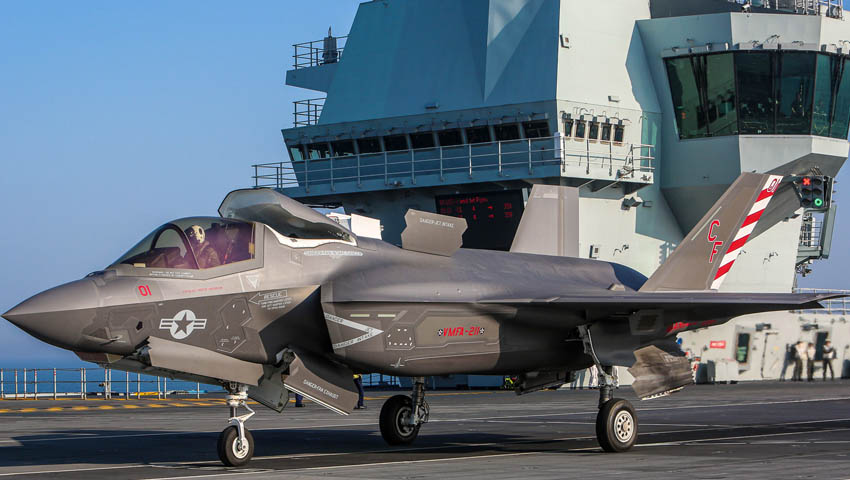
A fifth-generation F-35 fighter jet has been ditched in the Mediterranean Sea following a technical incident moments after take-off.
The UK Ministry of Defence (MOD) has confirmed reports a F-35B Lightning II has crashed in the Mediterranean Sea during “routine flying operations” by aircraft carrier HMS Queen Elizabeth.
A British F-35 pilot ejected from the aircraft after experiencing technical issues immediately after take-off.
According to the MOD, the pilot has been safely returned to the ship, with an investigation now underway to identify the cause of the incident.
In a statement, the MOD said it would be “inappropriate to comment further” until additional information is gathered.
The Royal Navy has reportedly deployed vessels to recover debris from the fighter jet.
The aircraft is among 18 fifth-generation F-35B jets — operated by joint RAF and Royal Navy 617 squadron, and the US Marine Corps — deployed aboard HMS Queen Elizabeth for seven-month deployment, which commenced in May.
The aircraft carrier has led six Royal Navy vessels, a Royal Navy submarine, a US Navy destroyer and a Dutch frigate through the Mediterranean, Indian Ocean and Indo-Pacific.

The Carrier Strike Group was initially expected to interact with over 40 nations during its 26,000-nautical-mile deployment, undertaking over 70 engagements, exercises and operations with allied forces.
These engagements include participation in NATO’s Exercise Steadfast Defender, supporting the Alliance’s Operation Sea Guardian, and conducting maritime security operations in the Black Sea.
[Related: UK’s Carrier Strike Group enters fight against Islamic State]

Want to see more stories from trusted news sources?
Make Defence Connect a preferred news source on Google.
Click here to add Defence Connect as a preferred news source.