

 iscover
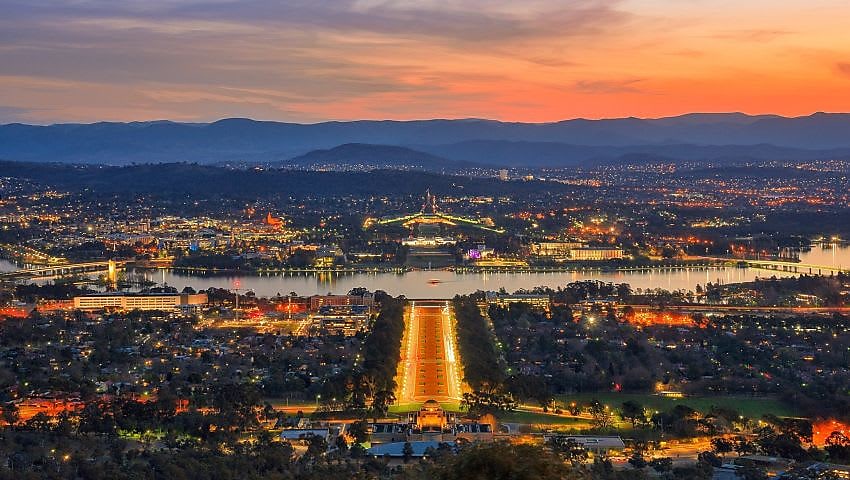
Our world is changing right before our eyes and the status quo approach of “going with the flow” will no longer serve Australia well. Adapting to this environment will require a “new look” approach to developing a National Security Strategy.
“The world is changed. I feel it in the water. I feel it in the earth. I smell it in the air. Much that once was is lost, for none now live who remember it,” these immortal words, said by the Lady Galadriel in both Elvish and the language of Men, open Tolkien’s masterpiece trilogy The Lord of the Rings and is probably the most apt description of the changes taking place in the modern world.
Australia, as a nation, stands at a major juncture, confronted with the uncomfortable reality that is the apparent crumbling of the post-Second World War economic, political and strategic order, offset by the rise of multiple competing centres of economic, political and strategic mass, with their own designs and ambitions for the 21st century.
Far from the overwhelming kinetic conflicts that served as the major catalysts for civilisational shifts in the past, the dying light of the post-war order is dominated by a mix of economic, political and military battles, bringing the world’s established and emerging great powers into direct competition and proxy confrontation with one another.
While many in the West have been slow to respond to the epochal shift in economic, political and strategic power, Australia has been among the slowest to respond, ensconced in the long-standing protective cocoon that is the tyranny of distance and our geographic isolation from the major centres of competition, that is, until now.
It is a well-documented reality that the Indo-Pacific is at the forefront of this shift in the global balance of power, driven by two emerging superpowers, the People’s Republic of China and India, flanked by equally important, rising great powers – like Indonesia, Pakistan, Vietnam, Thailand, Japan, the Philippines and others – which will only continue to grow in prominence and power against the relative decline of “traditional” great powers like the United States, Germany, the United Kingdom, France and others.
One of the key takeaways from this global and regional shift in power is the mobilisation of “whole-of-nation” power to propel these rising nations into positions of power and prominence, challenging the “global norms” Australia and other similar nations have grown woefully dependent upon and complacent about.
But what is our way out of this malaise and the ensuing challenges we will increasingly face in the coming decades?

Well, at risk of sounding like a broken record (again) – a comprehensive “whole-of-nation” National Security Strategy that sets out an easily digestible plan for Australia in the era of great power competition, with clearly articulated and easy to comprehend objectives, key performance indicators and, most importantly, an aspirational message to rally Australians to confront the challenges of our “new look” world.
An ‘Australian Century’ requires a ‘whole-of-nation’ effort
We have all no doubt heard of the concept of an “American Century” and similar precursors, like the “British Century”, or even the moniker developed by the Australian government, the “Asian Century”, as descriptors to define the dominant economic, political and strategic power of that century.
At the top level of any “whole-of-nation” National Security Strategy should be the objective of securing an “Australian Century” in the Indo-Pacific and the promise that entails, while achieving this, isn’t without its challenges, Australians have traditionally prided themselves on not being afraid of hard work, so let’s put our shoulders to the grindstone.
Beginning with a relatively simple and easy to understand guiding statement, something like: “Australia’s National Security Strategy must foster a resilient, competitive, sovereign, and forward-looking nation that leverages its strategic geography, economic potential and innovative culture to shape a stable, prosperous, and rules-based Indo-Pacific. By uniting government, industry and society in a long-term vision, Australia will secure its interests, enhance regional leadership and position itself as a global force in an era of unprecedented change.”
Now we have the broad strategic objectives or narrative outlined, we would move on to the immediate challenges and hurdles that present the most significant challenges to Australia’s national security and stability of the nation in this era of multipolar, great power competition.
So let’s break down our immediate challenges into five key points, beginning with:
- Geopolitical uncertainty and great power competition – The Indo-Pacific is becoming increasingly contested, with rising tensions between China, the US and regional powers. Australia must navigate complex alliances and ensure its sovereignty without becoming overly reliant on any one nation.
- Economic vulnerability and supply chain dependencies – Australia’s economy remains highly dependent on commodity exports, best described as a “holes and homes” economy that is increasingly vulnerable to external market disruptions. At an industrial level, Australia’s economy is exposed to vulnerable critical supply chains, particularly in technology, energy and defence technologies, while the comparatively uncompetitive and unproductive nature of the economy further impacts national resilience and sovereignty, as well as the attractiveness for global investment inflows.
- Workforce and skills Shortages – Australia faces a growing gap in key strategic skills, including STEM, cyber, defence and advanced manufacturing. An ageing population and slowing workforce growth could hinder long-term economic competitiveness.
- Climate change and resource security – Climate change poses risks to national security, food and water resources, and economic stability, but isn’t an insurmountable or catastrophic factor (despite what others would have you believe), it simply requires adequate investment in suitable infrastructure (think water security infrastructure) and technologies to offset and enhance the nation’s resilience.
- National unity and social cohesion – Rising geopolitical and economic pressures could deepen social divisions and erode public trust in institutions. This is further driven by a growing dislocation of many young Australians who feel shut out of the “Australian Dream” and the opportunities of their parents and grandparents. Meanwhile, cyber threats, misinformation and foreign influence operations pose risks to national stability.
But the challenges aren’t without their opportunities and this is where the key performance indicators and five priorities to “get after” immediately to begin turning around Australia’s prospects from 2030, while immediately taking necessary remedial actions to boost our national security, sovereignty and resilience.
- Prioritise strategic sovereignty, resilience and industrial competitiveness – Invest in advanced defence capabilities, including next-generation cyber, space and autonomous technologies. Strengthen domestic manufacturing and critical supply chains, reducing dependence on foreign-controlled industries, supported by a national energy security strategy focused on an “energy/technology agnostic” approach to energy abundance, including renewables, nuclear and emerging technologies.
- Nurture economic diversification, leadership and innovation – Establish a globally competitive regulatory environment that positions Australia as a global hub for a number of industries including, but not limited to, advanced manufacturing, artificial intelligence, quantum computing and next-generation energy. Expand trade and investment partnerships across the Indo-Pacific, reducing economic over-reliance on any single market. Leverage Australia’s US$4 trillion superannuation pool to drive long-term national investments in critical infrastructure, research and development, and emerging industries.
- Expanding regional influence – Deepen strategic and defence partnerships with allies like Japan, India, the US, and ASEAN nations to lead the development of a consent-based, rules-based Indo-Pacific economic and security architecture, enhanced by expanding Australia’s diplomatic and cultural footprint, promoting regional stability and leadership.
- National workforce development and national service – Overhaul education and workforce planning to build expertise across the economy in STEM, cyber and national security fields, with an emphasis on enhancing the training and development of Australia’s sovereign workforce while leveraging small scale policies to attract and retain global talent in key strategic industries. Foster a culture of national service and civic engagement to strengthen social cohesion and resilience.
- Governance reform and national coordination – Establish a uniform national regulatory framework that nurtures and enhances Australia’s long-term economic resilience, competitiveness and prioritises the national economic security as the foundation of broader national security. Australia also needs to improve and enhance federal, state and private sector coordination on national security, economic resilience and infrastructure planning.
Ultimately, Australia’s national security in this era of great power competition close to home requires a “whole-of-nation” effort, where every Australian is invested in the future of the nation and is, as with any good investment, rewarded for their investment, because if we can’t guarantee the investment for our own people, how can we expect them to take our national security seriously?
Final thoughts
If Australia is to survive and thrive in this evolving era, both policymakers and the public must acknowledge that while the world is increasingly multipolar, the Indo-Pacific is rapidly emerging as the most contested region globally.
This shift is driven by the growing economic, political and strategic influence of nations such as China, India, Pakistan, Thailand and Vietnam, alongside the established and resurgent capabilities of South Korea and Japan. Together, these forces are shaping a highly competitive landscape on Australia’s doorstep.
Given these challenges and opportunities, Australia must move beyond the narrow perspectives that have historically shaped its diplomatic, strategic and economic policies since Federation.
To fully leverage the transformations underway in the Indo-Pacific, Australia must adopt a long-term approach. The key question now is: when will we see a more detailed analysis and response to these challenges? When will a clear narrative and strategy emerge to help both industry and the public understand not just the risks, but the exciting and untold opportunities ahead?
As regional developments unfold and China continues to assert its influence, Australia must decide whether it can afford to remain a secondary power or if it must take on a more independent and influential role in an era of intensifying great power competition.
Crucially, Australia’s leaders and citizens must resist the allure of short-term distractions and remain steadfast in upholding the nation’s core values and principles.
Get involved with the discussion and let us know your thoughts on Australia’s future role and position in the Indo-Pacific region and what you would like to see from Australia’s political leaders in terms of partisan and bipartisan agenda setting in the comments section below, or get in touch at

Want to see more stories from trusted news sources?
Make Defence Connect a preferred news source on Google.
Click here to add Defence Connect as a preferred news source.