

 iscover
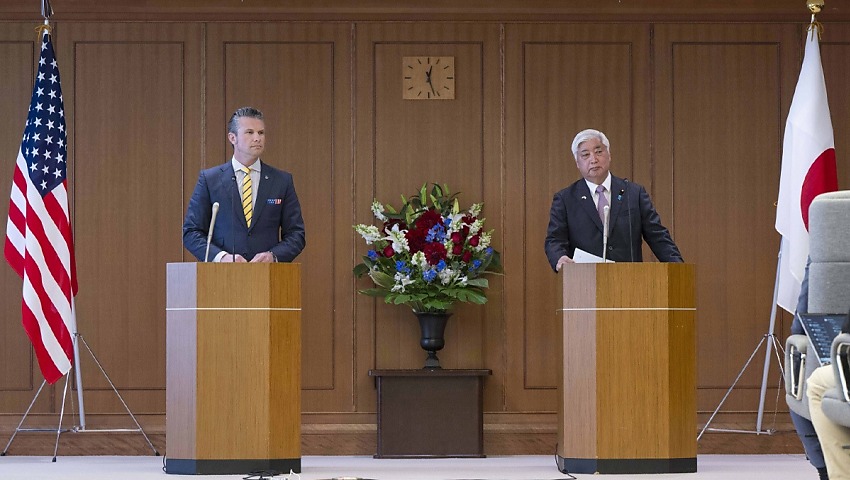
United States Forces Japan will be upgraded to a joint force headquarters, according to recent announcements from the US Department of Defense.
US Defense Secretary Pete Hegseth, speaking during a joint press conference in Tokyo, confirmed that the subordinate command of the United States Indo-Pacific Command is in phase one of being upgraded.
The US Department of Defense originally announced in 2024 that United States Forces Japan (USFJ) would be upgraded from a primarily administrative command to a joint force headquarters, with more warfighting and operational responsibilities.
As part of the USFJ’s upgrade, Hegseth said DOD will soon add additional personnel to the Tokyo and USFJ headquarters at Yokota Air Base to conduct activities aimed at strengthening bilateral bonds with the US military’s Japanese counterparts, as well as deepening operational cooperation.
“We certainly welcome JJOC’s establishment this past week,” Hegseth said during his opening remarks.
“It’s more urgency (and) it’s more cooperation in real time. It also increases our readiness to respond to [any] contingency or crisis, support US operations and help Japan and US forces defend (Japan’s) territory.
“America and Japan … we seek peace … But, as my first platoon motto says, ‘Those who long for peace must prepare for war.’
“We must be prepared, [and] we look forward to working closely together [with Japan] as we improve our warfighting capabilities, our lethality and our readiness.”

Reorganising the USFJ into a joint force headquarters would require increased staff and empowerment of command to accomplish new missions, according to Hegseth, who has previously travelled to Hawaii, Guam, the Philippines and the island of Iwo Jima.
“Our job at the Defense Department … is to build an alliance so robust that both the reality and the perception of deterrence is real and ongoing so that the Communist Chinese don’t take the aggressive action that some have contemplated they will,” Hegseth said.
“Japan would be on the front lines of any contingency we might face in the Western Pacific, and we stand together in support of each other.”

Want to see more stories from trusted news sources?
Make Defence Connect a preferred news source on Google.
Click here to add Defence Connect as a preferred news source.