

 iscover
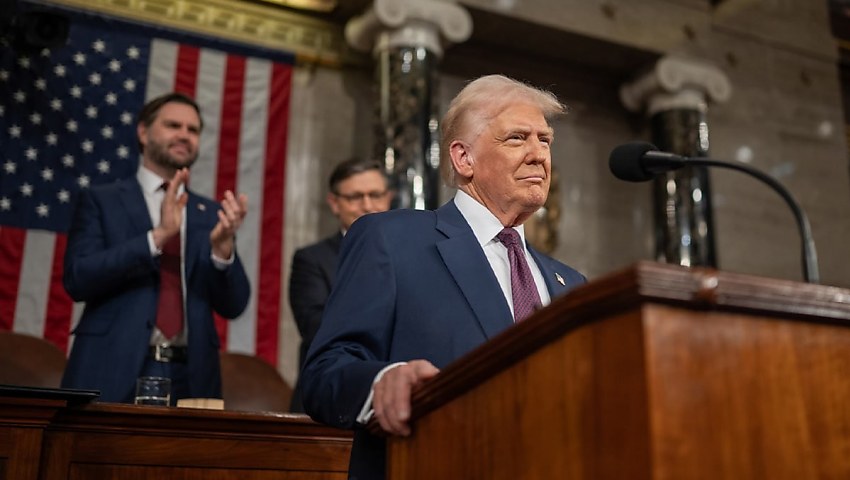
Australia will be increasingly wedged between policy decisions from the US and China, such as the newly announced US tariffs, according to economists.
The US has recently announced at least 10 per cent tariffs on foreign imports, including from Australia, this week.
Australia is expected to be subject to a minimum 10 per cent tariff, while other countries face higher “reciprocal” tariffs such as Cambodia (49 per cent), Vietnam (46 per cent) and Sri Lanka (44 per cent).
“Australia is trying to remain on friendly terms as far as possible with both. Unfortunately, I can’t see much alternative. We will gradually see a decline in the share of our exports going to China in favour of other emerging countries as relative growth in China slows but that will be a long, slow process,” said Shane Oliver, AMP chief economist and head of investment strategy.
“This (wedge) has been occurring for a while now but it’s getting harder.
“The tariffs will help accelerate de-dollarisation and less trade in the US dollar will see more trade in other currencies, including the yuan. It will be a long, slow process though.”
The US government had previously announced 25 per cent tariffs on all imported aluminium and steel earlier this year.
Australia was singled out during the most recent round of tariff announcements, with US President Donald Trump declaring that that country was effectively banning American beef to protect Australian farmers and the US would now adopt the same strategy. The US President did not reference Australia's strict biosecurity laws regarding the global beef trade and protection from mad cow disease (bovine spongiform encephalopathy).

Economist Evan Lucas confirmed that the recent tariffs would be unlikely to set up a scenario where the US dollar could be challenged by a competing global currency in the Chinese yuan.
“The Chinese peg their currency (at a specific value) with the People's Bank of China. They have deliberately devalued the yuan to offset tariff over the last 18 months, so they have been making provisions (in advance),” Lucas said.
“If you follow their strategy, they are not interested in becoming a reserve currency (to challenge the US dollar) because this would mean loss of control of fixing their own currency value. They have been clear that becoming a reserve currency is not in their interest.
“But are interested in physical good exchange, such as contra trades to work through trade embargoes.
“Currently, the Chinese specifically need to stimulate their economy. They are one of the only countries with deflation and the cutting of interest rates. In their strategy they have already hit Americans where it matters with soy and rice tariffs into China.”
Australian Minister for Trade and Tourism Don Farrell, speaking after the US tariff announcement, said the charges were not unexpected, but they are unwarranted.
“While we have an important trade relationship with the United States, it only accounts for less than 5 per cent of our exports,” he said.
“Over the past three years, the Albanese government has been focused on expanding trade and investment opportunities for our producers and exporters.
“We have established new free trade agreements with India and the UK, signed a new free trade agreement with the United Arab Emirates, and we’re implementing our Southeast Asia Economic Strategy and Roadmap for Economic Engagement with India – to deliver more opportunities for Australian businesses.
“We will continue to diversify our trading relationships – so that more of our fantastic Aussie food, wine and manufactured products can be enjoyed by the rest of the world.”

Want to see more stories from trusted news sources?
Make Defence Connect a preferred news source on Google.
Click here to add Defence Connect as a preferred news source.