

 iscover
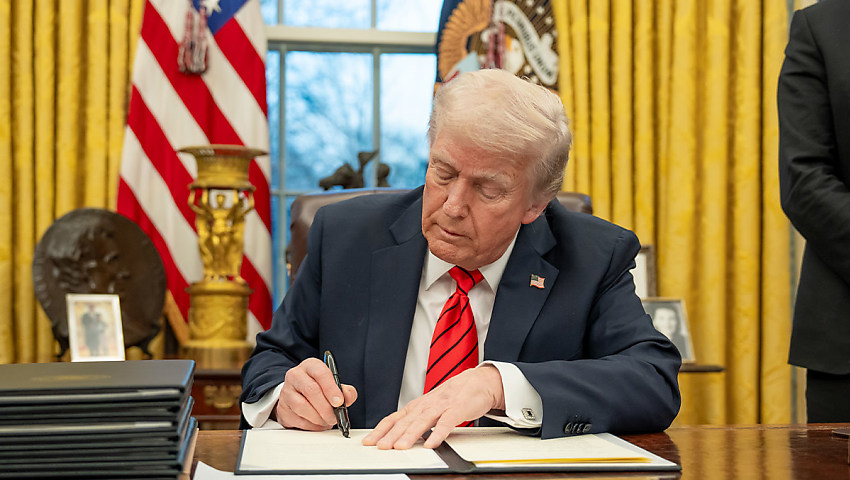
US President Donald Trump has launched a series of reforms to improve the speed of approval and accountability of the foreign military sales regime in the latest reform initiative to target the Pentagon.
In a bold move signalling a significant shift in American defence export practices, the Trump administration has issued an executive order that overhauls longstanding Pentagon procurement procedures and the foreign military sales (FMS) apparatus.
The new reforms aim to bolster the nation’s industrial base while streamlining arms transfers to international partners, including key allies like Australia — all at a time when the AUKUS partnership continues to reshape Indo-Pacific security dynamics.
The executive order outlines a comprehensive strategy to ensure the US maintains the world’s most technologically advanced military. Central to this initiative is the creation of a dynamic defence industrial base, supported by a robust network of global partners and allies.
The revised framework focuses on a rapid, transparent, and efficient foreign defence sales system, enabling effective cooperation between the United States and its strategic partners.
According to the order, the Trump administration’s policy will:
-
Ensure predictable delivery of American defence products by improving oversight and streamlining the approval process.
-
By eliminating redundant procedures, the order calls for parallel decision-making among key agencies, speeding up the process of determining which military capabilities are provided and to whom.
-
Existing rules and regulations tied to the development, execution, and monitoring of foreign defence sales are set to be pared down, aligning them more closely with broader US foreign policy objectives.
-
Increased cooperation between government and industry is expected to yield efficiencies in cost and scheduling for the FMS program.
-
The reforms mandate that exportability features are integrated early in the acquisition phase, ensuring that defence systems are designed with overseas markets in mind, thereby revitalising the American defence industrial base and reducing unit costs.

The executive order sets out an ambitious timetable for implementation. Within 60 days, the administration is required to:
-
Develop a list of priority partners for arms transfers, with updated guidance to US diplomatic missions.
-
Identify priority military end-items that can be fast-tracked for these partners without compromising force readiness.
Over the following 90 and 120 days, additional measures will be introduced, including the creation of new metrics for accountability, streamlined technology security approvals, and a single electronic tracking system for all FMS and Direct Commercial Sales (DCS) export requests.
This unified digital system is seen as a critical step in overcoming the inefficiencies that have long plagued the US defence export system.
Critics have long argued that the US defence procurement process is mired in red tape, contributing to delays that compromise both domestic force readiness and international defence partnerships. Under the new order, reform efforts will also focus on revising congressional notification thresholds – an effort aimed at mitigating delays caused by current legislative processes.
By reconfiguring the way sensitive defence technologies are approved for export, the Trump administration intends to create a more agile system that better responds to the fast-paced demands of modern conflict and international security dynamics.
Notably, the order redefines “parallel decision-making,” allowing simultaneous certifications and approvals by various agencies, a marked departure from the sequential processes that have historically slowed procurement.
Want to see more stories from trusted news sources?
Make Defence Connect a preferred news source on Google.
Click here to add Defence Connect as a preferred news source.