

 iscover
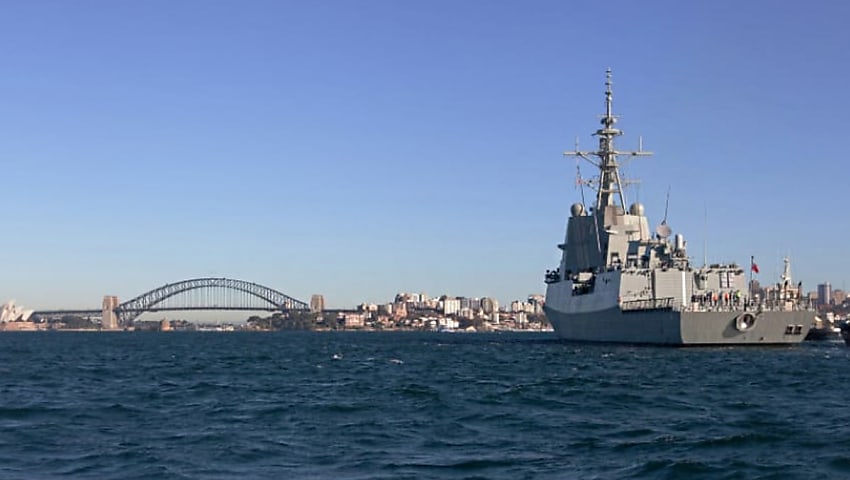
It is a debate older than our Collins Class submarines, continental defence versus forward defence. Now the debate has been resurfaced and raises significant questions about how the nation prepares to face an increasingly precarious 2030s.
Australia’s defence policy has long grappled with the tension between two contrasting strategic postures: Forward Defence and the Defence of Australia.
Forward Defence, dominant during much of the Cold War, emphasised engagement in conflicts far from Australian shores often alongside allies such as the United States to prevent threats from emerging in the region. Standing in contrast, the Defence of Australia doctrine, particularly influential from the 1980s onward, prioritised the direct protection of the Australian continent, focusing on surveillance, maritime control and self-reliant defence capabilities within the immediate northern approaches or the vaunted “sea-air gap”.
The rise of major Indo-Pacific powers, most notably China, but including other potential great powers like India and Indonesia, has significantly complicated the strategic environment in which Australia now finds itself and must now operate.
China’s assertiveness in the South China Sea, military modernisation and expansive Belt and Road Initiative present both economic entanglements and security concerns. Meanwhile, India’s growing naval capabilities and regional ambitions add another layer of complexity, while Indonesia’s increasing economic and military weight, combined with its geographic proximity, requires careful and sustained engagement.
These developments have raised questions about whether Australia can continue to rely on a purely defensive posture or if it must once again project power and influence beyond its shores to secure its interests, particularly as it, like many US allies, grapples with the potential of a far more isolationist America.
This strategic uncertainty has sparked debate over whether a return to Forward Defence is necessary in the face of increasingly contested sea lanes and power projection in the Indo-Pacific.
Yet for many opponents of Forward Defence, the doctrine risks entanglement in broader regional conflicts and reliance on allies whose long-term commitments may not always align with Australian interests. Contrasting this, a strict adherence to the Defence of Australia posture may prove inadequate in responding to the rapidly evolving regional dynamics, especially when deterrence and influence require more active engagement and coalition-building beyond Australia’s immediate geography.

Accordingly, Australian defence policy finds itself at a crossroads, attempting to reconcile the desire for sovereign self-reliance with the strategic imperative of regional engagement. Navigating this balance amid the resurgence of great power rivalry in the Indo-Pacific presents a critical challenge, one that will shape the nation’s security posture for decades to come.
The question is not merely where Australia defends itself, but how it can most effectively secure its interests in an increasingly volatile and interconnected region, prompting a number of Australian commentators and strategists to once again debate the pros and cons of both approaches and the ensuing tension between the two doctrines.
At the core of this latest round of conversation is Lowy Institute director of the International Security Program Sam Roggeveen, Aidan Morrison, director of energy and defence at the Centre for Independent Studies, and US Marine Corps Lieutenant Colonel Doug Abdiel, who breakdown and debate the challenges and opportunities in a special event for the Centre for Independent Studies (CIS).
Competitive tension between doctrines
As established, Australia’s defence policy and doctrine has long been caught between the competitive tension between proponents of both the Forward Defence and Defence of Australia doctrines and the specific requirements each of the postures would require of the nation should they be fully implemented as originally planned.
While this tension has ebbed and flowed according to the realities and requirements dictated by the broader global and regional requirements, the emergence of a multipolar world and recalibration of the balance of power in the Indo-Pacific has once again seen greater emphasis placed on the two doctrines.
A long-time proponent of the Defence of Australia doctrine, best described as the “Echidna Strategy”, is Lowy Institute director of the International Security Program Sam Roggeveen who has raised repeated concerns about the intimacy between Australia and the United States alliance (particularly under the leadership of the Trump administration) and the AUKUS trilateral partnership in particular.
Expressing this concern, Roggeveen elaborated on these concerns saying, “There are two traditional schools of thought [on Australia’s defence posture], the first is usually referred to as the Defence of Australia school and the other is the Forward Defence school ... The first group, the Defence of Australia school, says the job of the Australian Defence Force is to defend the Australian continent, simple as that...
“The second school is slightly more complicated, the Forward Defence school; they say the job of the Australian Defence Force is in conjunction with our great power ally to defend the regional order that ensures Australia’s security and Australia’s defence, now I happen to belong to the first school and I think at the moment, given the advent of the Trump administration, that school is rhetorically and in substance has a bit of an advantage at the moment.”
Roggeveen highlighted the particular conundrum Australian policymakers face, saying, “It is very hard to see Australia backing its great power ally to defend a rules-based order when that great power is itself intent on destroying that rules based order ... I think that the acquisition of nuclear-powered submarines, American and then British nuclear-powered submarines, draws Australia unnecessarily close to American strategic objectives.”
While this inference is reasonably accurate and based upon logical assumptions, it denies Australian strategic agency, while also overlooking the fact that enduring regional stability, or more pointedly, it is in Australia’s interests to actively and assertively maintain the post-Second World War Indo-Pacific status quo.
This is something that Roggeveen and his fellow Defence of Australia advocates seem to be either reluctant to accept or unwilling to recognise, thus colouring the analysis and resulting conclusions. He articulates this, saying, “It is harder to say no to the Americans than it would be if we didn’t have the capability (nuclear-powered submarines) in the first place. If we have capabilities that are designed to purely defend the Australian continent as I would advocate for under an Echidna Strategy then the question would never arise, the Americans would never ask us because we have no capability to help them.”
One area I do agree with Roggeveen on, is his point around us continuing to let budget drive Australia’s defence strategy and doctrine, largely does so via the nation’s capability definition and acquisition processes that result in what he sees as an over-dependence on expensive, exquisite and small numbers of US hardware like the F-35, Aegis combat system, P-8A Poseidon, M1A2 SEPv3 Abrams among a myriad of other capabilities.
Roggeveen said, “In linear terms where we develop a policy, we buy the kit to implement the policy and then we implement the policy. But it doesn’t always work that way, it can work the other way around. In fact, the kit that you have can actually drive policy so if we eventually have eight nuclear-powered submarines in our fleet as proposed then at the moment the balloon goes up and the Americans ask us, we need you now, it is much harder to say no to the Americans.”
However, not all of Roggeveen’s fellow contributors agree with this inescapable knot that he and others perceive that Australia has been locked into alongside the United States as a result of the AUKUS agreement, with the benefits provided by close proximity to the US more than offsetting any detrimental impact for Australia; however, our biggest challenge remains the “Americanisation” of our force structure at a time when it appears that the US may not be as committed to the region as we would like, feeding off the points made by Roggeveen.
Aidan Morrison, director of energy and defence at CIS articulated this point, saying, “It [Sam’s point around the waning importance of the US alliance] does clearly make the point that America will not chose to succeed in maintaining the kind of dominance in Asia we have become rather accustomed to and we shouldn’t build a defence strategy that is predicated on trying to urge them to maintain that kind of dominance.”
Departing from the status quo, Morrison said, “What I’d like to suggest is the best Australian national strategy [is one] which doesn’t any American intent or success to retaining that dominant power status in Asia, it is also potentially extremely pro-American. Put simply, we can have a strong alliance with America with less reliance on America. The US could and should want us to dramatically alter our defence strategy in order to enable them to remain deeply engaged in Asia if that is what they so choose.”
Going further, Morrison added, “What I think is something of a remarkable quirk of physics and economics that defence force and that posture is the same as what we’d build even if they chose to leave and we knew that they were leaving. Yet somehow our defence establishment seems incapable of having the kind of necessary clear thinking conversation with both our closest ally and I think the Australian public. Let me first try to sketch the essence of the problem – Australia has grown comfortable developing a defence force that essentially contributes small high-end forces near the tip of an American expeditionary spear.
“This has been somewhat helpful for America in an era where they’ve directed that spear against non-peer competitors in largely non-essential conflicts anywhere around the world except right on our doorstep. But now with the rise of China, should America choose to remain engaged in Asia, what they need most from Australia is secure, well-supplied continent that can support the shaft of an American spear pointed north.”
And herein lies our major problem, Australia’s policymakers and public, for that matter, remain entrenched in the belief that the global and, indeed, the regional threat environment hasn’t materially changed since the early to mid-1990s, at the height of the Pax Americana, accordingly our material defence capabilities haven’t changed (despite the numerous white papers, strategic updates and strategic reviews) effectively since the late 1970s (at least).
Morrison highlighted the challenges this lethargic approach leaves us with, saying, “Thus our ADF is not designed to defend Australia or have any independent strategic effect but simply to allow us to bid for supplemental niche roles in US operations. The Americans find this modestly useful. We get some alliance brownie points and we avoid having to think seriously about our own strategic circumstances beyond hoping the Americans will always look after us.”
Conveniently bringing us back to the concern about the “Americanisation” of Australia’s force structure, defence posture and what Roggeveen sees as an over-dependence on American military equipment, not to mention the enduring status quo of Australia letting budget guide strategy rather than the other way around, Morrison articulated this concern, saying, “What I’m saying is not that American equipment is bad, not at all. I want one [policy] instead of placing an order from the catalogue defence decides to put the catalogue away and invent some bespoke way of procuring much the same thing from a different supplier or different way mode of procurement. What we’ve ended up doing is Americanising the force structure but Australianising the platforms and equipment in it.
“What we should be doing is exactly the other way round, we should be Australianising the force structure and buying the best possible mostly off-the-shelf equipment wherever we can which is very often American. So as a result, we end up with a force that can do a tiny slice of what a superpower does which is projecting power and we often do it in the least cost-effective way which means we bring to bear the smallest possible slice for our economy.”
Perhaps controversially, Morrison’s point regarding the “Australianisation” of the force structure, to be complemented by the best COTS military equipment where viable, represents the best bang for buck approach for Australia to pursue, while accounting for much-needed risk management to deliver Australia a viable capability that is less dependent on the continued support of the United States (should it be unreliable or unavailable).
Critically, embracing such an approach makes Australia, as Morrison describes it, a “US ally that doesn’t require rescuing” at least immediately anyway if we are able to effect the necessary changes across the Australian Defence Force and, more critically, this would require significant transformation across the national economy to “bake in” industrial capacity, resilience and competitiveness to more effectively insulate the nation from the impacts of conflict or potential coercion.
Morrison articulated this, saying, “Also the best thing that we can bring to the US alliance is to be the ally in Asia that doesn’t need rescuing and the ally that can make it much easier to rescue others.”
Importantly, delivering this capability requires as the Government reminds us, that a coordinated "whole-of-nation" effort will be required, but one that is based in reality and one that prepares for the worst possible outcome at a minimum to ensure that Australia's defence and national security capabilities are fit-for-purpose to face down any potential reality that can be thrown up against us.
Final thoughts
If Australia is to not just survive but genuinely prosper in this shifting era, policymakers and the broader community must acknowledge that the world is growing ever more multipolar, and that the Indo-Pacific is quickly becoming the most fiercely contested region on the planet.
This transformation is driven by the rising economic, political and strategic influence of nations like China, India, Pakistan, Thailand and Vietnam, alongside the established – and resurging – capabilities of South Korea and Japan. Together, they’re forging a highly competitive arena right on Australia’s doorstep.
Confronting these challenges and opportunities means moving beyond the narrow outlooks that have long underpinned our diplomatic, strategic and economic policies since Federation.
To truly harness the profound shifts taking place in the Indo-Pacific, Australia needs to adopt a long-term perspective. The urgent questions now are: when will we see a comprehensive analysis and response to these developments? When will a clear narrative and strategy emerge that enables both industry and the community to understand not only the risks but the thrilling, untapped opportunities ahead?
As regional dynamics evolve and China continues to extend its sway, Australia must decide whether it can afford to remain a secondary power or whether it needs to embrace a more independent and influential role amid intensifying great-power competition.
Most importantly, our leaders and citizens must avoid short-term distractions and stay true to Australia’s core values and principles.
Get involved with the discussion and let us know your thoughts on Australia’s future role and position in the Indo-Pacific region and what you would like to see from Australia’s political leaders in terms of partisan and bipartisan agenda setting in the comments section below, or get in touch at

Want to see more stories from trusted news sources?
Make Defence Connect a preferred news source on Google.
Click here to add Defence Connect as a preferred news source.