

 iscover
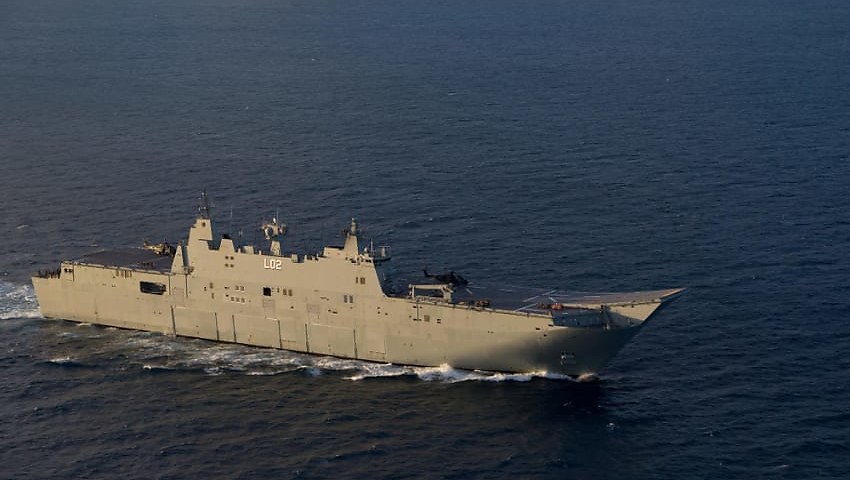
The Royal Australian Navy’s flagship amphibious assault ship, HMAS Canberra (III), has arrived in Wellington, New Zealand, for a landmark five-day port visit to its sister city – marking the ship’s first visit to the New Zealand capital and a significant moment in the enduring Anzac partnership.
As one of the largest and most capable vessels in the Australian fleet, HMAS Canberra’s arrival highlights the deep defence relationship between Australia and New Zealand. Over the course of the visit, personnel from the Royal Australian Navy (RAN) and Royal New Zealand Navy (RNZN) will engage with the local community, sharing stories of the long-standing mateship that has defined the two nations’ shared military history.
A major highlight of the visit will be a traditional Freedom of Entry parade through the City of Wellington, a custom dating back to medieval times and the highest honour a city can bestow upon a military unit. The parade will see more than 300 Australian and New Zealand Defence Force members march through the city in full ceremonial display.
The ritual symbolises the trust historically granted to military units entering fortified towns, allowing them to access supplies and shelter. In today’s context, it remains a powerful expression of respect and civic appreciation.
The Anzac bond forged on the battlefields of Gallipoli in the First World War continues to shape modern defence cooperation between the two nations.
Vice Admiral Mark Hammond, AO, RAN, Chief of Navy, is also in New Zealand as part of the visit and will meet with his counterpart, Rear Admiral Garin Golding, RNZN, in both Wellington and Auckland.
“Australia and New Zealand are bound together by our collective history, geography and shared interests in the Indo-Pacific region,” VADM Hammond said.
“We have a proud history of working together for over a century, including most recently during this year’s Australian Anti-Submarine Warfare Exercise and Operation Argos.

“I look forward to discussing with Rear Admiral Golding how our navies can continue to strengthen our interoperability and shared lethality – contributing to a secure and stable region.”
Rear Admiral Golding welcomed the opportunity for closer interaction between the two navies, both at sea and on land.
“Having the Australian Navy flagship here in our capital city is a visible demonstration of the close working relationship our navies enjoy and a real highlight for the people of Wellington,” he said.
The port visit comes ahead of the upcoming multinational Exercise Talisman Sabre, set to take place in Australia across July and August. HMAS Canberra will embark New Zealand Defence Force personnel and equipment en route, further reinforcing the practical cooperation underpinning the Anzac alliance.
RADM Golding said the combined training effort would enhance readiness and mutual understanding between partners.
“The chance to train across sea, land, and air domains with a range of military partners allows our personnel to hone their warfighting skills and operate as a truly integrated force,” he said.
Captain David McPherson, RAN, Commanding Officer of HMAS Canberra, said the crew were eager to engage with their New Zealand counterparts, both in joint training and on the sports field, saying, “This visit is a milestone for both our ship and our sister city. My crew and I are proud to represent Australia here in Wellington.”
“Our long-standing friendship and the Anzac spirit shape how our navies train, deploy and fight together,” CAPT McPherson said.
Canberra and Wellington have shared a formal sister city relationship since 2016. HMAS Canberra (III) is a 230-metre amphibious platform capable of transporting over 1,000 troops, more than 100 ground vehicles, four landing craft and up to 18 helicopters. The ship is crewed by more than 400 personnel.
Australia and New Zealand’s defence cooperation is grounded in a robust security framework that includes the 1944 Canberra Pact, the ANZUS Treaty, and the Australia–New Zealand Closer Defence Relations agreement reflecting an enduring commitment to mutual defence and regional stability.
Want to see more stories from trusted news sources?
Make Defence Connect a preferred news source on Google.
Click here to add Defence Connect as a preferred news source.