

 iscover
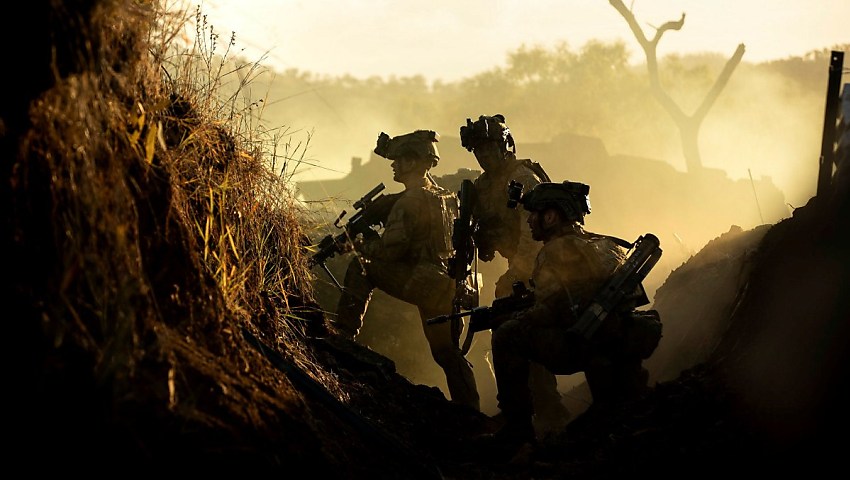
Australia’s sovereignty, while often politicised as an all-or-nothing concept, is best understood as the nation’s democratic ability to make autonomous strategic decisions such as joining AUKUS or our economic dependence on Beijing, set against an increasingly complex web of global alliances and pressures, rather than as absolute independence.
In the contemporary Australian context, the concept of sovereignty is undergoing significant transformation. Once defined in strict legal terms as the absolute authority of the state within its borders, sovereignty is now increasingly shaped by the realities of great power competition, a multipolar international order and the emergence of persistent, whole-of-nation grey zone conflict.
Australia finds itself navigating a world where state power is projected not only through military might but also through economic coercion, technological influence, disinformation and political interference, factors that blur the traditional boundaries between peace and war, foreign and domestic affairs.
Australia’s long-standing strategic and, indeed, our public culture shaped by geographic isolation, reliance on powerful allies and a deep-seated fear of abandonment has produced a complex relationship with the very concept of sovereignty from the macro to the micro level, respectively, while successive governments have sought to balance national autonomy with deep integration into alliance frameworks, particularly the US alliance. Yet as strategic competition intensifies in the Indo-Pacific, debates around sovereignty are becoming more prominent, more polarised and more politicised.
This is particularly evident in the discourse surrounding initiatives such as AUKUS and the presence of foreign forces on Australian soil. Critics argue such arrangements risk ceding control to external powers, while supporters view them as sovereign decisions made in pursuit of national security and strategic advantage.
Complicating this landscape further is the nature of modern threats, which frequently operate below the threshold of conventional conflict. Grey zone tactics – ranging from cyber attacks and foreign interference to economic disruption and information warfare – target the foundations of national resilience and challenge the state’s ability to respond within traditional legal and military frameworks.
As a result, sovereignty can no longer be understood purely as territorial control or legislative independence. Instead, it must also encompass Australia’s capacity to make independent decisions, protect critical infrastructure, uphold democratic institutions and resist coercion, whether overt or covert.
In this shifting strategic environment, sovereignty is no longer absolute, nor is it merely symbolic. It is increasingly defined by capability, credibility and cohesion. For Australia, maintaining sovereignty in the 21st century means building the institutional, technological and societal resilience necessary to operate confidently within a contested and increasingly volatile world, one where alliances are essential, but where strategic decisions must ultimately reflect national interests and democratic will.

Highlighting this shift is the director of the Australian Strategic Policy Institute’s (ASPI) National Security Programs, John Coyne, in a piece for ASPI’s The Strategist titled, Sovereignty: more than a slogan, less than absolute, in which he seeks to illuminate the debate, conversation and indeed the very intricacies of contemporary sovereignty and what it means for Australia.
Coyne unpacked these intricacies, establishing his thesis, stating, “‘Sovereignty’ is one of the most frequently invoked and most poorly understood terms in Australian strategic debate. It dominates arguments against AUKUS, US military presence in Australia, and our deepening alliance with Washington, yet it remains largely undefined in policy discourse. If Australia is to preserve and exercise absolute sovereignty in a contested world, we must start by understanding what the concept means and what it does not.”
Definitions are important
As with forming any basic understanding of a complex subject, understanding the basic definitions are foundational, in this case, understanding the established definition of sovereignty is essential to having an informed conversation.
Coyne establishes the foundation of this understanding, saying, “In international relations theory, sovereignty traditionally refers to the supreme authority of the state over its territory, population and decisions, free from external interference. In the post-Westphalian world, it has underpinned the legal and political order of states.”
“However, in the 21st century, this once-absolute notion has evolved. Sovereignty is now negotiated through treaties, trade, alliances, intelligence sharing and multilateral institutions. It’s less about total independence and more about maintaining credible decision-making power within complex networks of interdependence,” he added.
Based on this second point, it is easy for even those initiated in the ways to become confused as Australia, like all nations, and active participants in the post-Second World War economic, political and strategic order increasingly enmesh the concept of their sovereignty in a complex, interconnected ecosystem of nations, multilateral organisations, and of course, increasingly complex agreements blurring the lines between what constitutes our sovereignty and what doesn’t.
In the Australian context in particular, this becomes more complex, when one considers, as Coyne said, “Sovereignty anxiety in Australia is less about law and more about symbolism, about whether we are truly acting in our own best interests or merely following others.”
This has, of course, devolved into an increasingly complex, distorted and contentious battle of ideas, something Coyne detailed, saying, “On one side, some social media influencers and minor party figures portray every act of alliance cooperation as evidence of Australia becoming a US puppet, echoing Cold War anti-Americanism dressed up in digital-age outrage.
“On the other, a different fringe demands greater ‘strategic independence’ by embracing deeper economic and diplomatic alignment with China, ignoring Beijing’s well-documented coercive behaviour and rejection of liberal international norms.”
And it is here, in this “grey zone” that nuance comes into play, and it is here that Australia and its policymakers must increasingly grapple with and adapt to play in, rather than the default and false dichotomy that has come to dominate much of Australia’s strategic thinking.
Moving forward
Coyne recognised the growing need for both the Australian public and its policymakers to adapt to these challenges, stating, “To move forward, we need to mature our national understanding of sovereignty. That starts with education. The concept of sovereignty, its history, its modern definition, and its practical application should be integrated into school curricula. Young Australians should understand that sovereignty is dynamic, not static. It’s about making credible choices in a world of complex relationships.”
Unpacking this further, he added, “Second, policymakers and leaders must be more deliberate in explaining how sovereignty is exercised through partnerships. Rather than defensively countering sovereignty critiques, governments should proactively articulate how such initiatives as AUKUS or shared basing arrangements enhance our ability to protect national interests.”
However in order to deliver on these points Australia needs to thoroughly and comprehensively debate the future we want for the nation, our children and the role we want to play in our increasingly complex, competitive and unpredictable world through clear eyes and a clearly articulated and agreed upon set of national interests, something that is becoming increasingly difficult in today’s atomised, divided Australia.
Only from that can we clearly identify and articulate the capabilities, both military, economic, political and cultural that we need to develop, maximise and/or shed in order to maximise our capacity to independently secure out national interests in this new world.
Coyne articulated this point saying, “Third, we must continue to invest in the capabilities that make sovereignty real. That includes resilient supply chains, robust critical infrastructure, secure communications and sovereign decision making in defence, intelligence and technology. Sovereignty without the means to act is sovereignty in name only.”
“Finally, the national security community, think tanks, media and academics must work to sharpen public understanding. We should reject simplistic binaries and foster a more nuanced discourse. Sovereignty is not eroded by cooperation but by dependency without agency,” he added.
This final point is critical to our national success, particularly in the era of misinformation and disinformation, where truth and reality, it seems, are both up for not only debate, but also deconstruction, often by the loudest and most uninformed voices in the room.
Coyne said, “Sovereignty will always be central to Australia’s national security debate. But invoking the word isn’t enough. We need to understand it, define it and defend it not as a relic of strategic nostalgia but as a living, evolving capacity to act in the national interest. The real question is not whether we’re sovereign but whether we’re exercising that sovereignty with clarity, confidence and purpose.”
Final thoughts
From an economic and industrial perspective, the post-COVID-19 world has laid bare the fragility of global supply chains and exposed the limitations of Australia’s domestic manufacturing base. As the post-Second World War economic order continues to erode, Australia’s vulnerability to external shocks has become increasingly apparent, underscoring the need for greater national resilience.
Crucially, Australians must confront the fact that, unlike many nations, modern Australia has largely avoided the harsh realities of conflict. Generations have grown up without experiencing food, energy or medical shortages, leaving little appreciation for the social and economic dislocation that could arise should such disruptions occur. This complacency poses a risk to national preparedness.
To safeguard its future, Australia must evolve into a more self-reliant and strategically capable nation – developing economic, diplomatic and military instruments of power that reflect the expectations of a middle power with global interests. Doing so would not only reinforce national sovereignty but also enable Australia to play a more decisive role in shaping a secure and prosperous Indo-Pacific.
Abandoning the mindset that “it’s all too hard” would unlock transformative economic, diplomatic and strategic opportunities. As great power rivalry intensifies and China asserts greater influence across the region, Australia faces a pivotal decision: remain a dependent secondary actor or step up as a more capable, independent force for stability.
Government policy must prioritise expanding opportunities for Australians while strengthening national resilience, particularly economic resilience to reduce exposure to coercion and external shocks that would fundamentally undermine our sovereignty.
Ultimately, only a strong, diversified and innovative economy can support a credible defence posture, one that safeguards Australia’s interests and contributes meaningfully to regional and global security in an increasingly contested world.
Get involved with the discussion and let us know your thoughts on Australia’s future role and position in the Indo-Pacific region and what you would like to see from Australia’s political leaders in terms of partisan and bipartisan agenda setting in the comments section below, or get in touch at

Want to see more stories from trusted news sources?
Make Defence Connect a preferred news source on Google.
Click here to add Defence Connect as a preferred news source.