

 iscover
Australia is stepping up its cooperation with NATO and intensifying efforts to support Ukraine and hold Russia to account for its ongoing war of aggression, the Albanese government has confirmed.
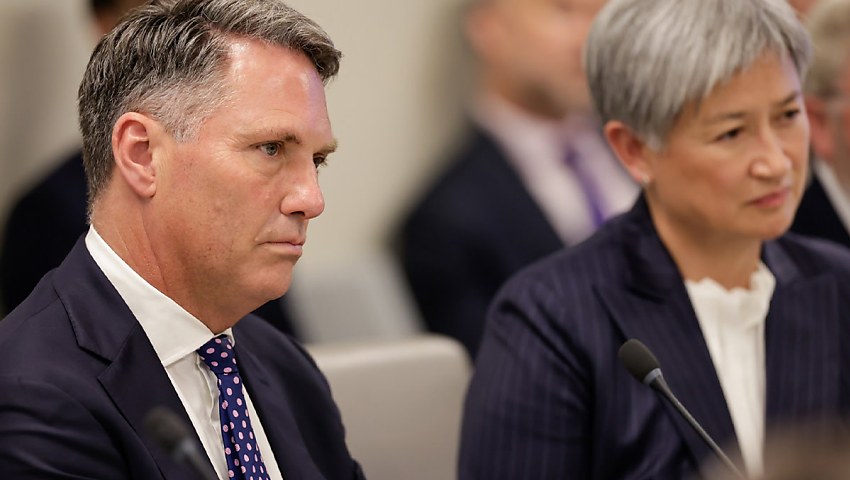
Speaking at the NATO Leaders’ Summit in The Hague, Deputy Prime Minister and Defence Minister Richard Marles announced a further Australian Defence Force (ADF) contribution to NATO-led operations, reinforcing Australia’s strong support for Ukraine and international stability.
In response to requests from NATO and Poland, a Royal Australian Air Force (RAAF) E-7A Wedgetail airborne early warning and control aircraft will be deployed to Europe starting in August. The Wedgetail will help safeguard a critical gateway used to deliver humanitarian and military aid to Ukraine. Up to 100 ADF personnel will accompany the aircraft as part of Operation Kudu. The deployment is expected to conclude by November 2025.
Minister Marles said the deployment demonstrates Australia’s capacity to operate alongside NATO partners in Europe and underlines its enduring commitment to supporting Ukraine. “The deployment of an E-7A Wedgetail aircraft will again showcase our ability to operate from Europe, alongside NATO and partners, in support of Ukraine and international peace and security,” he said.
The move builds on Australia’s broader support package for Ukraine, which has now exceeded US$1.5 billion since Russia’s full-scale invasion began in 2022.
At the same time, Foreign Minister Senator Penny Wong announced a new wave of sanctions targeting Russia’s war economy. The measures include financial sanctions and travel bans on 37 individuals, and financial sanctions on seven entities involved in Russia’s defence, energy, transport, insurance, electronics and finance sectors as well as figures responsible for spreading Kremlin-backed propaganda and disinformation.
Minister Wong detailed the importance of the relationship, saying: “Australia remains steadfast in our support for Ukraine and in our commitment to a comprehensive, just and lasting peace. Our targeted sanctions reflect our close coordination with key NATO partners, including the UK, Canada and the European Union. We will continue working together to disrupt Russia’s ability to fund its illegal and immoral war.”
Australia has now imposed more than 1,500 sanctions in response to Russia’s invasion. In a further boost to defence cooperation, Australia also signed a landmark agreement with the NATO Support and Procurement Organisation (NSPO) during the summit.

The deal will allow the ADF to participate in NATO’s collaborative procurement programs, gain access to shared logistics and systems support, and open the door for Australian defence industry to compete for contracts across NATO supply chains.
Minister Marles hailed the agreement as a key step in modernising Australia’s defence partnerships, saying: “Signing the NSPO Agreement opens the door to new partnerships for us to deliver capability and operational responsiveness for the Australian Defence Force.”
Australia has maintained a longstanding operational partnership with NATO and continues to play a key role as one of its closest Indo-Pacific partners, contributing to collective security and supporting democratic values on the global stage.
Want to see more stories from trusted news sources?
Make Defence Connect a preferred news source on Google.
Click here to add Defence Connect as a preferred news source.