

 iscover
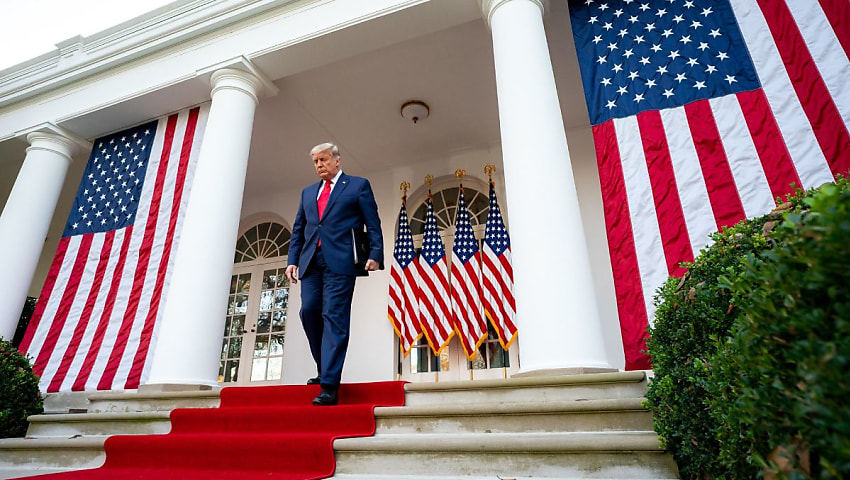
Australia has officially been put on notice, with US President Donald Trump securing a commitment from NATO partners to lift their defence spending to at least 3.5 per cent of GDP, with an ambition for 5 per cent.
Australia is among a number of American allies facing intensifying debate over its defence spending amid a shifting global security environment and rising pressure from its closest ally.
With the world becoming increasingly multipolar and unstable, questions are being raised about whether Australia’s current defence investment, hovering just above 2 per cent of GDP, at 2.1 per cent, is sufficient to safeguard national sovereignty, economic interests, and regional stability.
This debate has gained fresh urgency in light of renewed expectations from the United States, particularly as the second Trump administration has signalled that allied nations must shoulder more of the financial and strategic burden of their own defence.
While the issue is not new, recent developments have sharpened its focus.
This comes following the success of President Trump at the 2025 NATO summit, which saw a growing number of the alliance members commit to increasing their own defence spending, with leaders from across Europe committing to increase their spending to 5 per cent of GDP.
As part of this spending, it is expected that the new 5 per cent target will be made up of 3.5 per cent of GDP for “hard” capabilities, mainly equipment, troops, with the additional 1.5 per cent to be invested in “connective” tissue investments, including cyber security, logistics, mobility and space capabilities.
In response, NATO Secretary General Mark Rutte said: “How many people would be required to operate, maintain and sustain the following? When it comes to the 5 per cent, there are the two elements. One is the 3.5 per cent core defence spending, the US is more or less there.

“And when it comes to the 1.5 per cent defence-related spending, we can safely assume that US is doing that. When you look at their enormous capacity when it comes to cyber fighting, cyber crime, hybrid threats, when it comes to their infrastructure investments, when it comes to developing the defence industrial base.”
While Australia is not a NATO member, it is a major non-NATO ally and a core partner in the broader US-led security architecture, including AUKUS, the Five Eyes intelligence network, and deep operational integration across the Indo-Pacific. Trump’s remarks have reignited concerns in Canberra about the reliability of US extended deterrence, particularly in the face of Chinese military assertiveness and global instability.
Domestically, the conversation around defence spending is also becoming more complex, as successive governments have committed to ambitious modernisation programs, including nuclear-powered submarines, long-range strike systems, and expanded cyber and space capabilities; however, budget pressures, demographic constraints, and competing national priorities continue to limit Australia’s ability to scale up rapidly.
Critics, including, it seems, our own Prime Minister Anthony Albanese, are content with the scale and scope of Australia’s defence spending, often arguing that Australia cannot afford to send more money, frequently citing the 2023 Defence Strategic Review and supporting 2024 Integrated Investment Program and National Defence Strategy along with their prescriptions as more than sufficient as it stands.
Meanwhile, others across Australia’s political debate contend that we can no longer rely solely on the US security umbrella and must instead build a more self-reliant, regionally credible force capable of deterring coercion independently. Finally, others caution against escalating spending without clear strategic direction or sustainable funding models.
As these debates continue, defence policy is fast becoming a central issue in Australia’s broader national conversation. The question is no longer whether to spend more, but how much more, how quickly, and to what strategic end, especially if the price of alliance with the US under Trump is increased self-reliance, greater regional responsibility, and a greater share of the defence bill.
In response to the mounting pressure, Deputy Prime Minister and Defence Minister Richard Marles said on the sidelines of the NATO conference: “We’ve gone through our own process of assessing our strategic landscape, assessing the threats that exist there and the kind of defence force we need to build in order to meet those threats, to meet the strategic moment and then to resource that.”
This sentiment was echoed by Prime Minister Anthony Albanese, standing firm in response to questions about mounting pressure from the Trump administration this morning (Friday, 27 June 2025), saying: “What we did is we put forward our budget, we took it to an election and received … overwhelming support … We continue to invest in whatever capabilities Australia needs – we’ll continue to do that … My job is to look after Australia’s national interest, that includes our defence and security interests, and that’s precisely what we are doing.”
This comes amid revelations by Westpac that Australia’s combined government interest bill on all debt held by state, territory and federal governments is expected to hit 2.2 per cent of GDP by the 2027–28 financial year.
Regardless of the budgetary predicament, no one seriously questions the ever-increasing funding going to health, education, welfare, Medicare or the NDIS, both of which are increasingly becoming Australia’s own version of the “sacred NHS”, so when funding for the government’s most sacrosanct responsibility comes into question, maybe its time for Australia, Australians and our policymakers to wake up to themselves and grow up.

Want to see more stories from trusted news sources?
Make Defence Connect a preferred news source on Google.
Click here to add Defence Connect as a preferred news source.