

 iscover
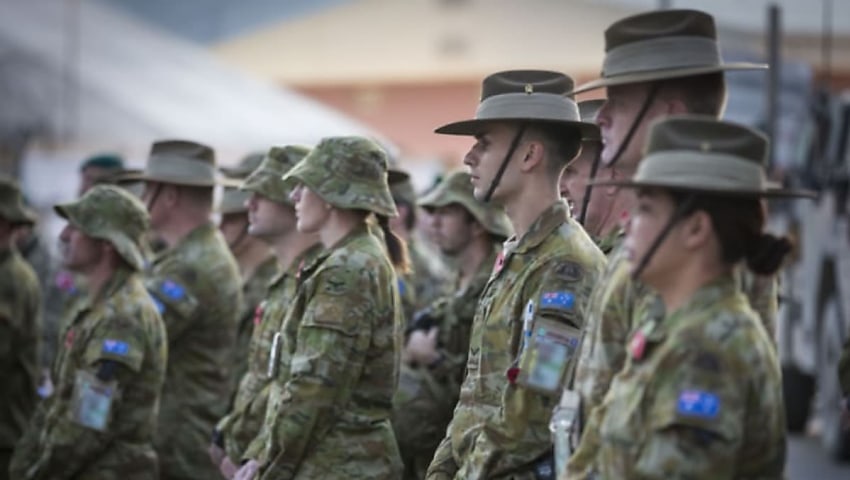
New research on the military discharge processes places veterans front and centre and reveals glaring issues within the Australian process.
Many veterans experience difficulties transitioning back into civilian life, but new research from Flinders University pinpoints the discharge process as being one of the key points failing Australian veterans.
Defence Connect covered the release of Fallout: the psychosocial harms of negative military discharge experiences in recent weeks as a news piece; however, it’s useful to dig into the research in more depth as it paints a picture of a painful and often poorly handled process.
“We invest significant resources into supporting veterans after they leave, and that’s important,” Cameron Grant, Flinders University PhD candidate and Australian Army veteran, said in a statement.
“But if the harm begins during discharge, then we’re stepping in too late and we’re treating the symptoms, not preventing the injury.”
Betrayal and transgression
Grant & Co’s research is based on open text responses from 379 participants. Responses ranged from one-word answers to lengthier passages of up to 384 words, with the median response being 80 words.
The authors of the paper used a qualitative approach to analyse the responses, refining their understanding of both the base questions and scope of the answers as the period of study progressed.

What the researchers discovered were three broad themes impacting veterans’ successful transition back into civilian life, with institutional betrayal and transgression forming the first key theme.
Almost by definition, military life is highly codified and requires the individual to submit to rigid hierarchies and intensely strong, almost familial bonds with fellow service members. However, according to many respondents, this system begins to break down not only during the discharge process, but even as that moment approaches.
Seniority, once dependable and rigidly enforced, can fall by the wayside, as one participant noted – “Person behind counter did not respect my rank. He was a corporal; I was a WO2”, said one 73-year-old respondent, eloquently describing the traumatic shedding of the habits of decades of service.
Others described an almost casual attitude to the process of discharge, completely at odds with the challenges faced by those leaving service. Still more noted how full of friction the process was compared to the act of signing up.
“There just wasn’t an easy-to-understand discharge process. The onus was on the individual to seek out the appropriate forms and process and get all the paperwork signed off by the relevant sub-units,” said a 33-year-old respondent.
“Very different to enlisting when you were spoon-fed every step of the way as a group. I feel like this is by design rather than accidental since it would be easier to stay in from an admin perspective.”
As the study notes, these may seem trivial things on the surface, but discharged veterans felt the process trivialised their service and sacrifice, and an abrogation of the shared values of the ADF.
“Value violations can occur through action (e.g. purposefully making a member’s discharge difficult) or inaction (e.g. not acknowledging service or providing a farewell),” the study said.
“Being victim to such transgressions affects our core psychological needs, particularly our need for belonging, or – more specifically, a sense of social-moral identity – a sense that we are good, respected, and appropriate group members or relationship partners, defined by the social groups with which we identify ourselves.”
Those leaving because of a medical discharge found the process even more difficult – and personally damaging – to navigate.
“I was medically discharged after 17 years, in one day, out the next,” a 17-year ADF veteran said.
“No transition whatsoever; to this day, it still affects me.”
Loss of self
It may be somewhat of a trope to say that individuals sign up to military service to “be part of something greater than themselves”, but regardless of intent, much of military training revolves around just such a process. It’s designed to background the individual in favour of the larger unit.
Discharge turns that relationship between the individual and the group upside down, and far faster and more traumatically than it was first built up, leading to the second persistent theme of responses – a sudden loss of identity and sense of belonging. To many, that lack of effort upon leaving the military has left scars for life.
“The military turned me into a machine. It took years. Then they discharged me without ANY ‘transition’ insights. They DIDN’T TURN US OFF!!!!!” wrote one male veteran who was discharged in 1998.
“The military stole my essence. It stole it because I ‘loaned’ it to them and they never gave it back […].”
Another veteran compared the ADF process to that of the US military, where the period of transition lets veterans continue to access defence establishments.
“[…] From the moment their ID card is handed in, members can no longer access even non-technical areas of defence establishments such as canteens, wet-messes, bars, gyms, sporting facilities, or recreation areas,” a 48-year-old veteran said.
“This contrasts with the US armed forces where veterans may continue to access non-technical areas of military bases by using their ‘retired veteran’ ID card. […].”
The study found that even such a simple step as allowing access to base facilities could make a world of difference during the discharge process, offering a more gradual process of not just reintegration into civilian life, but a more gradual process of leaving a military one.
“For some veterans, especially those who lived on base, the majority of their social connections were developed and maintained on military bases. Many social interactions that support a sense of belonging and help maintain psychosocial functioning are incidental, occurring on base at the gym, pool, mess, or bars,” the study said.
“For members with a highly centralised identity or a strong sense of connection to the military community, access to such non-technical areas of bases may facilitate these spontaneous interactions, potentially minimising losses and supporting psychological well-being.”
Stuck points
These negative discharge experiences create traumatic markers. The sudden shift from belonging to being on the outside, combined with a lack of care from the ADF and fellow service members, can create what researchers call “stuck points” – moments of trauma akin to post-traumatic stress disorder that can go on to have grave implications for the rest of a veteran’s life.
The nature of discharge, which too often can feel like a betrayal of everything a veteran has been taught to believe in, body and soul, during their defence career, creates feelings of loss and inadequacy that leave veterans anchored to that one negative experience.
“[…] I’ve had nothing to do with the military since. I still cannot bring myself to go to Anzac Day … I regret my 24 years of service. I regret the damage that my time in service that is still affecting my life and family. I’m not in the military any more but I’m still not comfortable to civilian live. I just do not fit in. I am broken.”
Cognitive distortions such as these – “I am broken” and “I do not fit in” – can stop an individual from recognising their own strengths and moving forward in their private and professional lives. Self-exclusion from events in the company of other veterans, such as Anzac Day, only serves to reinforce those distortions.
Having been trained, indeed indoctrinated, to rely upon the chain of command and fellow service members, the identity of many veterans remains stuck on their time in the military, with the negative discharge experience a rupture of that time of service.
“It’s like a jigsaw puzzle, the Army didn’t put the pieces back in the places where they were before enlistment. I have lost my identity,” a 17-year veteran said.
“I know nothing else and I have been trying to fill the void it has left in my life, everything I have tried since discharge over 30 years ago, i.e. volunteer work etc, has failed.”
Without the active assistance of his previous support network – the military network that they have been trained and taught to rely upon – recovery from the trauma of a negative or damaging discharge experience, many veterans feel trapped in the experience, despite it being years, even decades in the past.
Listen to the vets
Much of the findings of the study sync with the findings of the Royal Commission into Defence and Veteran Suicide published in 2024. While the objective events of an individual’s discharge experience may seem minor, the subjective impacts have a traumatic and long-lasting impact on veterans already struggling with a loss of shared identity and purpose as they attempt to reintegrate with civilian life.
The solution, as suggested by the study’s authors, is relatively simple, however – the ADF needs to listen to veterans with lived experience of the discharge process.
“Implementing a co-designed approach informed by the lived experiences of service members is necessary, given the diversity and heterogeneity of military experiences and subcultures,” the study said.
“Utilising established methodologies like human-centred design processes can ensure that changes are meaningful, structured, effective, and continually improved. Such approaches, which involve stakeholders in designing processes that affect them, have been shown to provide consumers with a sense of autonomy and have more effective and acceptable outcomes.”
Listen to the veterans – it really shouldn’t be that hard, and it’s the least we can do.
Want to see more stories from trusted news sources?
Make Defence Connect a preferred news source on Google.
Click here to add Defence Connect as a preferred news source.