

 iscover
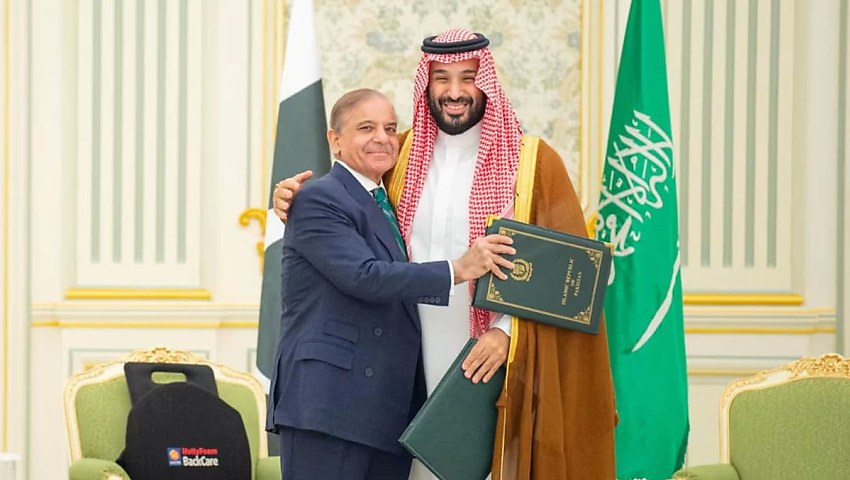
The reality of a multipolar world is now inescapable, with former rivals Saudi Arabia and Pakistan recently inking a mutual defensive pact, forming the basis of a new, Islamic nuclear umbrella and ethno-religious bloc capable of cohesively acting on the global stage.
The global order that emerged at the end of the Cold War, anchored in large part by American military primacy, Western economic dominance and the promises of liberal democratic globalisation, began to fray in earnest after 2010 as each of the central pillars of Western pre-eminence began to collapse in real time.
What has followed was not the sudden collapse of a unipolar world but a gradual and uneven transition into something far more complex: a multipolar system in which the global power paradigm is defined by multiple centres of power, both established and emerging, each of which has rapidly begun to assert itself both regionally and globally.
The signs were there early: China’s meteoric economic rise, Russia’s resurgence as a spoiler state, India’s quiet yet steady consolidation of influence, and the European Union’s efforts to assert strategic autonomy. Each development pointed towards the erosion of an uncontested position of the American-led order, giving way to a competitive landscape where power was shared, contested and layered across regions.
The post-2010 period has seen the United States remain the most powerful nation but no longer able to dictate terms unilaterally. The wars in Iraq and Afghanistan had drained Washington’s credibility, while the 2008 financial crisis shook confidence in Western economic stewardship.
Meanwhile, Beijing launched the Belt and Road Initiative, a vast project of infrastructure and finance designed not merely to expand trade but to weave a network of economic and political dependency across Asia, Africa and beyond.
Moscow, having reasserted control domestically under Vladimir Putin, flexed its muscles in Ukraine, Syria and elsewhere, keen to demonstrate that it remained a decisive actor. These moves were matched by India’s embrace of a more overt role as a regional and global player, and the Gulf states’ growing ambition to carve out influence independent of Washington’s security guarantees.
At the heart of this shift lay not just economics and diplomacy, but hard security. Nuclear umbrellas, once the preserve of the Cold War superpowers, have become increasingly contested and, in some cases, duplicated.

The United States still shelters NATO and select partners under its extended nuclear deterrent, but Russia and China now hold growing sway over their own spheres.
Meanwhile, India, Pakistan and North Korea represent regional nuclear poles in their own right, while speculation grows over potential “nuclear patrons” for states without independent arsenals. The result is an intricate web of nuclear-backed security architectures that overlap, compete and occasionally clash, creating both deterrence stability and dangerous points of friction.
One of the most striking consequences of this environment has been the forging of new alignments that would once have seemed improbable. Traditional adversaries, driven by shifting calculations of threat, regime survival and ethno-religious solidarity have begun to set aside old enmities in favour of pragmatic security pacts.
Pakistan, long defined by its rivalry with India, a burgeoning relationship with Beijing and an increasingly uneasy relationship with the West, has sought deeper partnerships across the Islamic world, often with Saudi Arabia at the centre.
The Kingdom of Saudi Arabia itself, once tethered almost exclusively to the United States, has pursued a more independent posture, experimenting with defensive arrangements that speak as much to religious identity as to strategic necessity. These alignments, while initially tentative though they may be, suggest a world where ideology, identity and survival intermingle to create security orders not bound to the neat blocs of the 20th century.
By the mid-2020s, the multipolar world has become not just a descriptive term, but the defining reality of international affairs: a system where no single power can impose order and where competition, economic, political, strategic, and despite the rhetoric to the contrary, ethno-religious is the new norm.
For Australia, herein lies the problem. While much of the commentariat continues to view multipolarity and great power competition purely through the lens of economic, political and strategic factors, it will, particularly across the Eurasian and Middle Eastern landmass, also take on an ethno-religious flavour.
This is something that Australia, like many nations across the West, isn’t familiar with and a reality that will increasingly need to be factored in to how we engage with the new, competitive multipolar world.
The rise of an Islamic ’bloc’?
While it might sound like the early stages of a Tom Clancy novel or, for those of my generation, the precursor to the original Call of Duty: Modern Warfare campaign, the burgeoning economic, political and strategic partnership between Pakistan and Saudi Arabia heralds a major shift in the post-Cold War, “End of History” period of global power relations.
In particular, the signing of a mutual defence pact between Saudi Arabia and Pakistan in the aftermath of Israel’s strikes against Hamas officials negotiating a ceasefire to the ongoing conflict in Gaza and questions about what the US knew and when has prompted significant questions for the Saudis.
Specifically, the questions about America’s lack of willingness to either forewarn Qatari authorities or the fact that it was perhaps left in the dark about Israel’s intended strikes against Hamas officials in Doha has prompted strategic anxiety within Saudi Arabia and other American, Islamic allies across the Middle East.
Of significance is the material content of the mutual defence agreement, namely the NATO Article V-like declaration that, “any aggression against either country shall be considered an aggression against both”, which undoubtedly extends Pakistan’s nuclear deterrence umbrella to Saudi Arabia.
This marks a major shift in the doctrine and the focus of Pakistan, which has, as previously mentioned, been heavily focused on deterring aggression from its Hindu neighbour and frequent sparring partner, India, to form the basis of a more coordinated “Islamic bloc” capable of acting on the global stage.
Reinforcing and clarifying this new reality, Pakistan Prime Minister Shehbaz Sharif told reporters last week, “Let me make one point clear about Pakistan’s nuclear capability: that capability was established long ago when we conducted tests. Since then, we have forces trained for the battlefield ... What we have, and the capabilities we possess, will be made available to (Saudi Arabia) according to this agreement.”
Echoing the Pakistani Prime Minister’s statement is the official Saudi readout following the signing, which said, “This agreement, which reflects the shared commitment of both nations to enhance their security and to achieving security and peace in the region and the world, aims to develop aspects of defence cooperation between the two countries and strengthen joint deterrence against any aggression.”
It is worth noting that neither nation named a potential “adversary”, as Pakistani Prime Minister Sharif said, “We have not named any country whose attack would automatically trigger a retaliatory response. Neither has Saudi Arabia named any country, nor have we ... This is an umbrella arrangement offered to one another by both sides: if there is aggression against either party – from any side – it will be jointly defended, and the aggression will be met with a response.”
What this does do however, is establish the basis for an Islamic NATO or even an Islamic Union, albeit something that is still a while from fully being formalised and will, no doubt, be met with significant challenges from within the Islamic world, particularly from other major Islamic powers like Erdogan’s Turkiye, the Islamic Republic of Iran, and of course, Australia’s neighbour: Indonesia.
Nevertheless, Prime Minister Sharif was clear that there are no roadblocks to expanding the arrangement to other Islamic nations and partners across the Middle East, particularly those seeking collective economic, political and ethno-religious security and deterrence in an increasingly contested global order, with the Prime Minister adding, “I can say the door is not closed to others.”
This was also reinforced by the Deputy Prime Minister of Pakistan, Ishaq Dar, who recently added, “It is premature to say anything, but after this development, other countries have also expressed a desire for similar arrangements ... Such things follow due process. Even with Saudi Arabia, it took several months to finalise.”
A sign of things to come
While we are far from seeing the fallout settling from this monumental shift and agreement between two Islamic powers, it is safe to say that this establishes the new direction of travel and “new norm” for the emerging multipolar global order.
Of particular note is the ethno-religious lines upon which elements of the new multipolar world are being drawn and the influence these factors, long considered extinct and irrelevant by Western academics, policymakers and strategic thinkers entranced by Francis Fukuyama’s theory of the “End of History”.
Rather it presents a series of challenges that Australia, like the United States, the United Kingdom and European nations in particular, is ill equipped and even worse, ill-prepared to confront, particularly as it must also increasingly consider the domestic ramifications of foreign conflicts.
By contrast, some of the world’s other established powers, particularly those from east Asia, South America and Russia for example, understand the importance of national, ethno-religious and cultural identities and the role they play in organising and influencing factors for engaging with the broader world.
In turn, this makes it easier for these nations to understand the rationale and the logic which underpins the decision-making processes and guiding principles (at least to some degree) and plan accordingly, something that will undoubtedly favour these powers and their ambitions in the new multipolar world.
This only becomes a more powerful influence when one considers that Australia, like many Western nations, refuses to recognise the importance that historic enmities and rivalries, ethno-religious, cultural and tribal factors will only continue to play, because their realities conflict with our “modern” sensibilities and sensitivities.
Final thoughts
Australia has spent too long coasting on luck and geography. For decades we’ve enjoyed comfort, security and stability without the shocks or sacrifices that shaped other nations.
But that era is over. The world has shifted, our region is more contested, more hostile, and far less forgiving.
Wars in Europe and the Middle East and even brief flare-ups between India and Pakistan remind us that “might makes right” once again. And this time, it’s not just about tanks and missiles, it’s about whole-of-nation power: economies that can absorb shocks, societies resilient to coercion and governments able to act decisively under pressure.
Australia isn’t ready. Like many in the West, we remain dangerously complacent. The old “she’ll be right” mindset leaves us small, exposed and vulnerable to the ripple effects of modern conflict and multipolar competition.
If we want to safeguard our way of life, we need to think bigger. That means building the diplomatic, economic and military weight expected of a serious power. It’s not just about defence, it’s about sovereignty, prosperity and shaping the Indo-Pacific rather than being shaped by it.
The choice is stark: remain a second-tier middle power or rise to meet the moment. With China more assertive and regional tensions rising, delay is no longer an option.
Australia must diversify its economy, invest in innovation and prepare for coercion so no foreign power can hold our prosperity hostage. A resilient, agile economy is the foundation of deterrence and the key to national confidence.
Only then can our nation and our defence force evolve from reactive to proactive, capable of defending our interests in a world where power is shifting fast and security can no longer be assumed.
Get involved with the discussion and let us know your thoughts on Australia’s future role and position in the Indo-Pacific region and what you would like to see from Australia’s political leaders in terms of partisan and bipartisan agenda setting in the comments section below, or get in touch at

Want to see more stories from trusted news sources?
Make Defence Connect a preferred news source on Google.
Click here to add Defence Connect as a preferred news source.