

 iscover
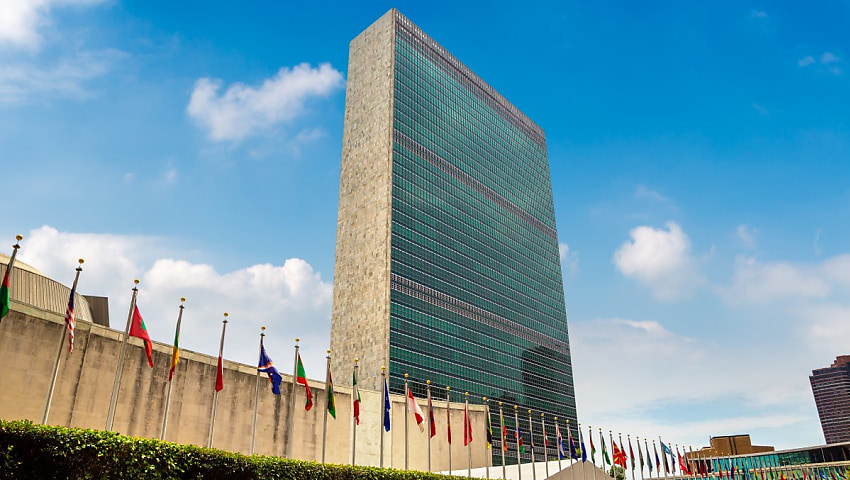
International bodies like the UN, World Bank and EU have been flexing their muscles in recent years, but they forget they’re only as strong as their member states – posing a real and unavoidable problem in today’s era of great power rivalry and multipolarity.
The modern international order is a relatively recent creation, forged in the aftermath of centuries of conflict, competition and shifting borders.
For much of human history, power was concentrated in empires, kingdoms and city-states, each bound together by varying degrees of ethno-religious identity, cultural and religious allegiance, coercion and tradition. Authority in these organs was often personal and dynastic, rather than rooted in the sovereignty of a people, a Parliament or a congress.
The idea of the nation-state, a political community defined by a shared identity, common institutions and recognised territorial boundaries – only began to crystallise in the 17th century with the Peace of Westphalia.
That settlement, which ended the Thirty Years’ War in 1648, established a new principle in European politics: states, rather than monarchs or churches, were to be the ultimate arbiters of their own affairs.
Over the centuries that followed, this model spread and evolved, binding together nations through shared language, culture, history and institutions. While colonial empires would rise and fall and while the two world wars would redraw maps on a massive scale, the nation-state became the essential unit of international life.
By the middle of the 20th century, as the fires of the Second World War receded, the victorious powers turned their attention to shaping a more stable, cooperative global order.
Out of the ashes of conflict emerged the great multilateral organs we now take for granted: the United Nations, the World Bank, the International Monetary Fund, and later institutions such as the World Trade Organization.

These bodies were designed to provide mechanisms for dialogue, cooperation and, ideally, the peaceful resolution of disputes. However today, they have taken on a life of their own, often either directly or indirectly undermining the sovereignty of the nation-state, in turn undermining their own resilience and legitimacy.
Yet these international institutions have never existed in a vacuum. Their endurance and credibility rest not on lofty declarations alone but on the collective strength and commitment of sovereign nation-states.
The architects of the post-war order understood that without robust, functioning states capable of upholding their own security, prosperity and governance, multilateralism would collapse under the weight of its own idealism. In practice, institutions like the United Nations depend upon the willingness and in many ways, the consent of their member states to act, contribute resources and enforce decisions.
This truth is becoming starker in the 21st century as great power competition re-emerges.
Strategic rivalry between major states, from the Indo-Pacific to Europe, is testing the limits of international organisations created in a very different yet ironically similar era.
As rival visions of global order clash, the resilience of these multilateral bodies will depend not simply on rhetoric or process, but on the vitality and sovereignty of their constituent members. Weak or dependent states are too easily swayed, undermining collective security. Strong, confident nations, by contrast, provide the stability and credibility that international organs require to function.
In this light, the nation state remains both the foundation and the guarantor of the international order, something many international institutions seem to have forgotten.
For Australia and for others navigating an uncertain global environment, the lesson is clear: enduring international cooperation must be anchored in the strength of sovereign states, capable of standing firm in the face of great power pressures while contributing to the broader rules-based system.
Highlighting this is Dr Jenny Gordon, non-resident fellow at the Lowy Institute and also a honorary professor at the Centre for Social Research and Methods at the Australian National University, in a piece for the Lowy Institute, titled Why we need international institutions … and how to rebuild them in an era of great power competition, in which she outlined how international institutions can rebuild themselves and their legitimacy in this era of multipolar, great power competition.
The challenge of global problems beyond borders
Gordon’s work emphasised that many of the biggest challenges states face today are not ones that can be solved alone. Issues like climate change, pandemics, cyber security, trade disruptions, maritime law, outer space regulation and intellectual property cross borders. No single sovereign nation can impose rules or respond effectively without cooperation.
Thus, international institutions are framed not simply as idealistic or moral constructs but as operating necessities, tools for cooperation, coordination and stability in an interconnected world.
Such institutions reduce transaction costs, provide forums for dialogue, establish norms or rules and create mechanisms to monitor or enforce behaviour. Even more, they offer predictability: when rules are clearer, states (especially smaller ones) can plan and act with a degree of certainty about how others will behave.
Rules for thee, but not for me: Sovereignty, the rules-based order, and the nation-states’ role
Another recurring theme in Gordon’s analysis is that international institutions depend deeply on robust, sovereign nation-states. These states are both the creators and sustainers of multilateral bodies. The legitimacy, accountability and effectiveness of global institutions rest upon their member states respecting sovereignty, fulfilling obligations and acting with agency.
Gordon articulated this in the Australian context, stating, “multilateral organisations, especially international standard-setting bodies, create rules that are vital to Australia’s security, interests, values and prosperity. Those bodies regulate international cooperation in key sectors”.
Interestingly though, Gordon failed to afford the international organs and multilateral organisations need to equally respect the sovereignty and decision-making agency of nation-states and their respective governing bodies.
Gordon went further explaining, “Global institutions and their bureaucracies become unaccountable, when they become vulnerable to manipulation or coercion, when they lose the confidence of their membership … they fail in their task to help the sovereign nations that establish them agree a common set of rules.”
These statements reflect that institutions are effective only insofar as the member states invest sovereignty and trust but also guard against undue influence or coercion from powerful actors.
Without that, institutions risk becoming inefficient, illegitimate or tools of dominance.
Tensions in the era of great power competition
Gordon highlighted that in the current era, with rising competition (e.g. between the United States and China), these international institutions are under strain.
Geopolitical rivalry makes it harder to maintain cooperation, consensus and shared values; this largely comes as a result of the way powerful states may challenge established norms, refuse compliance or attempt to reshape institutions to suit their interests.
Conversely, weaker or dependent states may find themselves coerced or sidelined, which flies in the face of the widely believed role that middle powers like Australia, Canada and others have sought to champion in the post-Second World War order, that might no longer makes right.
It remains to be seen however, whether in an era of multipolarity and great power competition, such as the one we are entering into, whether these “weaker” or “dependent” states will actually be capable of affecting the international order in the way they have done so in the past.
In this environment, the importance of “rules-based order” becomes more than rhetoric: it becomes a stabiliser. Institutions help diffuse tension, offer channels for dialogue, reduce uncertainty and provide platforms for smaller states to have a voice.
They also help balance power by embedding norms and processes that restrain unilateral actions, or at least (in theory) subject them to scrutiny. But how do we maximise the effectiveness of these organisations in the face of these challenges?
What makes an effective international organisation?
Gordon was quick to provide a number of areas which need to be reinforced, if not modernised, suggesting that strong institutions share certain traits, including:
- Accountability and transparency – bodies need mechanisms whereby members can hold one another to account; decision making must not be opaque. If bureaucracies become detached or overly dominated, legitimacy is lost.
- Inclusivity and equality among members – not all members will have equal power but there must be perception and practice of fair treatment, equal voice in certain forums, protection of smaller states’ interests.
- Adaptability to new challenges – institutions established in the post-WWII period were designed for particular contexts. But today’s threats (pandemics, cyber, space, climate) require evolving rules, mandates, resources and modes of cooperation.
- Sovereign foundations – even though they transcend borders, institutions rest on the foundation that states control their own destiny, choose to join or commit and uphold their obligations. Sovereignty enables legitimacy, it’s the basis for the mutual trust that cooperation requires.
This approach has dramatic implications for a middle power like Australia, something that Gordon highlighted, stating there is strong incentives for Australia to engage with multilateral institutions to amplify influence, protect interests, shape norms (e.g. in trade, environmental regulation, maritime law).
However, this isn’t without its risks, Gordon argued that if institutions degrade, if great power competition undermines them, or if Australia fails to invest in diplomacy, development, foreign policy infrastructure, we as a nation lose key leverage.
Finally, Gordon argued that domestic political publics increasingly question globalism versus sovereignty; balancing national interests and global responsibilities becomes harder under pressure, which is starting to increasingly shape domestic politics in Australia and across the Western world.
Final thoughts
Despite their necessity, international institutions are far from perfect. Lowy acknowledged that these bodies are often subject to what might be called institutional drift or outright capture.
Powerful states, corporations or coalitions of interest can dominate decision-making processes, bending rules or norms to suit their own ends. In such cases, institutions risk becoming vehicles for narrow power politics rather than genuine custodians of the international order.
Compounding this problem is the fact that many global bodies lack robust enforcement mechanisms. Participation, while largely voluntary, and where coercion or outright non-compliance arises, there is little capacity to penalise offenders or compel adherence.
The authority of such institutions therefore rests heavily on the goodwill and cooperation of member states – a fragile foundation in times of heightened rivalry.
Another persistent challenge is the pace of adaptation. Treaties, rules and bureaucracies are notoriously slow to adjust, leaving institutions ill-equipped to handle fast-moving threats such as cyber attacks, pandemics or sudden environmental shocks.
By the time reform catches up, the crisis has often shifted or deepened. This lag undermines confidence in the ability of international organisations to provide timely and effective solutions.
Equally significant is the issue of legitimacy in the eyes of ordinary citizens. When people perceive that multilateralism erodes national sovereignty or that the benefits of cooperation are distributed unevenly, trust in these bodies quickly evaporates. In democratic societies especially, this can fuel populist backlash against international engagement altogether, further weakening the system from within.
Taken together, these critiques highlight a sobering truth: international institutions are essential, but they are not self-sustaining. Their endurance depends upon the strength and commitment of sovereign nation-states.
Institutions thrive when their members take responsibilities seriously whether by contributing resources, insisting on transparency and fairness, defending the rules-based order under strain, or driving adaptation to new global challenges.
Without such commitment, multilateral bodies risk withering into irrelevance, or worse, becoming mere instruments of domination.
Ultimately, the durability of international cooperation will not be secured by lofty ideals alone. It must rest upon the foundations of strong, confident sovereign states willing to invest in, defend and reform the institutions they themselves created.
Only then can these bodies serve as genuine guardians of shared norms rather than brittle façades masking the contests of power beneath.
Get involved with the discussion and let us know your thoughts on Australia’s future role and position in the Indo-Pacific region and what you would like to see from Australia’s political leaders in terms of partisan and bipartisan agenda setting in the comments section below, or get in touch at

Want to see more stories from trusted news sources?
Make Defence Connect a preferred news source on Google.
Click here to add Defence Connect as a preferred news source.