

 iscover
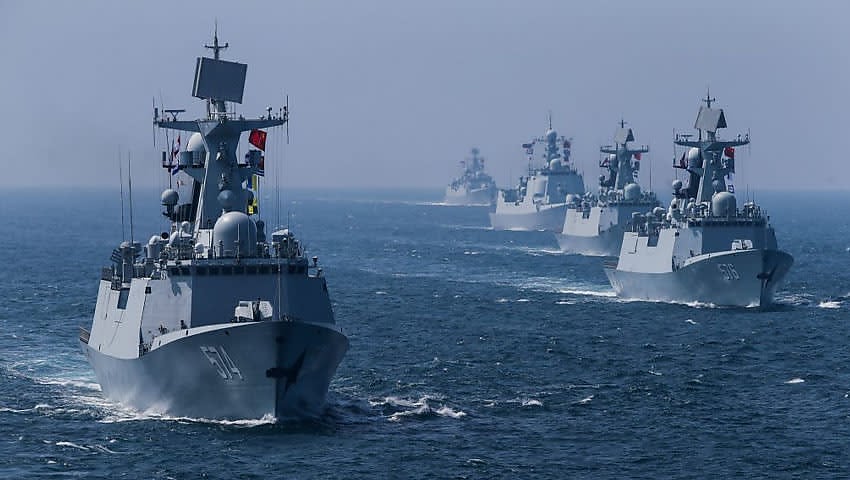
Beijing’s military modernisation has rightfully drawn attention from across the Indo-Pacific, and while it has had some setbacks and is far from perfect, the reality is quite concerning for all regional nations.
In just over two decades, China’s People’s Liberation Army (PLA) has undergone one of the most rapid and ambitious military transformations in modern history.
What was once a bloated, manpower-heavy force reliant on outdated Soviet-style equipment is now increasingly modern, networked and formidable across every domain: land, sea, air, space and cyber.
This acceleration has been driven by sustained economic growth, strategic industrial policy, and Xi Jinping’s determination to make the PLA a “world-class” force by mid-century, driven by its active and persistent efforts to effectively “unpick” the coalition and force projection-based militaries of the West.
China has built the world’s largest navy by hull count, launched a fleet of new aircraft carriers, expanded amphibious and long-range strike capabilities, and developed cutting-edge technologies in hypersonics, drones, quantum and artificial intelligence. Its missile forces now hold the ability to threaten US and allied bases across the Indo-Pacific, while integrated surveillance and reconnaissance networks extend Beijing’s reach far into contested maritime zones.
Alongside hardware, the PLA has restructured itself for joint operations, created new theatre commands and pursued military-civil fusion to harness national technological talent for defence purposes. Though uneven and not without friction, the pace of change has shifted the regional balance of power. Where once the PLA was derided as a “junkyard military”, it is now treated as a near-peer competitor by the United States and its allies.
For Australia, this transformation is not an abstract matter. It reshapes the security environment, challenges freedom of navigation and complicates deterrence in ways that directly affect our national interests.
Highlighting this is Rowan Callick’s short but pointed article in the Australian Strategic Policy Institute’s The Strategist, titled Despite hiccups, Chinese military modernisation still a threat to region, which captured the paradox at the heart of China’s military transformation under Xi Jinping.

On the one hand, the PLA looks ever more modern, lethal and expansive, with impressive new kit rolled out at parades and military anniversaries. On the other hand, beneath the glossy surface lie persistent frictions – political interference, leadership churn, and uneven systems integration – that slow the PLA’s evolution into a truly professional, combat-effective force.
The crucial point Callick made, however, is that these “hiccups” are not grounds for complacency. Minor or even significant setbacks in China’s modernisation program do not erase the trajectory of growth or reduce the threat the PLA poses to the Indo-Pacific. For Australia, the task is not to underestimate these vulnerabilities nor to exaggerate China’s strengths, but to prepare a defence posture that exploits the PLA’s weaknesses while countering its undeniable advances.
Paradox of the ’Victory’ parade
Callick began with the spectacle of massed parades: stealth aircraft, hypersonic missiles, autonomous drones, and even the full display of a nuclear triad. Xi Jinping has clearly delivered the hardware. China’s defence-industrial ecosystem is now vast, integrated with civilian industry and capable of producing advanced platforms at scale.
The pace of this production sprint is unprecedented in the modern era.
But modernisation is not merely about acquiring equipment. True transformation requires coherent doctrine, professional leadership, reliable command systems and effective sustainment.
On these measures, Callick noted, the PLA continues to stumble. Frequent purges and reshuffles within the senior ranks reveal Xi’s obsession with loyalty over competence, creating institutional instability. Political micromanagement undermines the delegation of authority, a critical ingredient for effective mission command in wartime.
This is the paradox: hardware advances coexist with brittle organisational underpinnings.
The most damaging hiccups are political. Xi’s anti-corruption drives have repeatedly purged senior officers, with missile force commanders and equipment chiefs recently disappearing from public view.
While these campaigns tighten party control, they erode continuity, create mistrust and disrupt the learning cycles that armed forces require. Officers are reminded daily that political loyalty outweighs military judgement.
This undermines initiative – a vital trait in complex, fast-moving operations. An officer corps conditioned to wait for political guidance is less likely to take bold decisions in the fog of war. Callick rightly flagged this as a structural vulnerability that will linger, regardless of how advanced the PLA’s hardware becomes.
Technical challenges
Even on the technical side, China’s rush to field new platforms creates uneven progress. Carrier programs are still working through basic launch and recovery procedures. Stealth aircraft production is rising, but engines and avionics lag behind Western standards. Hypersonic systems, while impressive in demonstration, face sustainment and accuracy hurdles.
Integration across domains remains patchy. Turning missiles, aircraft, ships, cyber and space assets into a truly joint system of systems requires decades of doctrinal development, secure communications and trusted leadership chains. Here, the PLA remains behind the United States and its allies.
But it isn’t all good news.
Yet none of these setbacks diminish the threat. Even imperfect systems can have coercive value. A partially modernised PLA can still threaten Taiwan, apply grey zone pressure in the South China Sea, or project missile power into the Western Pacific. The sheer scale of China’s military build-up shifts the balance of power in Australia’s region, regardless of organisational inefficiencies.
This is why Callick’s central warning resonates: hiccups may slow the PLA, but they do not stop it. Indeed, the combination of growing hardware mass with brittle political control could produce unpredictable behaviour in a crisis.
Our key priorities
For Australia, the lesson is clear. Defence planning cannot assume that PLA weaknesses will protect us. Instead, those weaknesses should be seen as exploitable opportunities areas where the Australian Defence Force and its partners can develop comparative advantages. Meanwhile, PLA strengths, particularly in missile forces, naval expansion and cyber capability, demand urgent countermeasures.
This means investing in denial, sustaining partnerships, hardening national resilience and building capabilities that leverage Australia’s strengths in flexible command, alliance networks and advanced technology.
But how do we secure an advantage?
1. Exploit PLA political and command vulnerabilities.
- Mission command culture: Strengthen ADF doctrine that empowers junior leaders to act independently, contrasting PLA rigidity.
- Leadership stability: Ensure continuity in Australian command pipelines, avoiding political disruption of military professionalism.
- Allied exercises: Run large-scale, complex joint drills with allies to highlight flexibility and adaptability in decision making.
2. Counter PLA hardware mass with smart denial.
- Long-range strike: Accelerate acquisition of precision missile systems (High Mobility Artillery Rocket System/PrSM, Tomahawk, hypersonics).
- Maritime denial: Prioritise submarines, smart mines and uncrewed systems to complicate PLA fleet operations.
- Air and missile defence: Expand layered defence networks with Aegis, National Advanced Surface-to-Air Missile System and allied radar systems.
3. Exploit PLA sustainment and logistics weaknesses.
- Stockpiles and production: Invest in sovereign munitions production to outlast PLA supply constraints.
- Forward logistics: Harden and disperse bases in northern Australia and across partner states.
- Resilient supply chains: Diversify defence-critical imports to reduce PLA leverage.
4. Leverage PLA’s patchy systems integration.
- Joint C4ISR superiority: Invest in secure, integrated command networks linking land, air, sea, space and cyber.
- Uncrewed systems: Expand autonomous platforms to overwhelm PLA command-and-control systems.
- Space resilience: Develop distributed satellite constellations with rapid reconstitution.
5. Compete in grey zone and cyber operations.
- National cyber defence: Harden civilian infrastructure against state-backed intrusions.
- Offensive cyber: Maintain credible cyber strike options targeting PLA networks.
- Information warfare: Invest in joint capabilities to counter disinformation and strengthen regional confidence.
6. Strengthen collective regional costs.
- Allied posture: Deepen Quad and AUKUS cooperation on denial capabilities.
- ASEAN partnerships: Provide surveillance assets and cyber assistance to regional states.
- Minilaterals: Expand AUKUS Pillar II technology-sharing into broader Indo-Pacific resilience.
7. Maintain strategic balance.
- Deterrence signalling: Use visible deployments and exercises to deter coercion.
- Diplomatic engagement: Keep open military-to-military dialogue channels with China to reduce miscalculation risk.
- Resilience mindset: Treat PLA hiccups as opportunities to sharpen Australian strengths, not as excuses for inaction.
Final thoughts
Callick’s analysis reminds us that the PLA’s modernisation is messy, politicised and uneven – but it is also real, sustained and threatening. For Australia, the correct response is neither complacency nor alarmism. It is a sober recognition that while China’s armed forces face real obstacles, they are still becoming more capable year on year.
The ADF’s comparative advantages lie in mission command, alliances, integration, cyber expertise and industrial resilience. By exploiting PLA weaknesses and countering its growing strengths, Australia can help shape a regional balance that deters aggression and preserves strategic stability.
In short: don’t be lulled by the hiccups. Use them to act – decisively, urgently and in concert with partners – to ensure Beijing’s military modernisation does not translate into unchecked coercive power in our region.
Get involved with the discussion and let us know your thoughts on Australia’s future role and position in the Indo-Pacific region and what you would like to see from Australia’s political leaders in terms of partisan and bipartisan agenda setting in the comments section below, or get in touch at

Want to see more stories from trusted news sources?
Make Defence Connect a preferred news source on Google.
Click here to add Defence Connect as a preferred news source.