

 iscover
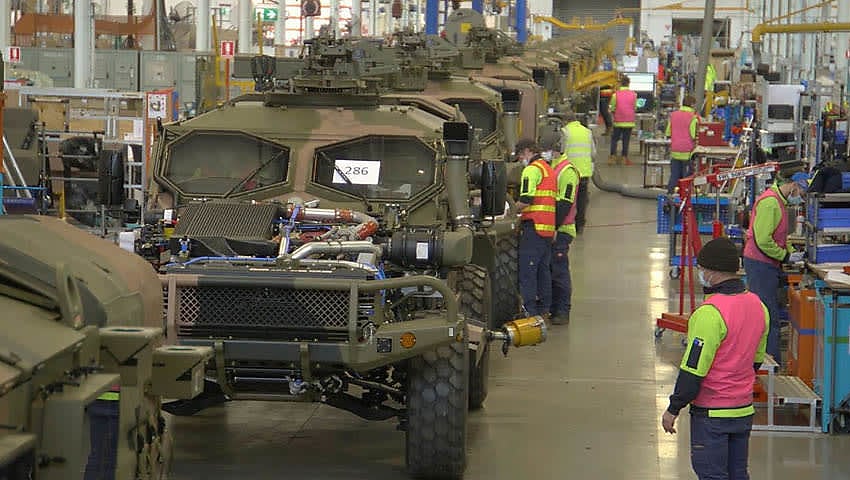
Australia’s industrial capacity (or lack thereof) has been increasingly under the microscope in recent weeks, with the rhetoric recognising the importance of a scaleable and competitive manufacturing base to our national security. The question is, can we mobilise fast enough?
Australia’s industrial story is one of remarkable rise, gradual retreat and renewed urgency.
For much of the 20th century, Australia was an advanced industrial economy by global standards, successfully manufacturing cars, ships, steel, machinery and chemicals to supply both domestic markets and export partners.
Buoyed in large part by the explosion of post-war reconstruction, the population explosion through sustainable migration and the “Baby Boom”, coupled with decades of protective tariffs, fostered a robust industrial base, employing over a quarter of the national workforce and producing everything from locomotives and textiles to precision instruments.
This saw manufacturing output peak in the late 1980s, accounting for more than 15 per cent of gross domestic product (GDP), underpinned by a mix of domestic demand, foreign investment and a highly skilled technical workforce, immortalised by the likes of Jimmy Barnes and his ballad to the Australian worker: Working Class Man.
However, from the 1990s onwards, globalisation and waves of economic liberalisation reshaped Australia’s industrial landscape, as the nation shifted towards a “knowledge based” economy characterised by a dependence on services, real estate speculation and resource extraction.
Tariff reductions, privatisation, and the prioritisation of service sector growth saw large portions of the nation’s manufacturing capacity either offshored or shuttered. Industries such as automotive manufacturing, once emblematic of Australia’s self-sufficiency were progressively dismantled, culminating in the closure of Holden in 2015.
Today, manufacturing represents less than 6 per cent of GDP and Australia ranks among the lowest of the Organisation for Economic Co-operation and Development nations for industrial self-reliance. Once home to vertically integrated supply chains and major production hubs in Victoria, South Australia and NSW, the nation has increasingly relied on imported machinery, vehicles and complex manufactured goods.

This has resulted in the steady deindustrialisation of the national economy and coincided with a new era of great power competition, where economic and industrial strength are again at the heart of national security.
Many would be forgiven for thinking the spotlight that was the COVID-19 pandemic and ensuing global supply chain shocks would serve to shake both the Australian public and political class from its slumber, the same could be said for Russia’s war in Ukraine and the outbreak of war in the Middle East, which underscored the risks of dependency on distant markets for critical materials, energy and defence equipment.
Yet Australia remains woefully under-industrialised, with the nation directly comparable to a “developing” nation when one measures the industrial base of the nation and how it compares to other nations, with Harvard University’s The Atlas of Economic Complexity ranking Australia at 105, wedged between Botswana and the Ivory Coast.
Meanwhile, rising tensions in the Indo-Pacific, including China’s rapid militarisation and weaponisation of trade, have reinforced the strategic reality that a nation’s industrial base is inseparable from its capacity to defend itself and project influence.
As allies such as the United States, Japan and the European Union reindustrialise under the banners of resilience and sovereignty, Australia faces a pivotal and inescapable choice. Rebuilding national industrial capacity is no longer a matter of economic nostalgia but a core requirement of strategic endurance, essential for sustaining defence production, energy security and technological independence in an increasingly contested world.
Highlighting this new reality is Marc Ablong, Australian Strategic Policy Institute senior fellow, in a piece titled Industrial mobilisation is Defence’s true test, in which he articulated the mounting challenges to national (re)industrialisation and its role in supporting mobilisation in the event of conflict in our region.
Economic power = national security
It might sound trite to say that a nation’s economic power is directly proportional to its national security, yet for whatever reason, Australia remains firmly committed to merely tinkering around the edges of all the constituent policy leavers, including tax, industrial relations, energy, environmental protections, planning and a host of others, rather than viewing each of those areas as the central pillars of a holistic industrial policy.
Highlighting the growing recognition of the links between economic power and national security, Ablong cited recent proclamations from the 2025 Helsinki Geoeconomics Week, when he stated, “economic power is now inextricably linked to national security and strategic competition. The shifting tectonic plates of geopolitics are grinding away at our traditional certainties”.
Explaining it in the Australian context, Ablong added, “For Australia, on the front line of new geoeconomic realities, our ability to project power and secure our interests rests not solely on the strength of our military capability, but on the depth and responsiveness of our industrial base. The necessity of industrial mobilisation for national support to Defence is now a defining strategic challenge.”
While the concept of “mobilisation” presents some uncomfortable imagery for the general public, mobilising an industrial base is something that has, to date, been largely confined to the positive narratives surrounding the nation’s gradual build-up and then explosive period of industrialisation during the Second World War.
Ablong detailed the challenges faced at the time, quoting the work of Paul Hasluck’s The Government and the People which he argued serves as a powerful reminder of the painful and reactive scramble to convert a peacetime economy into a war machine, stating, “as we saw during World War II. The challenge was not just about raising armies, but about creating the essential war-supporting foundations – the factories, the materiel, the logistical backbone and the workforce”.
“His official histories serve as a chilling blueprint of unpreparedness. Hasluck documented the profound difficulties of coordinating resources, redirecting production lines and marshalling a nation ill-equipped for the demands of conflict,” Ablong added.
For background, Australia’s industrialisation during this period saw a massive program of state-directed industrial mobilisation, transforming the economy into a wartime manufacturing powerhouse. The Department of Munitions, established in 1940, oversaw the creation and coordination of thousands of factories, workshops and supply chains producing everything from rifles and ammunition to aircraft and tanks.
Industrial cities and centres such as Melbourne, Sydney, Newcastle, Wollongong and Adelaide became centres of round-the-clock production to support the Australian and broader allied war effort in Europe and the Pacific theatres.
The nation’s workforce also changed dramatically, with hundreds of thousands of Australians, including a rapidly expanding number of women, entered factories, filling roles in engineering, machining and assembly lines. Skilled trades and technical education expanded rapidly, and for the first time, Australia achieved large-scale production of all of the basic and complex industrial inputs and outputs from steel and coal to chemicals, munitions, complex machinery and vehicles.
As a result of this rapid industrialisation by 1943, the country had built more than 700 aircraft, 60 naval vessels and millions of rounds of ammunition, as well as locally designed armoured vehicles such as the Sentinel tank. Meanwhile, Australia’s shipyards, including those at Cockatoo Island and Whyalla, constructed destroyers, corvettes and supply ships to support the Royal Australian Navy and Allied operations across the Pacific.
The automotive industry, previously small and dependent on imports, was retooled for military purposes, laying the groundwork for the post-war emergence of Holden and a broader domestic vehicle manufacturing sector. By the war’s end in 1945, Australia had developed a diversified industrial base capable of producing steel, munitions, vehicles, aircraft and ships largely independent of overseas supply.
This rapid industrialisation not only underpinned the nation’s contribution to Allied victory but also reshaped Australia’s post-war economy and identity. The infrastructure, skills and industrial confidence gained during those years laid the foundation for decades of manufacturing growth, technological innovation and the emergence of Australia as a modern, self-reliant nation.
However as it stands today, Australia (like many similar nations) finds itself in a particularly precarious position, something Ablong detailed, stating, “The hard truth to be learned from WWII is that a successful total national effort requires forethought, legislative authority and a sustained, coordinated investment long before crisis breaks. The very essence of national support to Defence is the civil sector’s seamless, scalable delivery to the warfighter of capability, from munitions to maintenance.
Ablong added, “To believe that the modern, hyper-efficient and globally disaggregated industrial model will spontaneously pivot to meet the extraordinary attrition rates and surge requirements of major conflict is to ignore history. Hasluck showed that the friction points are not just technical, but political and administrative.”
And here lies Australia’s problem, we’re already behind the curve, and while we’re not alone in being behind the curve, our proximity to the global epicentre of geopolitical, economic and strategic competition in the Indo-Pacific means we are far more exposed to the ramifications if the situation goes sideways.
NDS sets the intent, but what else is needed?
The Albanese government since coming to office in mid-2022 has set out ambitions to support the reindustrialisation and pseudo-mobilisation of the nation, beginning with the largely civilian focused National Reconstruction Fund and its supporting financing corporation, Rewiring the Nation, and related efforts.
Meanwhile the 2024 National Defence Strategy identified the necessity for a greater synergies and collaboration between industry and defence in an effort to emulate the early stages of the pre-Second World War industrialisation efforts that prepared the nation for the coming global conflict.
Ablong detailed this, stating, “For Australia, this necessity is mirrored in the National Defence Strategy’s call for industry and supply chain resilience. This isn’t corporate welfare, but rather a strategic investment in deterrence. We must move beyond transactional procurement to relational, long-term partnerships that foster innovation, provide the financial certainty required for capital investment and cultivate the skilled workforce needed for strategic technologies.”
He added, “Industry, for its part, must view Defence not as a niche market but as a core pillar of future purpose. This means stepping up to co-invest in facilities, skills and research that bridge the civilian and military domains.”
And here lies the challenge, how do we achieve this and what can be done to accelerate it? Well luckily, Ablong identified some central priorities, identifying four central pillars.
Demand signalling and stability: The government must act as a dependable, long-term partner to industry, not just as a sporadic customer. By providing clear and consistent demand signals, it can reduce investment risk for private industry and support the growth of critical capabilities.
This requires moving from stop-start procurement cycles to a steady, strategic partnership, recognising that Australian industry is an essential component of national defence capability rather than simply a supplier.
While this means avoiding the stop-start procurement cycle, this equally requires that Australia allow the strategy to guide the budget, not have the budget guide the strategy as has long been the case.
Sovereign capability prioritisation: Australia must clearly define and protect its genuinely sovereign industrial capabilities, those vital to producing, sustaining and adapting key defence systems without relying on external supply chains.
Targeted onshoring of production in areas where overseas disruption poses a strategic vulnerability is critical to ensuring national self-reliance and resilience.
Skills and workforce mobilisation: National preparedness depends on people. Australia must develop a coordinated approach to maintaining and expanding the skilled workforce needed for defence production and sustainment, including engineers, technicians and tradespeople.
This extends beyond Defence itself to the network of small and medium enterprises that form the backbone of the broader industrial base, allowing for the broader transfer and consolidation of skills.
Legislative and administrative readiness: Australia requires robust legal and administrative frameworks that can swiftly mobilise and coordinate civil and industrial resources in a crisis.
This means having pre-tested plans, clear lines of authority and an established understanding across government of how to balance military demands with essential civilian needs, but these also provide the opportunity for Australia to more broadly develop the national industrial base, through the development of a “platform” agnostic manufacturing capacity.
For Ablong, these four pillars are essential for the long-term national security of Australia, something he articulated, “Industrial mobilisation is the ultimate test of national resilience. It is a recognition that the sinews of a nation’s economy are, in extremis, the lifeline of its armed forces. We cannot afford to wait for the conflict to begin before we start priming the pump. Strategic foresight, deliberate industrial planning and genuine public-private partnerships are non-negotiable prerequisites for security in the 21st century.”
This recognition articulated a similar recognition made by American historian and author Arthur Herman, senior fellow at the Hudson Institute and author of Freedom’s Forge: How American Business Produced Victory in World War II and who had his own three pillars of an industry policy that differentiate it from other forms of macroeconomic policy, namely:
- A primary focus on the manufacturing sector and/or infrastructure and “infant industries” that are seen as “crucial” for future economic growth, prosperity and competitiveness in the global economy.
- Industry policy often implies direct interventions in a nation’s trade policy, leveraging “tariffs, quotas and other restrictions on imports from foreign competitors”, along with controlling the flow of certain materials and goods to purchasers abroad, and finally, even going to the extreme of providing direct subsidies or price incentives for exports.
- Finally, Herman cited a reliance on industrial policy is usually more typical of “mixed economies”, where the role of government in economic and business affairs is considered “normal and accepted”.
However we need to remain clear-eyed, something Herman articulated, saying, “In the United States, however, the use of industrial policy measures has been viewed with suspicion throughout most of the 20th century – conveniently ignoring the fact (which industrial policy advocates never tire of pointing out) that protectionist tariffs helped to spur America’s industrial growth in the 19th and early 20th centuries, until the United States finally became the dominant industrial power in the world.”
Unpacking this further, Herman sought to balance out the success of industry policy with its failures, stating: “On the other hand, industrial policy’s spotty record elsewhere has made suspicion of its methods and goals seem justified. For every Japan or Taiwan that has made a success of industrial policy, there are Argentinas, Brazils, Ghanas, and Ugandas where industrial policy has proved a failure.”
Ultimately, much of the contemporary debate and conversation as it stands, devolves into accusations and a debate between the camps of “picking winners” versus “creating the environment” for competitive industry to be established and thrive.
Avoiding this reductive dichotomy will prove essential if we’re going to both avoid the mistakes of our past and begin taking advantage of the opportunities presented by the voracious economic demands of the Indo-Pacific.
Final thoughts
Building Australia’s capacity to operate as an independent power – one with the economic weight, diplomatic influence, and military capability of a great power – is more than an aspiration; it’s a statement of sovereignty.
It reflects an Australia prepared to take full responsibility for its own security and to contribute meaningfully to the stability and prosperity of the Indo-Pacific.
For too long, Australia has been portrayed as caught between its economic ties with China and its strategic partnership with the United States, trapped at the crossroads of a great power contest. But it doesn’t have to be this way. In a world increasingly divided between autocracy and democracy, Australia must have an open and honest conversation about its future direction.
This discussion must involve the Australian people – those who will ultimately bear the cost, share the burden and defend the choices made on their behalf.
To succeed, this strategy demands transparency, collaboration and trust between government, policymakers, industry and the public. It requires inspiring Australians to once again believe in a shared national project, one that strengthens the economy, secures critical industries and enhances resilience against economic coercion.
A strong, diverse and self-reliant economy is the foundation of national power and the best deterrent against external aggression.
Equally important is a national reckoning with our own ambitions. Should Australia continue to see itself as a “middle power” or is it time to aim higher and act as a true top-tier regional power capable of shaping, rather than simply reacting to global change?
The urgency of this challenge is well captured by Herman, who wrote of the United States that, “whether we call it industrial policy or something else, we urgently need a new paradigm ... because the development of advanced technologies can rapidly transform economies of scale and determine the course of future innovation”.
The same holds true for Australia: without bold investment in capability, innovation and self-reliance, we risk stagnation – and with it, the erosion of our national power and independence.
Get involved with the discussion and let us know your thoughts on Australia’s future role and position in the Indo-Pacific region and what you would like to see from Australia’s political leaders in terms of partisan and bipartisan agenda setting in the comments section below, or get in touch

Want to see more stories from trusted news sources?
Make Defence Connect a preferred news source on Google.
Click here to add Defence Connect as a preferred news source.