

 iscover
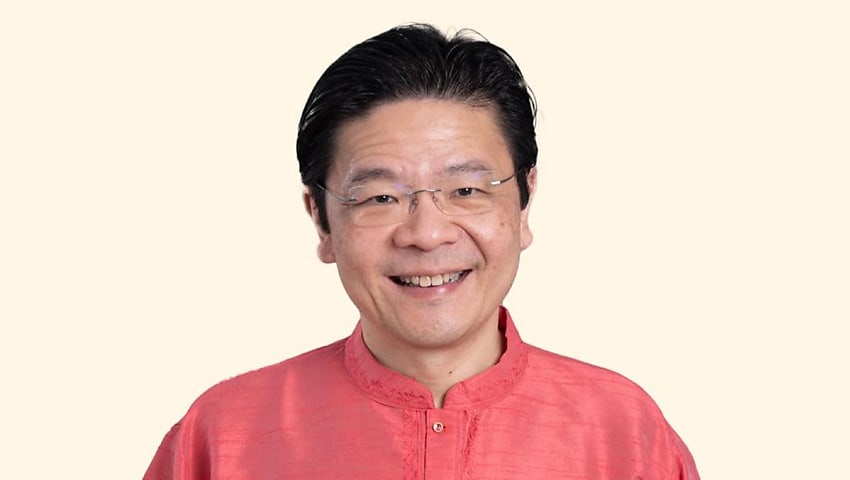
Nowhere is the global shift towards multipolarity more evident than in the Indo-Pacific; now Singapore’s Prime Minister has warned concerned nations of turbulence as they seek to navigate the “post-American” world.
There is no escaping the reality that the post-Second World War and post-Cold War economic, political and strategic order that is dominated and, in many ways, held together by the United States is coming to an end.
While the timeline of its demise continues to be a subject of debate and broader conversation, the unipolar world is well and truly at an end, giving rise to the “post-American” multipolar world.
Across the Indo-Pacific, this transition of global economic, political and strategic power is well underway, with formerly developing nations rapidly emerging as the 21st century’s most consequential powers, usurping the positions previously held by many European nations, leaving only the United States as the world’s remaining Western superpower.
This new world order isn’t without its birthing pains and, in many ways, the upheaval, friction and argy-bargy between established and emerging powers, particularly in the Indo-Pacific, are Braxton Hicks contractions or more simply put, the build-up before the main event.
Front and centre of this disruption is the rise of China as a great power “peer” competitor to the United States and the rapid emergence of other potential great power peers across the region, including India, Indonesia, Pakistan, Vietnam, South Korea and more broadly on the global stage, Saudi Arabia, South Africa, Brazil, Mexico, Poland and, of course, a resurgent Russia.
As a result of these shifting global and regional dynamics, established middle-tier powers like Australia, Japan, South Korea and now the island city-state of Singapore are now joining the chorus of concerned nations facing down the “post-American” world.
To this end, in a recent interview with editor of the Financial Times Roula Khalaf, Singapore Prime Minister Lawrence Wong warned that the “post-American” world was fraught with turbulence and needed to be accounted for accordingly, particularly for established powers like Australia and Singapore, which are increasingly finding themselves having to navigate ongoing and increasing tensions between the United States and China.

Prepare for an ’unpredictable’ transition
If recent history is any guide, the ongoing transition from a unipolar, American-led world order towards a considerably more contested, multipolar world will continue to be characterised by intense competition, tension and challenges for all parties, but especially smaller and middle powers long invested in the post-Second World War economic, political and strategic order.
Recognising this, Prime Minister Wong explained from Singapore’s perspective, “We are, certainly, in the midst of a great transition to a multipolar world, a post-American order and a multipolar world. No one can tell how the transition will unfold, but there is no doubt it will be messy and unpredictable because America is stepping back from its role as global insurer, but there is no other country that’s able to or willing to fill the vacuum.
Wong added, “So we are in an uncomfortable position where the old rules do not apply any more, but the new ones have not been written. And we must brace ourselves for more turbulence ahead. So what are we to do in this environment?”
This question is one nations across the Indo-Pacific and, more broadly, the global environment are grappling with, particularly Australia as it grapples with competing economic and security interests given the nation’s overwhelming economic dependency on China and traditional, historic security and cultural relationship with the United States.
While successive Australian governments, particularly in the recent years, have taken vastly different approaches to navigating the intricacies of the emerging multipolar world and the ensuing challenges facing the nation, success is anything but guaranteed.
“Countries do need to do more to invest in their own economic security and also stability ... What the Trump administration has done is to motivate and catalyse many countries to do this self-reflection. And you see that happening now. More countries are indeed investing...
“The positive result of this is countries taking more responsibility and spending more on your own security, we worry that the consequence of these actions will also mean, as I just said, a weakening of the global order today,” Wong added, outlining the growing trend of some nations to begin taking more direct and focused action to become the masters of their own destiny.
Now achieving this in the face of an increasingly multipolar world isn’t without its challenges, but the risk-reward calculations are a key part of any nation adapting to the future and planning accordingly, particularly if the world transitions towards a multipolar world dominated by multiple centres of economic, political and strategic gravity and associated spheres of influence.
Wong added, “We hope it will not end up like that because if the world ends up in exclusionary blocs and spheres of influence, I think it will be more dangerous and unstable. So from our point of view, multipolarity should still have a way to bring about global connections.”
And herein lies our challenge, and if we’re bold enough to pursue it, our opportunity.
Walking the tightrope will require nuance, but we must plan for success
While some within the Australian ecosystem have been quick to write off the Australia–America relationship and the associated alliance (usually motivated by their own or influenced political ideologies) Singapore’s Prime Minister reinforces the reality that his nation, like many across ASEAN, will need to accept that neither the US nor China is going anywhere.
Prime Minister Wong said, “Singapore, and all of the Asean countries, will be able to navigate this new environment. We will be able to, therefore, continue to have relations with both America and China.”
If this sounds familiar, it’s easy to understand why, given Australia’s longstanding policy of “Agree where we can, disagree where we must” in regards to our relationship with Beijing while seeking to juggle investment commitments and requests in order to secure our security relationship with Washington.
However, it is worth noting that Wong is clear-eyed on the need to walk the geostrategic tightrope, saying, “Having said all that I just described of China, we are talking about China today still not being able to or willing to replace America’s role in the global system. Because it’s not quite at the same level as America. It’s still a middle-income country with a lot of domestic challenges. So there is no new global leader yet emerging, and we are in this very messy period of transition.”
Nevertheless, disruption and turbulence should be expected by virtue of the transition from a unipolar to a multipolar world. Again, Prime Minister Wong approached this from the Singaporean perspective, saying, “In this very unpredictable, messy period of transition, which can continue for years, maybe more than a decade, I think we will have to work with like-minded countries, as I said just now, find ways to preserve and reinforce the multilateral frameworks that matter.”
In order to maximise the security and resilience of Singapore, the nation is diversifying its economic relationships while strengthening its existing relationships within the confines of existing multilateral organisations, while also seeking to strengthen the sovereignty of the island city state, with an emphasis on the future and the opportunities present in this contested era.
Prime Minister Wong articulated this, with particular focus on Singapore’s young people who will ultimately inherit the nation in the coming years, saying, “You see that level of growing anxiety amongst young people. Because we are in a different environment; less stable, more chaotic, more disorderly, so naturally young people are more concerned about their future. We feel that in Singapore too.
“So from a political point of view, from a domestic point of view, our focus must be to find ways to give assurance to our young. To give them that confidence that they can chart a better future for themselves. And that’s what we are determined to do in Singapore.”
Perhaps it is time that Australia’s own policymaking class took a leaf out of Singapore’s book and start to put our national interests and those of the Australian public first, or we, as a nation, will become increasingly poorer, irrelevant and vulnerable to coercion by our neighbours as the region becomes more competitive and contested.
But doing so will require a clear, concise and committed plan for the future of our nation and one that is bold, considered and well communicated with the Australian public, or, as an old boss who was a former cop used to tell me in the context of policing, “is best done with and for the community, rather than to and against it”.
Final thoughts
Australia stands at a crossroads. Our leaders must take national defence seriously, not as an afterthought, not as a slogan, but as the central task of government. Nothing matters more. Not wiping 20 per cent of HECS debt. Not clinging to self-defeating climate dogmas. Not even our sacred institutions like Medicare or the NDIS.
That might offend a few sacred cows, but it’s time.
Australia must urgently build the capability to defend itself and its interests, both independently and alongside the United States and our regional partners. To do that, government and the public alike must confront some uncomfortable truths.
First, the Indo-Pacific is now the world’s most contested region. China, India, Pakistan, Vietnam and Thailand are flexing their muscles, while Japan and South Korea are reasserting their power. Strategic competition isn’t approaching our doorstep, it’s already inside the gate. Our “whole-of-nation” strategy must be reset for this new reality.
Second, without a sustained push in investment, reform and long-range planning, Australia won’t just fall behind; we’ll be left in the wake of our neighbours’ rise. If we don’t act now, the next generation will inherit a country overshadowed by richer, stronger, more assertive powers.
For too long, we’ve chased quick wins and easy politics. Since Federation, governments have preferred the short-term fix to the long-term prize. But the Indo-Pacific is shifting beneath our feet, and business as usual won’t cut it. We need foresight, courage and a plan that seizes opportunities and blunts threats before they overtake us.
The question isn’t whether the challenge is coming, it is already here. The real question is when Canberra will finally deliver a bold, detailed strategy that unites industry, government and the public behind a clear national vision.
With China’s ambitions now in plain view, Australia faces a stark choice: remain a bystander or step up as a shaper of the Indo-Pacific’s future. The decisions we make today will decide whether we lead in this new era or get swept aside by it.
Get involved with the discussion and let us know your thoughts on Australia’s future role and position in the Indo-Pacific region and what you would like to see from Australia’s political leaders in terms of partisan and bipartisan agenda setting in the comments section below, or get in touch at

Want to see more stories from trusted news sources?
Make Defence Connect a preferred news source on Google.
Click here to add Defence Connect as a preferred news source.