

 iscover
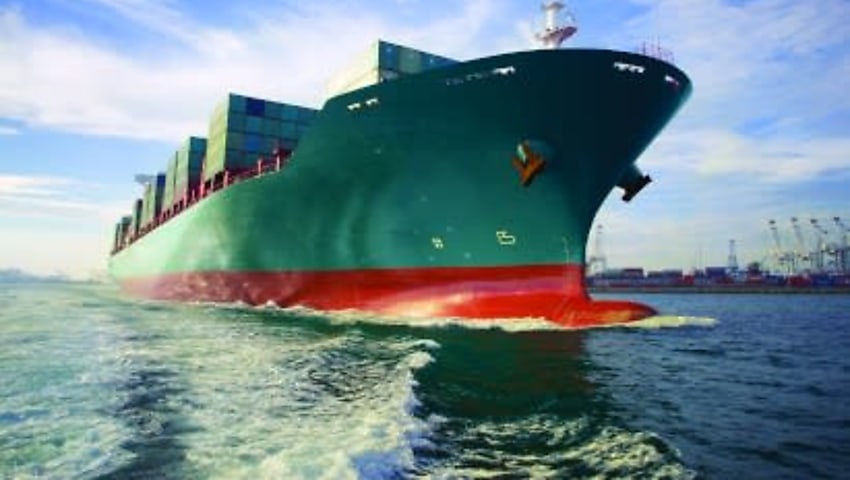
As the era of hyper-globalisation gives way to more siloed, contested and “neo-nationalist” economic systems, trade is becoming the new norm, but that doesn’t necessarily mean bilateral and multilateral trade are going the way of the dinosaur.
In the late 1930s and early 1940s, Imperial Japan advanced the idea of a Greater East Asia Co-Prosperity Sphere as both a strategic vision and a powerful piece of wartime messaging.
Presented as a bold new order for Asia, the concept promised liberation from Western colonial rule and the creation of a self-sufficient regional bloc led by Asian powers, for Asian peoples.
At its heart, however, the Co-Prosperity Sphere was as much an instrument of Japanese imperial ambition as it was an ideological project. The model was framed around economic autarky and strategic depth. Japan, heavily dependent on imported raw materials, sought to bind the resource-rich territories of south-east Asia and the Western Pacific into an integrated system that could sustain prolonged conflict.
Oil from the Dutch East Indies, rubber from Malaya, rice from Indochina and industrial labour across occupied territories were to feed Japan’s war economy, while Japanese industry and military power would sit at the apex of the system. In theory, this arrangement would insulate the region from Western economic coercion and create a unified Asian economic zone.
Politically, the design emphasised hierarchy rather than equality. While Japan publicly championed pan-Asian solidarity, in practice it envisaged itself as the natural leader, exercising decisive control over security, trade and governance.
Local elites were sometimes co-opted and nationalist rhetoric encouraged, but real authority rested with Japanese military administrations. As a result, the sphere was therefore less a federation of equals than a tightly managed colonial empire, justified through shared identity and wartime necessity.
The ambition of the Greater East Asia Co-Prosperity Sphere lay in its scale and intent. It sought not only to redraw borders but to reshape economic flows, political loyalties and strategic alignments across half the globe.

While its failure was driven by military overreach, resistance within occupied territories and the inability to reconcile lofty ideological claims with the harsh realities of occupation, the model eventually provided the basis for contemporary organs like the European Union and the Common Market and even loosely defined strategic partnerships like the Southeast Asia Treaty Organisation (SEATO) and Association of Southeast Asian Nations (ASEAN).
While the end of the Second World War would put a stop to the Japanese ambitions, the post-war order ultimately gave rise to the integrated economic, political and strategic order built upon the security guarantees provided by the United States that empowered and accelerated the emergence of globalisation and the global economy.
This would ultimately give rise the post-Cold War period of “hyper-globalisation” during the 1990s to the mid-2010s, which saw the explosion of economic interdependency, the hollowing out of Western economies in particular (especially in the case of Australia which saw a shift towards a low-complexity, services and resources-driven economy), and the emergence of China as the world’s pre-eminent industrial economy.
Now in light of the implications of Beijing’s rising power and ambitions of regional supremacy emerging in earnest under President Xi Jinping, the greater emphasis on economic sovereignty, national resilience and (re)industrialisation, coupled with allied economic integration, is emerging as a key component for many national policymakers across the Indo-Pacific.
Highlighting the growing emphasis on integration and collaboration between allies, in this case, a less formal, modern reimagining of Japan’s Greater East Asia Co-Prosperity Sphere, this time focused on two specific anchor nations, Australia and Japan, is Australian Strategic Policy Institute (ASPI) senior fellow David Uren in a piece titled Japan and Australia can build economic strength amid weakening globalisation.
The core of Uren’s analysis is based from conversations held at the ASPI Japan–Australia Economic Security and Industrial Cooperation Symposium, which reflected a shared recognition that the global economic order is undergoing profound strain and that governments can no longer rely on market forces alone to manage strategic risk.
Uren began his analysis, saying, “The forces of globalisation that drove business and governments through the decades leading up to the 2007–08 Global Financial Crisis have lost their power amid rising nationalism, social inequality and financial volatility. The contours of a new international order cannot yet be drawn with any certainty, but strengthening economic security is emerging as a priority for many, including the governments of Japan and Australia.”
Building economic resilience, integration amid dying globalisation
At the core of Uren’s analysis, and the growing recognition that both Australian policymakers and the Australian public need to grapple with, is as one of the speakers at the symposium stated, quoting Italian Marxist scholar Antonio Gramsci, “The old world is dying and the new world struggles to be born.”
This effectively echoes the sentiment established by Japan’s newly installed and first female prime minister, Sanae Takaichi, who stressed the impact of the deteriorating global order and the re-emergence of multipolarity and great power competition where she emphasised as an immediate priority of her government, strengthening Japan’s food, energy and health services security, as well as what she terms the country’s international security.
Uren highlighted this shift, stating, “In the era of globalisation, Japan was an initiator of just-in-time supply lines, in which inventories were reduced to the bare minimum and duplication of suppliers was eliminated to maximise use of capital. The challenge now is to insert redundancy into supply lines, just in case.”
He went further, adding, “We can’t assume that the most competitive supplier will win the work once security concerns come into decision-making processes. However, the introduction of new criteria may fall foul of rules set by the World Trade Organization or free trade agreements. It is far from clear how business and governments should navigate these tensions.”
China naturally looms large in the conversation for both Japan and Australia, and it is argued by some that international trade rules have contributed to strategic imbalance. Concerns remain that those same rules have constrained Beijing’s behaviour and that their erosion could worsen instability.
Japan’s experience with a Chinese rare earths embargo in 2010, and more recent threats of export controls, underscored the risks. Yet there was consensus that Japan cannot decouple from China; the objective is diversification, not rupture.
And this is where Australia enters the frame, particularly following developments between Australia and the United States around critical minerals, and Australia’s growing critical minerals relationship with Japan, with diversification critical for both nations, something Uren highlighted.
“Strengthening supply chain security needs the work of partners both upstream and downstream to obtain reliable market demand, which some speakers described as the ‘comprehensive supply chain approach’.”
He added, “Much of the discussion focused on critical minerals, which present high risks to investors. The processing of rare earths, for example, can involve hundreds of steps to separate the elements. This involves great technical complexity. The pricing of many critical minerals is opaque, and markets are susceptible to manipulation. As the dominant force in many critical minerals, China has market power.”
Expanding the Australia–Japan economic partnership
Uren’s analysis goes to the core of the economic security dilemma now confronting middle powers such as Australia and Japan: markets alone cannot deliver strategically resilient outcomes in sectors where geopolitical risk, capital intensity and market distortion intersect.
His argument rests on the recognition that critical minerals and defence industry investment operate in conditions fundamentally different from those assumed by orthodox free-market theory.
At the centre of Uren’s case is the failure of private capital to absorb asymmetric risk. Critical minerals projects are exposed to long development timelines, opaque pricing, technological complexity and, critically, the risk of deliberate market disruption.
China’s demonstrated ability to flood markets with cheaper material creates a form of strategic price risk that private financiers cannot hedge. In this environment, offtake agreements – normally the cornerstone of project finance – lose credibility unless backed by government assurance.
Uren’s point is blunt: companies will rationally walk away from contracts if cheaper supply emerges, and no amount of moral suasion will override commercial incentives. Secure and reliable demand therefore becomes a public good, requiring state-backed market support, underwriting or partnership.
Uren also highlighted the regulatory and normative dimension of intervention. Government involvement is not limited to finance; it extends to setting standards for sustainable mining, processing and use.
Environmental and processing standards serve a dual purpose: they align projects with social licence expectations while constraining the ability of dominant players to weaponise excess supply through environmentally or socially unconstrained production.
In this sense, standards become a tool of market discipline as much as environmental stewardship.
The reference to existing Australia–Japan ventures, such as the Japan Australia Gallium Associates project involving Sojitz, JOGMEC and Alcoa Australia, demonstrates that this model is already emerging. These projects illustrate how state-linked capital and commercial expertise can be combined to de-risk strategically vital supply chains without fully nationalising them.
Uren extended this logic into defence industrial cooperation. He argued that delayed military modernisation premised on the false assumption that globalisation reduced conflict risk has left allies exposed at precisely the moment when demand for advanced capabilities is surging. As multiple states seek the same platforms, costs will rise and supply will tighten.
The answer, in Uren’s view, lies in deeper industrial integration between trusted partners, allowing demand to be pooled, production to be coordinated and duplication reduced.
Here, AUKUS is presented as a partial proof of concept. By cutting through export controls and regulatory barriers, it shows how governments can reshape industrial ecosystems when strategic necessity demands it.
The acquisition of Japanese-built frigates by Australia is therefore more than a procurement decision; it is a potential catalyst for broader collaboration in dual-use technologies.
Underlying Uren’s analysis is a strategic conclusion: as US relative economic weight declines, middle powers must shoulder greater responsibility for both economic and military security.
Government-to-government coordination is a prerequisite for business-to-business cooperation and sustained alignment could ultimately support a formalised Australia–Japan security relationship.
In Uren’s framing, economic security, industrial policy and alliance strategy are no longer separate domains, but components of a single, increasingly indivisible system.
Final thoughts
Both government and everyday Australians need to confront some uncomfortable realities if we’re genuinely serious about securing the nation’s future.
The Indo-Pacific is no longer a region we simply observe from afar; it’s now the world’s most contested strategic and economic arena. China, India, Pakistan, Thailand and Vietnam are flexing newfound economic, political and military weight, while Japan and South Korea are reasserting themselves with renewed purpose.
Competition isn’t creeping towards us; it has already arrived, and it won’t ease off. Our national approach must be overhauled to reflect this sharper, more demanding environment.
At the heart of this reality is a fundamental truth: Australia cannot afford to keep relying on the same narrow economic base and outdated assumptions.
Without a sustained surge in innovation, diversification and genuinely out-of-the-box national planning, we don’t just risk slipping behind, we risk watching our neighbours power ahead while we stagnate. If we fail to act, future generations could inherit a country overshadowed by more dynamic, productive and influential regional economies.
For decades, both sides of politics have opted for the quick fix over the long game. Successive governments have prioritised short-term wins and reactive policymaking instead of building the resilient, future-ready economy we require.
But the strategic landscape is shifting under our feet, and business-as-usual won’t get Australia where it needs to be. We need to break old habits, boost productivity, broaden our industrial base and deliberately cultivate new, globally competitive sectors that strengthen national resilience.
The challenge isn’t hypothetical, it’s already here.
The pressing question is when will Canberra finally produce a bold, detailed economic and strategic plan that galvanises industry, communities and the broader public around a clear vision for a stronger, more competitive Australia?
When will we see a strategy that genuinely prioritises economic resilience as a pillar of national security in an age of accelerating great-power competition?
With China and other great powers expanding their influence and our region becoming more contested, Australia faces a stark decision: remain a passive observer of change or step up as an active shaper of the Indo-Pacific’s future.
The choices we make now, especially about how we innovate, invest and transform our economy, will determine whether Australia thrives in this new era or gets pushed to the margins by it.
Get involved with the discussion and let us know your thoughts on Australia’s future role and position in the Indo-Pacific region and what you would like to see from Australia’s political leaders in terms of partisan and bipartisan agenda setting in the comments section below, or get in touch at

Want to see more stories from trusted news sources?
Make Defence Connect a preferred news source on Google.
Click here to add Defence Connect as a preferred news source.