

 iscover
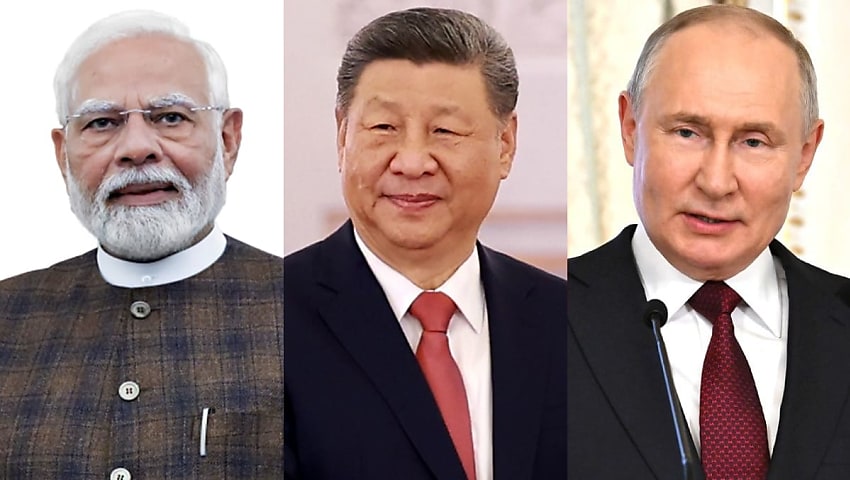
We have often been told that “the enemy of my enemy is my friend”, but in the real world, the truth is often far more complex, with Australia and its allies risking lionising nations where everything may not be as straightforward as it seems.
For much of the Cold War, Australia and India existed on opposite sides of the global strategic ledger. Canberra was firmly embedded within the US-led alliance system, while New Delhi championed non-alignment in theory and cultivated a deeply practical strategic partnership with the Soviet Union in practice.
Mutual suspicion, geographic distance and differing political cultures ensured that the bilateral relationship remained shallow, episodic and largely transactional for decades.
Even after the end of the Cold War, India’s economic insularity and Australia’s reflexive Atlanticism limited the scope for any genuine strategic convergence, which began to change in earnest in the late 2000s.
Driven in large part by India’s gradual economic liberalisation, its growing concerns about China, and Australia’s recognition that the Indo-Pacific – not the Euro-Atlantic – would define its future security environment created new incentives for engagement.
The 2009 Joint Declaration on Security Cooperation marked a turning point, signalling a shared interest in maritime security, counter-terrorism and regional stability.
Subsequent milestones followed: the lifting of Australia’s uranium export ban to India in 2011, the conclusion of the Comprehensive Strategic Partnership in 2020, and the steady expansion of defence exercises, intelligence sharing and leader-level dialogue.
Over the past 15 years, Canberra has increasingly treated India not merely as an emerging partner, but as a central pillar of its long-term strategic hedging against China.

Successive Australian governments, Labor and Coalition alike, have embraced the narrative of India as a “natural” Indo-Pacific counterweight: a large democracy, a resident power, and a state with its own unresolved tensions with Beijing.
The revival of the Quadrilateral Security Dialogue, alongside the United States and Japan, cemented this assumption, elevating India to near-core status within Australia’s strategic imagination. Yet this deepening relationship has always rested on a set of optimistic assumptions that deserve closer scrutiny.
While Australia continues to progressively decouple from China in critical sectors and aligned itself more tightly with US-led containment strategies, India has pursued a far more ambiguous course, maintaining deep defence ties with Russia, expanding trade with China even amid border clashes, and embedding itself within alternative institutions such as the Brazil, Russia, India, China, South Africa organisation (BRICS) and the Shanghai Cooperation Organisation (SCO).
As Canberra places ever-greater strategic weight on New Delhi, the gap between Australian and, more broadly, Western expectations and Indian behaviour has become harder to ignore.
Understanding how the India–Australia relationship developed and why it now sits at the centre of Australia’s Indo-Pacific strategy is essential to grappling with the uncomfortable reality that follows: India is not becoming what Australia hopes it will be.
Instead, it is becoming more openly ethnonationalist at home, more transactional abroad, and more determined to preserve strategic autonomy even as its Western partners seek alignment against China and Russia.
For Australia and its broader, longstanding allies, the challenge is no longer how to build ties with India, but how to reconcile those ties with a partner whose interests, values and actions increasingly diverge from the assumptions that underpinned the relationship in the first place.
India’s defence: Strategic autonomy
At the core of any Indian counterpoint is undoubtedly its long utilised claims of “strategic autonomy”, which saw it more closely aligned with the Soviet Union during the Cold War, despite being an official member of the Unaligned Nations grouping, building relationships across the Communist Bloc that remain robust to this day.
Meanwhile, India kept one eye on Washington: after liberalising in 1991, India let the US re-enter its security relations (easing nuclear sanctions, growing trade) because Washington saw India as a democratic counterweight to Beijing.
As a recent analysis by the Hudson Institute noted, “successive American administrations have supported [India’s] growth on diplomatic, economic and military fronts … to counter China’s rise”. By the early 2000s, India was a burgeoning market and partner for the US, Europe and Japan – but it never abandoned its old friendships.
The turning point came in the 2010s. China’s assertiveness in Asia (e.g. border stand-offs) alarmed both India and countries like Australia. In response, India quietly joined US initiatives: it revived the Quad (with Australia, Japan, the US) in 2017 and invited Australia back into the Malabar naval drills in 2020.
It also upgraded its strategic ties with Australia (signing a Comprehensive Strategic Partnership in 2020) and with Japan. Yet India studiously avoided any formal military pact. Indeed, pundits observed that India has “never allied itself openly … with any other major power”, preferring to keep distance even when collaborating.
At the same time, India stayed active in Russia–China forums. It joined the Shanghai Cooperation Organisation in 2017 (along with Pakistan) and has been a founding member of BRICS since 2009. In practice, this means New Delhi hosts summits with autocrats like Putin and Xi, even as it meets Western leaders in Quad summits.
This balancing act peaked after 2022, as Narendra Modi’s India embraced President Vladimir Putin (negotiating oil and missiles) while also joining G7 and Quad meetings.
However, analysts have warned that this is a delicate tightrope.
As one commentator put it, New Delhi’s “simultaneous membership in the Quad and BRICS risks turning from leverage to a test of endurance”.
India’s foreign minister openly rebukes pressure to choose sides, arguing India must pursue its own interest: “We have seen the India–Russia relationship has worked to our advantage … if it works to my advantage, I would like to keep that going.” In other words, India will take what it needs from all camps, regardless of promises or illusions of exclusivity.
Two senior leaders from allied nations meet during a state visit. India’s partnership with Russia remains unusually warm. Even after Putin’s 2022 invasion of Ukraine, India refused to join Western sanctions. It continued buying Russian oil at steep discounts and negotiating new defence contracts.
In 2018, New Delhi signed a US$5 billion S-400 air defence deal with Russia, a move that risked triggering US anti-Russia sanctions (CAATSA). As India expert Manoj Joshi noted, “it is politically important in that it signals that India will not abandon Russia as a supplier because of US pressure”.
Today, about 60–70 per cent of India’s imported weapons are Russian-built and Russian arms (from fighter jets to submarines) remain essential to India’s military. In short, Russia still supplies India’s security needs, even as the West builds closer ties.
At the same time, India’s leaders insist they have also deepened ties with the US and Europe. Under the Modi government, strategic dialogues and joint exercises with Australia, Japan and the US expanded. India joined the G7 (as an invitee) and signed high-tech cooperation pacts on space, technology and cyber security. Prime Minister Modi’s speeches stress pluralism and internationalism.
Yet India’s purchases and votes tell a different story. For example, Indian Foreign Minister Subrahmanyam Jaishankar declared in 2022 that India would “be supportive of any initiative that de-risks the global economy and stabilises global order” but notably did not condemn Russia’s annexation of Ukrainian territory.
In a UN vote on Ukraine, India abstained, with Minister Jaishankar explaining “we don’t predict our votes in advance”. These actions disappointed Western partners who hoped India would align.
Expanding ties with Russia, dealing with China
India’s “hedging” is most evident in its Russia policy. Despite talk of new partnerships, India remains Moscow’s closest Asian ally. In late 2021, Russia began delivering S-400 missile batteries to India, ignoring US threats of sanctions. US officials warned India the CAATSA sanctions law could be applied, but there was no waiver offered. India simply moved forward, undeterred.
A 2022 Al Jazeera report commented that India’s deal with Russia “would mark a major setback to any US efforts to undercut Russia” in India’s market.
In fact, India’s officials have shrugged off pressure, stressing that buying cheap Russian oil and arms “works to our advantage”.
Conversely, Russia reciprocates by treating India as a special partner. In 2023 and 2024, President Putin personally hosted Prime Minister Modi at summits (in Uzbekistan and Russia) and signed commercial and military agreements.
Oil companies like ONGC expanded projects in Siberia to keep India’s fuel flowing. A Reuters analysis noted that India’s approach with Russia is deliberate: even a “diminished” post-Soviet Russia still offers “advantages” to New Delhi as an insurance policy in a multipolar world. In short, India’s defence and energy purchases underscore its unwillingness to sever Russia ties.
However, this comes with costs. India’s Western partners quietly warn that it is playing with fire. A US State Department advisory in 2018 explicitly urged India to drop the S-400 purchase or risk sanctions. But New Delhi defied the warning anyway.
The result is a cooling of US–India trust: for instance, the United States has not fully lifted all technology transfer restrictions to India (e.g. on space technology).
From India’s view, though, the transaction calculus is simple: Russian arms come with no strings and a friendly relationship – and those suits India cannot easily replicate from the West.
Shifting towards the other Indo-Pacific titan, China – India’s dealings with China combine competition and cooperation. The two countries share a long, disputed border; indeed, violent clashes (Doklam 2017, Galwan 2020) have convinced New Delhi that Beijing is a threat to India’s core security.
China has rolled out ambitious projects (the Belt and Road Initiative) that India initially rebuffed. Yet the two giants also have enormous trade ties (China has been India’s single largest trading partner) and India leans on China to uphold regional stability when possible.
After the 2020 clashes, New Delhi responded by banning dozens of Chinese apps and tightening investment rules. But it also returned to dialogue: by late 2024, India and China announced troop pullbacks and agreed on border management protocols.
In global forums, India and China still coordinate when convenient. India supports China on some global south issues (like resisting unilateral sanctions), while China tolerates India’s participation in the Quad and West-led initiatives. India joined the BRICS summit in 2023 and even chaired some sessions, welcoming China’s proposals on trade.
It also sat beside President Xi Jinping at SCO summits (India entered the Shanghai Cooperation Organisation in 2017). In August 2025, India’s leader commented that India–China ties had made “steady progress” since their leaders last met, as they prepared another summit.
That same month, India and China agreed to bring major capex projects and diplomatic contacts back to normal.
All the while, India avoided outright confrontation. For instance, when the US discussed restricting China’s tech, India demurred on new bans, reasoning it needed Chinese investment and rare earth imports.
A Reuters summary noted that “relations between the Asian rivals [have] thawed … guided by respect for each other’s interests and sensitivities”, citing India’s call for stable ties.
In practical terms, India engages China through regional groupings: it now cooperates in anti-terror drills under the SCO and jointly educates air force pilots (the Asian “Wing of Bengal” exercise in 2023).
Yet strategic distrust remains. India quietly modernised its border infrastructure and accelerated weapon purchases after 2020, and it condemned China’s South China Sea claims.
Even after the Galwan clash, India has resumed high-level meetings with Beijing. In August 2024, Prime Minister Modi and President Xi met at the BRICS summit and pledged to de-escalate tensions.
By late 2024, both sides had agreed to withdraw troops from key border points and restore direct flights. In October 2025, Modi hosted Chinese delegates in Delhi; official statements touted “stable, predictable, constructive ties” that “contribute to regional and global peace”.
In short, India’s China policy mixes deterrence with accommodation: it backs new Asian infrastructure projects (e.g. the Asian Infrastructure Investment Bank, which China leads) even while refusing to endorse Beijing’s BRI corridor through Pakistan. This middle ground frustrates both friends and rivals.
As one analysis puts it, India remains in two worlds at once: pragmatically advancing development cooperation with China in some arenas, while hedging against Chinese power along the Himalayan border.
India’s membership in these overlapping forums exemplifies its multi-alignment. It keeps one foot with the “democratic” Quad powers and one foot with the “BRICS” powers, raising significant questions about the commitment of the rising power to stepping in to support the Western rules-based order.
This double-game strategy can offer leverage: New Delhi can claim it is building ties everywhere to ensure peace – but it also carries the risk of over-stretch.
The Daily Sabah op-ed warned that as blocs harden, “each defence deal, energy purchase and UN vote carries more geopolitical symbolism. India’s room for manoeuvre is shrinking: the US demands alignment, China dominates the alternative, and Russia’s dependence leaves little room”.
In short, staying equidistant is becoming harder; India’s future calculations must balance great-power rivalry on all sides.
The ethno-religious factor
Compounding India’s foreign-policy tightrope is its domestic Hindu nationalist agenda under Prime Minister Modi. The ruling BJP draws on an ideology (Hindutva) that emphasises India’s Hindu identity.
Many Western diplomats and analysts worry that this ethnocentric bias bleeds into diplomacy, affecting relationships, which is increasingly undeniable when one considers the active inclusion of migration stipulations for any economic deal in efforts to build sizeable and influential diasporas in foreign nations.
A recent Foreign Policy article bluntly observed that “India’s diplomacy is increasingly courting controversy, thanks to the Modi government’s Hindu nationalist agenda”. In practice, this has meant heated disputes with neighbours.
For example, in late 2023, Prime Minister Modi unveiled a new Parliament building featuring a map of “Akhand Bharat”, an expanded India spanning Pakistan, Nepal and beyond. Some could dare compare it to the Greater German Reich established following the Anschluss between Germany and Austria.
The move provoked anger in Kathmandu and Islamabad: Nepal’s leaders protested that India was violating sovereignty. Pakistan lodged formal objections. Prime Minister Modi’s government scrambled to explain it as cultural-historical imagery, but India’s own officials (a BJP minister) praised it as “the resolve is clear – Akhand Bharat”.
Such ideological symbols have caused alarm in traditionally pro-India neighbours.
Domestically, the government’s Hindu-first policies, like the 2019 citizenship law favouring non-Muslim immigrants, have strained ties with Muslim-majority neighbours (e.g. Bangladesh halted joint projects in protest).
India’s handling of minority issues has also drawn international criticism: the UN and Western governments have complained of rising Islamophobia and attacks on religious minorities. In Europe and the US, Modi’s “tiger-warrior diplomacy” (a reference to China’s own strident “wolf-warrior” approach) has raised eyebrows.
London-based analyst Kunal Purohit admitted many officials in the UK foreign ministry feel “petrified … about doing business with Modi’s government”, even as “overriding strategic concerns” force them to keep working with India.
Likewise, India’s strongman image has made some Western capitals cautious. For example, after police raids on the BBC in India (following a critical documentary), Britain publicly expressed concern in 2023.
In private, allies fret that India’s ethnonationalism could backfire. One observer warned that “outbursts of anti-Muslim rhetoric and attacks on Muslims” by Indian political actors “cause problems for New Delhi, both in the Muslim world and in the West”. Yet strategic necessity mutes the criticism.
Even Purohit’s piece concluded that India’s geostrategic significance as a counterweight to China “might ensure that criticism … is not too vocal”.
In other words, Australia, the US and others will publicly winnow their concerns about India’s religious politics so long as India is seen as a valuable hedge against China or Russia.
This uneasy calculus tolerating ideological excesses for security gains is part of why India’s friendship can seem duplicitous.
Hedging our bets or setting the scene for another adversary?
Australia has specifically tried to “hedge its bets” by deepening ties with India, hoping the partnership would deter China from dominating Asia.
Canberra upgraded relations with India especially after the 2017 Doklam and 2020 Galwan border conflicts. The two countries signed a Comprehensive Strategic Partnership in 2020, expanded joint naval exercises (AUSINDEX, AustraHind), and set up a foreign/defence ministers’ “2+2” dialogue. In 2024, Australia’s Defence Strategic Review even declared India a “top-tier security partner”.
These moves signalled that shared concerns about China had finally overcome decades of indifference in Canberra–New Delhi ties.
Yet it seems Australia quickly learnt the limits of India’s cooperation.
For instance, a planned Quad summit in Sydney (2023) had to be rerouted when the US president cancelled, underscoring that India’s role depended on Washington’s leadership.
And in practice, Australia and India have pursued their security agendas quietly. A Reuters analyst noted that from 2020 onward, India’s engagement with Quad exercises (like Malabar) did send a “strong strategic signal to Beijing”.
But by 2024, both New Delhi and Canberra were recalibrating towards China: India began “cautiously reset[ting] its ties with China” while Australia reopened dialogues with Beijing.
As Shanthie Mariet D’Souza summarised for The Diplomat, “neither New Delhi nor Canberra [was] inclined to be seen as openly colluding against China”. In other words, both nations quietly dialled back confrontation.
Australia’s need for realpolitik and India’s global Izaat
Australia’s frustration shows India’s duplicity in stark relief. Canberra offers new trade and investment initiatives and has invited India to regional forums. But officials acknowledge India’s domestic drivers: a popular conservative government and a belief that India should not be drawn into great-power wars unless its own borders are threatened.
For example, recent India–Australia discussions noted that expanding defence cooperation must be “measured”, focusing on non-controversial areas (maritime security, critical minerals, tech) rather than overt alliance pledges.
Australian strategists recognise this carefully: they see India as an indispensable partner in principle but one whose Hindutva nationalism and tradition of non-alignment make it an unpredictable ally.
Meanwhile, a Lowy Institute report even observed a “decay and shrinking” of Quad momentum during 2019–22, in part because of India’s reluctance to get locked into US pressure on China.
Still, pragmatism prevails. Canberra’s Foreign Minister Penny Wong has repeatedly welcomed India’s cooperation on global issues (from climate to supply chains) while diplomatically ignoring India’s internal politics.
A sign of this balancing act came in 2025 when Australia invited India to the G7 outreach summit in Japan, even though India is not a G7 country.
Australia, like the US and the UK, will likely continue courting India, however, whether that is with clear eyes remains to be seen, particularly if we continue to expect unconditional friendship and refusing to accommodate India’s autonomy.
As one Asia Society Policy Institute senior fellow and former Australian intelligence chief Richard Maude put it, the region’s mantra is “turning up”: unlike China, India only shows up when it suits its interests.
Final thoughts
India’s foreign policy over the last 15 years has been defined by contradiction and complexity. It has welcomed Quad, AUKUS and Western capital even while partying with BRICS, the SCO and authoritarian leaders.
Allies like Australia yearn for India to serve as the “third pole” against China and Russia but India’s leadership insists on hedging all bets in its own nationalist interest. This makes India simultaneously a key partner and a lingering wild card.
In journalistic terms, India’s behaviour is often described as duplicitous: it talks like a democratic friend in Washington and Canberra but acts like an opportunistic neutralist in Moscow and Beijing.
In opinionated terms, one might say India’s ethnonationalist government has thrown out the old playbook of purely interest-based diplomacy, injecting ideology into its international image.
The result is a country that defies easy categorisation – a democracy flirting with dictators, a “Hindu nation” courting universal forums, and a global power always keeping a lever over others.
For countries like Australia, this hybrid India presents both promise and puzzlement. Canberra will continue seeking security cooperation but must do so on India’s terms: respecting New Delhi’s insistence on autonomy.
India’s new phase will no longer allow equal distance between powers, it must mean “selective proximity”.
If this recalibration succeeds, India may navigate the new world order on its own terms. Until then, its great-power balancing act will remain a masterclass in how one nation can play many sides, to the delight of none and the eternal watchfulness of all.
Either way, for Australia where prestige, honour and ethno-religious rivalries intersect with economics, security and geopolitical competition, maybe the best friends are the ones who have turned up when we needed them.
Get involved with the discussion and let us know your thoughts on Australia’s future role and position in the Indo-Pacific region and what you would like to see from Australia’s political leaders in terms of partisan and bipartisan agenda setting in the comments section below, or get in touch at

Want to see more stories from trusted news sources?
Make Defence Connect a preferred news source on Google.
Click here to add Defence Connect as a preferred news source.