

 iscover
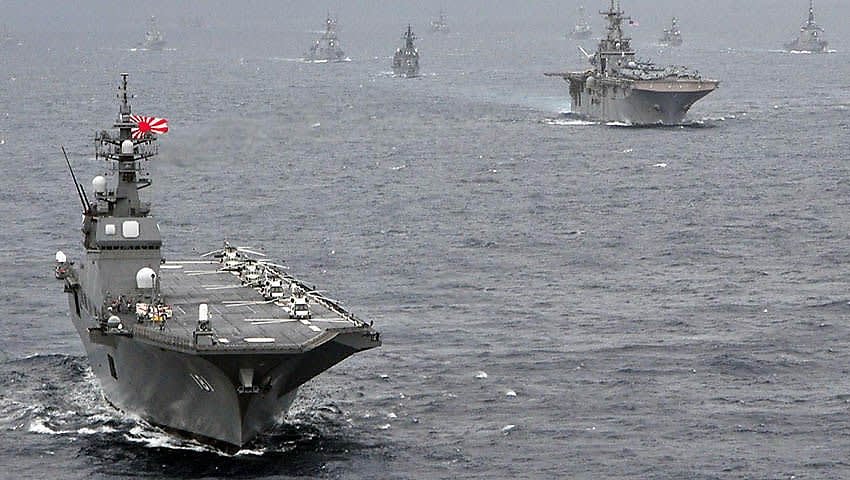
Eighty-one years following the end of the Second World War, Japan is seeking to cast off the shackles imposed upon it by the United States, as the new prime minister, Sanae Takaichi, seeks to normalise the nation’s defence posture and capabilities, with major implications for Australia.
At the end of the Second World War, Japan – previously one of the world’s great powers – stood shattered following over decade of conflict beginning in mainland Asia, culminating in the devastating attack on Pearl Harbor, which, as Admiral Isoroku Yamamoto infamously predicted (at least in film), served to “awaken a sleeping giant” in the United States.
Following four years of devastating conflict across the islands, atolls and vast oceanic expanses of the Pacific, Japan had been defeated and the Supreme Allied Commander in the Pacific, the indefatigable and contentious General Douglas MacArthur, was installed, in essence, as the last shogun of Japan, responsible for the pacification of the ancient, warrior culture.
As part of the conditions of Japan’s ultimate surrender, the United States and its allies, including Australia, enforced the demilitarisation of Japan, ultimately giving way to the post-war constitution which forbid Japan from offensive military capabilities and actions, and, at least for a time, a military that was more a domestic police force than true military.
With the advent of the Cold War and outbreak of conflict on the Korean Peninsula, the US and its partners sought to “normalise” Japan’s military posture, resulting in the true formation of the Japan Self-Defense Forces (JSDF) as a military and, with Japanese domestic efforts, the reindustrialisation of the shattered national economy.
This eventually saw the emergence of Japan as the world’s second largest economy behind that of the United States in the 1980s and a hub of regional and international finance, manufacturing and high-technology, driven by an increasingly advanced industrial base and intimate integration with the global rules-based order built by the US.
The collapse of the Soviet Union in 1991 and the following “Peace Dividend”, combined with the Asian Financial Crisis, ultimately served to have a dramatic impact on Japan’s economy and its military, as the domestic and global pressures all served to place increasing pressure on the Land of the Rising Sun.
In the meantime, the ever present threat of North Korea, combined with the rapid and increasing economic, political and strategic emergence of the People’s Republic of China and their own animosities and ambitions for the region, began to cause concern within policymaking circles around the Pacific.

As we progressed well into the new millennium, Japan began to become increasingly concerned about the rise of China and its willingness to use force to achieve its economic, political and strategic objectives, particularly since the ascendency of President Xi Jinping in 2013 and the rapid acceleration of Beijing’s military modernisation and territorial claims in east Asia.
In response, successive Japanese governments, from Shinzo Abe through Fumio Kishida, Yoshihide Suga and now the self-proclaimed “Thatcherite”, Sanae Takaichi, have reinforced Japan’s need to rapidly expand, modernise and “normalise” their national defence posture in an effort to add to their sovereign defence capabilities and the collective security of the Indo-Pacific.
This dramatic shift in Japanese posture, policy and, eventually, military capability, will undoubtedly have a dramatic and measurable impact on not only Japan’s position and role in the region, but equally, the role and position of other regional powers, Australia included, as we both grapple with the continued devolution of the post-war “rules-based order” and the new era of multipolar competition.
Highlighting this is Jessica Sier, north Asia correspondent at The Australian Financial Review, in a piece titled Japanese PM’s plan to rearm has implications for Australia, in which Sier detailed Prime Minister Takaichi’s ambitious plans to “beef up Japan’s military and revise its pacifist constitution, which voters now agree is no longer fit for purpose”.
Shaking off the shackles of the war guilt
At the core of Japan’s historic struggle to overcome the post-war pacifist constitution is the long-lingering war guilt (at least in varying degrees) that has, until recently, continued to figure prominently within the public consciousness, guiding policymakers and their overwhelming reluctance to build a deterrence-focused military.
While formalised in the post-war constitution, this pervasive thinking prominent across the Japanese public is now, as Sier detailed, beginning to be shaken as the Japanese public grapples with the uncomfortable reality of potential conflict on their doorstep.
First cab of the rank is Japan’s commitment to defending its own former colonial asset in Taiwan from mainland Chinese aggression, which prompted a dramatic response from Beijing, Sier explained, saying, “Takaichi sparked China’s ire (and a wave of reprisals) in November after suggesting Japan could intervene militarily if China were to attack Taiwan, a self-governed democracy that Beijing claims is part of its territory.”
This has had a direct impact on the Japanese zeitgeist and public consciousness as it relates to Beijing, with, as Sier added, “Japanese voters backed Takaichi’s strong stance against China at the ballot box. With China’s military activity intensifying around Taiwan and Japan’s south-western islands, North Korea accelerating its missile program, and doubts growing about US security guarantees, voters appear increasingly willing to set aside postwar restraint in favour of self-protection."
In order to credibly deliver on this guarantee to Taiwan, Japan undoubtedly (like Australia and other American allies) will be forced to lift their defence spending and the pace at which they field new capabilities en masse to effectively deter Beijing from taking direct, kinetic action against Taiwan.
Delivering this served as a central pillar of Takaichi’s election campaign, with her promising to press ahead with a substantial expansion of Japan’s military capabilities, across the major warfighting domains, while also completing the latest five-year plan (equivalent to Australia’s own, now defunct Defence white papers) two years ahead of schedule.
In order to deliver on these promises, Takaichi firmly has the nation’s postwar constitution in her sights, recently saying during a campaign stop, “Why can’t we change the way the SDF are referenced in the constitution? Let’s protect their pride and empower them to be an effective organisation. Please allow us to make this much-needed constitutional revision.”
Implications closer to home
Australia undoubtedly benefits from having another major power capable of adding to the regional security umbrella in the form of a resurgent Japan, particularly should the plans outlined in the United States’ 2025 National Security Strategy and 2026 National Defense Strategy come to fruition.
Where Australia runs serious risk is falling prey to its worst national impulses and seeking to ingratiate ourselves with Japan’s leadership, while doing the bare minimum to provide for our own defence and national security interests, as has been the case historically since Federation.
While this is understandable given the size disparity of the populations and by extension, national economies, Australia has always defaulted to this strategy of learnt helplessness and dependency rather than seeking to carve out its own, sovereign path.
Indeed, as Sier stated, quoting Deputy Prime Minister and Defence Minister Richard Marles, who said during a visit to Tokyo in December, “We have never been more strategically aligned ... We will continue to stand with Japan, and we will do it resolutely.”
This is reinforced further by Sier, who added, “Australia is deeply embedded in that shift. Tokyo increasingly views Canberra as its most consequential defence partner after the United States. Cooperation has moved well beyond symbolism into joint planning, force integration and industrial alignment. The expansion has been driven by shared concern over China’s growing military footprint in the East China Sea and the Western Pacific.”
Now while Sier herself doesn’t go so far as to claim this culture of dependency is the driving force for Australia’s new-found love for Japan, that is purely my observation, it is hard to ignore the pattern in Australian strategic policy.
The question becomes, will the Japanese public be as accommodating of Australia’s real strategic apathy as what the American public has been over the past eight decades, or will we find out the hard way? Regardless, shouldn’t we plan for the worst possible outcome anyway, just to be safe?
Final thoughts
Australia’s place in a rapidly changing Indo-Pacific remains contested terrain. At one level, this is a debate about the value and future of alliance. At another, it is about how Australia perceives its own agency as a sovereign middle power in an era of great power competition.
Resolving this tension will require more than slogans; it demands sustained intellectual effort, transparent policy choices and a willingness to articulate the often uncomfortable trade-offs inherent in any grand strategy.
Australia’s leaders may not agree on every aspect of this debate, but the underlying questions about sovereignty, alignment, deterrence and economic integration will define the country’s foreign policy priorities for decades.
As Sier and others have underscored, what Canberra decides now will shape not just diplomatic posture but the very contours of national security and identity in a contested regional order.
Get involved with the discussion and let us know your thoughts on Australia’s future role and position in the Indo-Pacific region and what you would like to see from Australia’s political leaders in terms of partisan and bipartisan agenda setting in the comments section below, or get in touch at

Want to see more stories from trusted news sources?
Make Defence Connect a preferred news source on Google.
Click here to add Defence Connect as a preferred news source.